
President sends unity message from Evros addressing Western Thrace claims
The Greek President’s visit to Evros highlighted Thrace’s cultural harmony and geopolitical significance, countering divisive narratives around “Western Thrace” and affirming unity across its diverse communities.
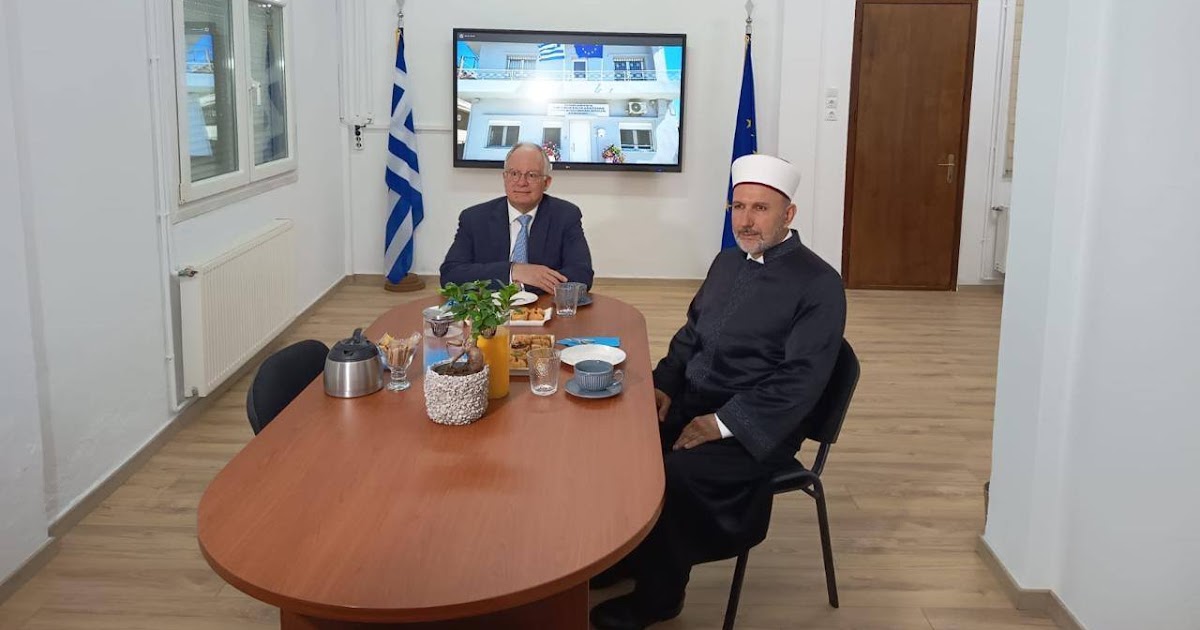

The four-day visit of the President of the Hellenic Republic to Evros, on the occasion of the events commemorating the Liberation of Thrace, concluded leaving a strong political, social, and symbolic imprint in the border region. Through a series of meetings, visits, and public interventions, the special role of Thrace as a place of coexistence of cultures, religions, and traditions was highlighted, as well as its status as an area of increased geopolitical significance for the country.
Meetings with Religious and Social Organizations
During his stay in northern Evros, the President visited the Mufti’s Office of Didymoteicho, where he met with the Most Learned Mufti Emin Serif. The discussion focused on issues concerning the local Muslim community, the need to maintain religious harmony, and the importance of peaceful coexistence among all citizens in Thrace, regardless of religious or cultural identity.
Particular significance was attributed to the President’s meeting with the chairman of the Committee of Muslim Alevis of Thrace, Kara Hussein Ahmet. During the meeting, the role of multiculturalism and mutual respect in shaping the social fabric of the region was emphasized, with special reference to the historical presence of the Alevi Bektashis in Thrace and the need to preserve their cultural and religious heritage.
Message of Unity and Social Cohesion
In his public statements, the President of the Republic stressed that Thrace has historically been a model of peaceful coexistence and democratic living together, sending a message of unity, equality before the law, and social cohesion to all communities in the area. At the same time, through his contacts with representatives of local government, residents, and organizations in Evros, the challenges and development prospects of the border region were brought to light.
Reactions Surrounding the Phrase “Western Thrace”
However, particular attention was drawn to the fact that mouthpieces of the Turkish consulate chose to focus almost exclusively on a specific reference by the President during his speech to “Western Thrace,” attempting to link it with the recent ban by Greek courts on the operation of an association named “Western Thrace Fenerbahçe Association.”
This effort is interpreted as yet another attempt to create political impressions and artificial tensions around issues of identity and terminology in Thrace.
The selective interpretation of the President’s statements by circles affiliated with the Turkish consulate reveals, according to political observers, a continuous effort to instrumentalize sensitive issues concerning Thrace. While the visit of the highest constitutional authority sought to highlight coexistence, unity, and respect among all communities, some chose to revive divisive approaches that do not correspond to the reality of the region nor to the will of the majority of Thrace’s inhabitants.


Source: TAXIARHISpress





