
Tsinar Case: 2026 Thrace Debunks the ‘Monolithic Minority’ Myth
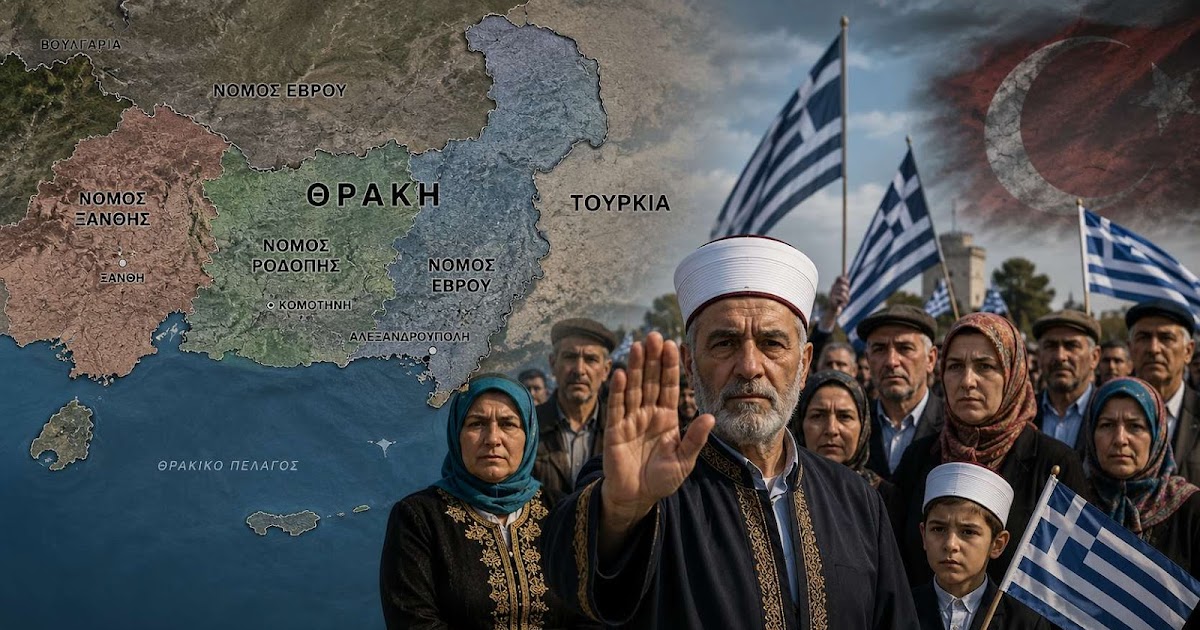
The Tsinar mosque trial in Xanthi sparked unprecedented online debate among 102,600 users, shattering the myth of Thrace's Muslim minority as monolithic and exposing deep divisions over identity.

Written by Nikos Arvanitis
There are moments when an event acts as a catalyst, revealing the reality that already exists beneath the surface. The recent trial regarding the Tsinar mosque in Xanthi was such a moment.
Those who limited themselves to the legal dimension saw simply another typical confrontation. But those who followed the reactions on digital networks witnessed a much larger phenomenon: an unprecedentedly intense public discussion, where tens of thousands of citizens took positions under their own names on issues of identity, representation, and democracy.
It was precisely there that a convenient myth of decades collapsed: that the Muslim minority of Thrace constitutes a unified, compact, and monolithic body that is expressed with one and only one voice.
The digital data leave no room for dispute. The discussion unfolded in parallel on my personal Facebook profile and on the official page of RodopiPress.
Despite the different starting points of the two audiences, the results were almost identical. In total, the dialogue reached 159,800 views and approached more than 102,600 unique users—numbers extremely rare for regional data.
The truly impressive element, however, is that 96.2% of the views on the personal profile and 97.6% on RodopiPress came from people who were not friends or followers.
More than 154,000 citizens outside our “natural” audience participated organically. Society sought out the discussion; it wasn’t imposed on them.
This enormous response is due to the fact that the Tsinar case touched on vital social concerns. The minority’s grassroots weren’t simply discussing a trial, but putting fundamental questions on the table:
- Who really represents them?
- What is the balance between religious and national identity?
- What is the role of official institutions and how much are they influenced by extra-institutional mechanisms?
- Is there room for alternative voices without fear of exclusion?
The qualitative analysis of named positions confirmed the complete absence of a unified “line,” highlighting a colorful mosaic of perspectives:
-
A 30% – 33% revolved around an exclusive “Turkish national self-identification.”
-
The majority, at a rate of 35% – 38%, expressed positions referring to a Greek civic identity (“Greek Muslims”).
-
A 15% – 20% emphasized Thracian, local, and regional identity, avoiding national confrontation.
-
A 10% – 15% adopted a complex approach, recognizing elements from both cultural heritages, while a smaller part focused purely on peaceful coexistence.
These data are not the product of a poll, but the spontaneous capture of society’s trends in real time. The Muslim minority proves in practice to be a complex reality full of internal polyphony. And yet, while this polyphony was expressed so massively, a large part of Thrace’s local media chose silence.
It wasn’t a lack of interest, but the chronic awkwardness of public discourse when faced with “sensitive” issues, at the very moment when society itself proves it is ready to discuss them without taboos.
This is where the greatest lesson lies. The Thrace of 2026 is not the Thrace of stereotypes, prefabricated narratives, and controlled monologues.
It is a society far more complex, mature, and multilayered. The Tsinar case didn’t just bring to light a legal dispute, but revealed a vibrant society that confidently claims the right to speak with all its voices.
Editorial Comment: Nikos Arvanitis’s opinion piece highlights a critical truth: the social base in Thrace has long since surpassed the traditional reflexes of silence and awkwardness. The numbers and quality of the dialogue show that the region’s future passes through acceptance of its internal polyphony.

Source: TAXIARCHISpress





