
OSCE Vienna 2026: Greece’s Response on Thrace and Digital Misinformation
At the OSCE Vienna 2026 meeting, Greece strongly countered pro-Turkish narratives on Thrace, highlighting peaceful coexistence and condemning digital misinformation targeting minority communities.
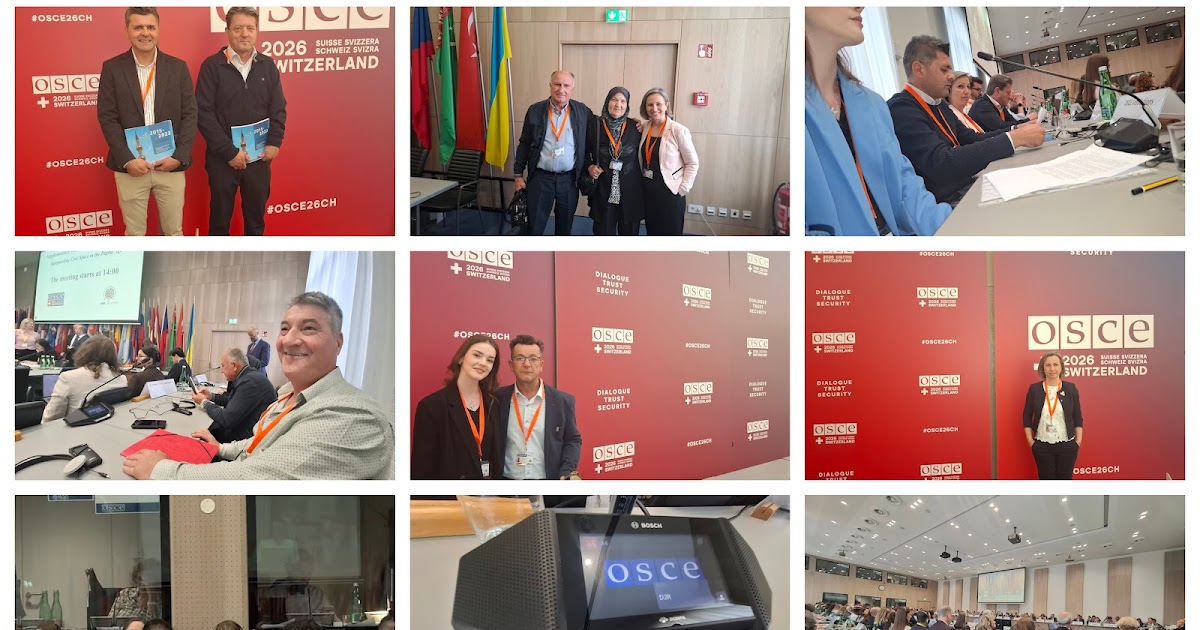

OSCE Vienna 2026: Greece’s Strong Message on Thrace and Combating Digital Disinformation
• By Nikos Arvanitis
The Supplementary Human Dimension Meeting of the OSCE, held on May 11 and 12, 2026, in Vienna under the theme “Protecting the Political Space in the Digital Age,” highlighted with particular intensity the issues of disinformation, hate speech, and the exploitation of minority issues in the digital environment.
Both pro-consulate organizations, such as ABTTF, BTAYTD, and DEB/KIEF, as well as entities from Thrace, participated in the meeting and presented their perspectives on the situation of the Muslim minority in the region, focusing on peaceful coexistence, religious freedom, and equality under the law prevailing in Thrace.
The Interventions of Pro-Consulate Organizations
Representatives of the pro-consulate organizations once again attempted to promote the narrative of a “Turkish minority” in Thrace, adopting a critical stance against Greece and alleging restrictions on rights, digital attacks, and oppression. Through their statements, they sought to portray a different picture of the situation in the area, framing the issue within a broader context of political and communicative pressure.
The Response of Thracian Entities
Interventions by representatives of entities from Thrace were particularly significant, as they presented a different reality regarding the life of the Muslim minority in the region.
The presence of the Panhellenic Pomak Association stood out, highlighting the pressures, as argued, historically exerted by pro-Turkish mechanisms on the Pomaks of Thrace with the aim of altering their distinct cultural identity.
The Association emphasized that the Pomaks form an integral part of the Muslim minority in Thrace, possessing a distinct cultural and historical identity, noting that attempts to present the entire minority as “Turkish” do not correspond to the actual demographic composition of the area.
Finally, the speaker expressed that targeted campaigns on social media attempt to silence voices that do not adopt the Turkish nationalist narrative, creating an atmosphere of pressure and intimidation against those who express differing views within the minority.
Simultaneously, representatives of the Management Committees of Muslim Property in Xanthi and Komotini, the Cultural and Athletic Association of the Mountainous Area of Xanthi Prefecture, as well as of the Seyyid Ali Sultan Dergâhı-Tekkesi of the Alevis – Bektashis, depicted Thrace as a region of peaceful coexistence, where Muslim citizens freely exercise their religious and political rights.
Fake News and Digital Propaganda at the Forefront
The interventions of the Thracian entities focused particularly on the danger of disinformation and fake news, which—as noted—are exploited to create artificial tension and undermine social cohesion in the region.
Neşe Mumin Salih, representative of the Cultural and Athletic Association of the Mountainous Area of Xanthi Prefecture, pointed out that the Muslim minority in Thrace, as recognized by the Treaty of Lausanne, has been for decades an example of peaceful religious coexistence. She also emphasized that certain circles use digital media to cultivate polarization and suspicion among citizens.
Similar statements were made by representatives of the Management Committees of Muslim Property in Xanthi and Komotini, who stated that Muslims in Thrace participate equally in public life and freely perform their religious duties, rejecting narratives of oppression.
The Intervention of the Alevis – Bektashis
The intervention of the Alevis – Bektashis of Thrace attracted distinct interest, as they raised the issue of distortion of their community’s representation by media and external actors. They pointed out that the arbitrary presentation of individuals as alleged representatives of religious communities undermines trust and democratic functioning.
The Greek Intervention at the OSCE
The presence of representatives from the Permanent Greek Delegation to the OSCE was decisive; they exercised their right of reply and intervened strongly in the sessions, providing well-substantiated responses to the claims of the pro-Turkish organizations.
Greek representatives clarified that, according to the 1923 Treaty of Lausanne, the minority in Thrace is recognized as Muslim and not national or “Turkish,” while also reminding that Greek Muslim citizens fully enjoy the rights and freedoms guaranteed by the Greek Constitution and the European acquis.
At the same time, they emphasized that freedom of expression and participation in public life is guaranteed for all citizens in Greece, while highlighting the danger posed by the systematic spread of false news and the political exploitation of the minority issue.


.jpg "OSCE Vienna 2026: The Greek Response on Thrace and Digital Disinformation")


Source: TAXIARHISpress





