Necessary Cookies

Required for the site to function. Cannot be disabled.

Analytics Cookies

Help us understand how visitors interact with our site (Google Analytics via GTM).

Marketing Cookies

Used to track visitors and deliver personalised advertisements.

We use cookies to enhance your browsing experience and analyse site traffic. By clicking Accept All, you consent to our use of cookies. Privacy Policy
NewsFire Global
Home News Europe World Christianity Culture Wars Opinion Video
Information
About Us Authors Advertising Terms & Conditions Privacy Policy Contact
R2B Media
R2B NEWSFIRE.GR PAPAFOTIS.GR THRACTION HELLENIC CONSERVATIVES RIGHT2THEBONE YT
News World

Netanyahu Faces Tough Re-election Battle in October 27 Vote

Israel's parliament scheduled national elections for October 27 as Prime Minister Benjamin Netanyahu faces declining polls amid public dissatisfaction with his handling of security crises.

JULY 13, 2026 AT 3:38 PM
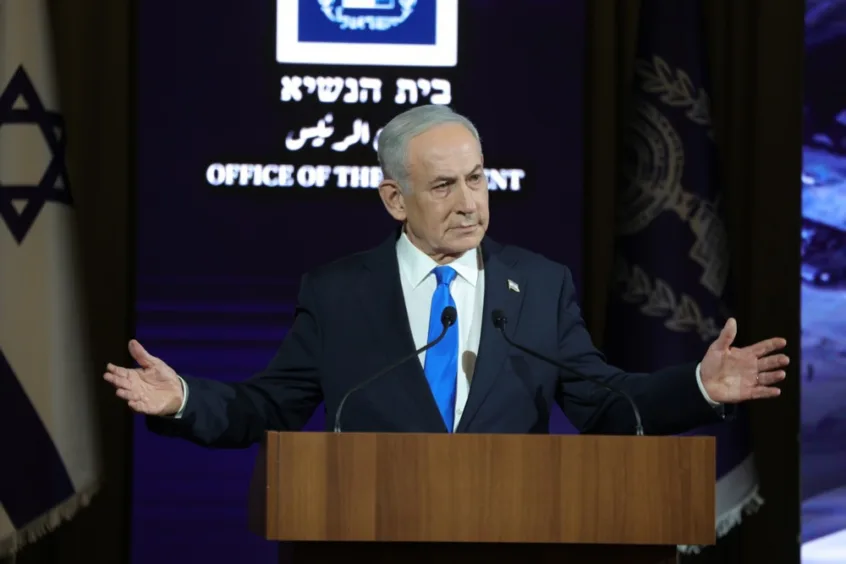
Photo: brusselssignal.eu

According to Brussels Signal, the vote represents the first time since 1988 that Israeli elections are proceeding on their originally scheduled date without an earlier coalition collapse. The election comes nearly three years after the devastating October 7, 2023 Hamas attacks and follows prolonged conflicts in Gaza, Lebanon, and against Iran.

Benjamin Netanyahu‘s right-wing coalition has navigated multiple crises throughout its tenure, but recent polling data suggests the governing bloc may struggle to secure the 61 Knesset seats required for a majority. His Likud party is projected to win between 22 and 27 seats, a significant decline from the 32 seats it captured in 2022.

The broader right-wing and religious bloc that has sustained Netanyahu’s government consistently polls below the majority threshold, raising questions about the viability of another Netanyahu-led administration.

Opposition forces have gained momentum, with former IDF chief Gadi Eisenkot‘s Yashar party performing competitively in head-to-head polling scenarios. A recent Channel 13 survey placed Eisenkot’s list narrowly ahead of Netanyahu’s coalition, signaling a potentially competitive race.

Security Failures and Public Discontent Drive Campaign

The election campaign is dominated by several contentious issues that have eroded public confidence in Netanyahu’s leadership. Accountability for security lapses surrounding the October 7 attacks remains a central concern for Israeli voters, as Brussels Signal reports, alongside frustration over the government’s management of the multi-front wars that followed.

The fallout from judicial reform efforts and the politically divisive ultra-Orthodox military draft exemption also feature prominently in campaign discourse. Coalition partners including Shas and United Torah Judaism continue advocating for Haredi draft exemptions, a stance that risks alienating secular and centrist voters while complicating the arithmetic needed to form a stable government.

Fragmented Opposition Faces Coalition Challenges

While Netanyahu faces headwinds, the opposition remains fragmented across multiple parties and political factions. Potential alliances centered on centrist figures and former military leaders could provide an alternative governing option, though forming a stable coalition may prove difficult regardless of which bloc emerges stronger.

Arab parties and smaller factions are positioned to play kingmaker roles in coalition negotiations, potentially determining whether Netanyahu secures another term or whether Israel transitions to new leadership after more than a decade of his governance.

Netanyahu has confirmed his candidacy and is positioning himself as the experienced leader best equipped to navigate Israel’s complex security environment. However, polling suggests significant portions of the Israeli electorate hold him responsible for security failures and remain dissatisfied with his crisis management.

Timeline and Next Steps

Party lists must be submitted by early September, with final election results expected in early November. The October 27 date represents the latest constitutionally permitted timeframe for holding the vote.

The outcome will determine not only Israel’s next government but also the direction of its security policy, judicial system, and approach to longstanding domestic divisions that have intensified in recent years.

With information from Brussels Signal

Share:
Eleni Papadaki-Van Der Merwe

She was born in 1986 in Johannesburg, South Africa. She is the granddaughter of an immigrant from Crete who settled in the Greek community of Johannesburg (one of the largest in Africa). She holds a bachelor’s degree in International Relations and Political Science from the University of the Witwatersrand (Wits) in Johannesburg and a master’s degree in Journalism from Rhodes University in Grahamstown. She began her career at English-language media outlets in Johannesburg, covering politics and economics, with a focus on issues related to migration and the diaspora. She moved to Athens in 2015 to “return to her roots,” initially to pursue graduate studies, and has remained there permanently. She is married to an Afrikaner; they have two children and live in the southern suburbs of Athens.

Recent News
Photo: brusselssignal.eu

According to Brussels Signal, the vote represents the first time since 1988 that Israeli elections are proceeding on their originally scheduled date without an earlier coalition collapse. The election comes nearly three years after the devastating October 7, 2023 Hamas attacks and follows prolonged conflicts in Gaza, Lebanon, and against Iran.

Benjamin Netanyahu‘s right-wing coalition has navigated multiple crises throughout its tenure, but recent polling data suggests the governing bloc may struggle to secure the 61 Knesset seats required for a majority. His Likud party is projected to win between 22 and 27 seats, a significant decline from the 32 seats it captured in 2022.

The broader right-wing and religious bloc that has sustained Netanyahu’s government consistently polls below the majority threshold, raising questions about the viability of another Netanyahu-led administration.

Opposition forces have gained momentum, with former IDF chief Gadi Eisenkot‘s Yashar party performing competitively in head-to-head polling scenarios. A recent Channel 13 survey placed Eisenkot’s list narrowly ahead of Netanyahu’s coalition, signaling a potentially competitive race.

Security Failures and Public Discontent Drive Campaign

The election campaign is dominated by several contentious issues that have eroded public confidence in Netanyahu’s leadership. Accountability for security lapses surrounding the October 7 attacks remains a central concern for Israeli voters, as Brussels Signal reports, alongside frustration over the government’s management of the multi-front wars that followed.

The fallout from judicial reform efforts and the politically divisive ultra-Orthodox military draft exemption also feature prominently in campaign discourse. Coalition partners including Shas and United Torah Judaism continue advocating for Haredi draft exemptions, a stance that risks alienating secular and centrist voters while complicating the arithmetic needed to form a stable government.

Fragmented Opposition Faces Coalition Challenges

While Netanyahu faces headwinds, the opposition remains fragmented across multiple parties and political factions. Potential alliances centered on centrist figures and former military leaders could provide an alternative governing option, though forming a stable coalition may prove difficult regardless of which bloc emerges stronger.

Arab parties and smaller factions are positioned to play kingmaker roles in coalition negotiations, potentially determining whether Netanyahu secures another term or whether Israel transitions to new leadership after more than a decade of his governance.

Netanyahu has confirmed his candidacy and is positioning himself as the experienced leader best equipped to navigate Israel’s complex security environment. However, polling suggests significant portions of the Israeli electorate hold him responsible for security failures and remain dissatisfied with his crisis management.

Timeline and Next Steps

Party lists must be submitted by early September, with final election results expected in early November. The October 27 date represents the latest constitutionally permitted timeframe for holding the vote.

The outcome will determine not only Israel’s next government but also the direction of its security policy, judicial system, and approach to longstanding domestic divisions that have intensified in recent years.

With information from Brussels Signal