Necessary Cookies

Required for the site to function. Cannot be disabled.

Analytics Cookies

Help us understand how visitors interact with our site (Google Analytics via GTM).

Marketing Cookies

Used to track visitors and deliver personalised advertisements.

We use cookies to enhance your browsing experience and analyse site traffic. By clicking Accept All, you consent to our use of cookies. Privacy Policy
NewsFire Global
Home News Europe World Christianity Culture Wars Opinion Video
Information
About Us Authors Advertising Terms & Conditions Privacy Policy Contact
R2B Media
R2B NEWSFIRE.GR PAPAFOTIS.GR THRACTION HELLENIC CONSERVATIVES RIGHT2THEBONE YT
News Christianity

Christian Schools in Jerusalem Face Troubled Start to School Year

Christian schools across Jerusalem suspended classes when over 70 West Bank teachers were denied entry permits, affecting 8,500 students in the second such crisis within six months.
Stefanos Banos
Stefanos Banos Staff Writer
SEPTEMBER 2, 2026 AT 1:28 PM

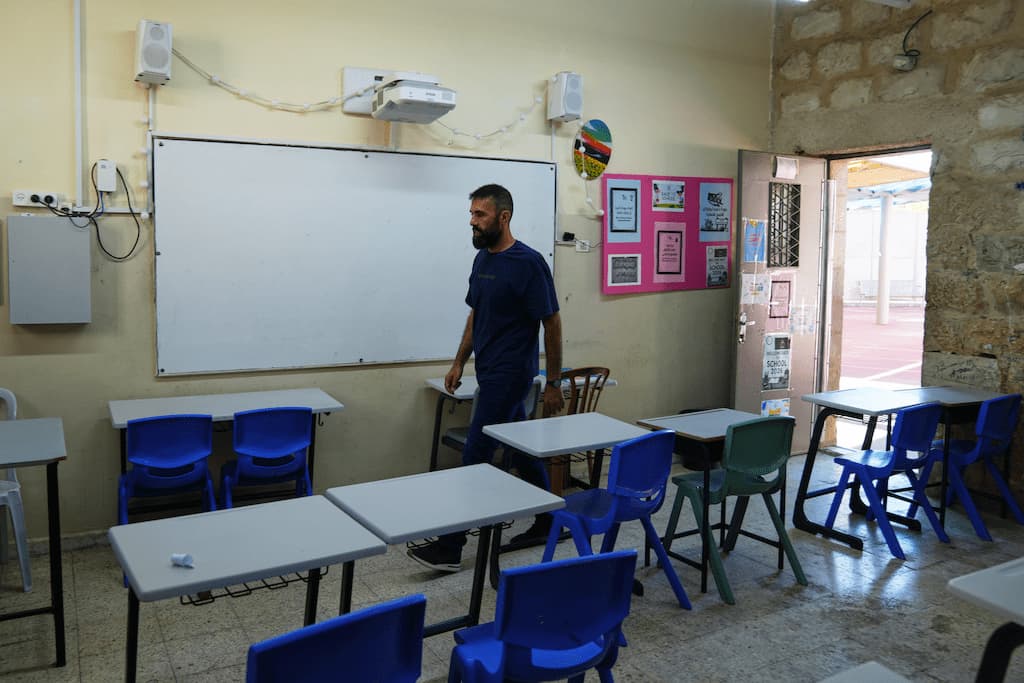
According to Valeurs Actuelles, all Christian schools in Jerusalem announced the suspension of classes on September 1st, 2026, the scheduled start of the school year. The institutions determined they could not function without the essential personnel—teachers, administrative staff, health workers, security, and maintenance employees—who had not received renewed permits to enter Israel from the West Bank.

The crisis resolved within 24 hours when all awaited permits arrived on the evening of September 1st, allowing classes to resume. However, explanations for both the initial blockage and the sudden resolution varied wildly, ranging from claims that “there was never a problem” to acknowledgment of “efforts that paid off” and references to simple “technical delays.” Some permits issued were reportedly of reduced duration, leaving uncertainty about future operations.

Second Crisis in Six Months

This is far from an isolated incident. In January 2026, the same twelve Christian schools in Jerusalem closed their doors under identical circumstances when 171 teachers from the West Bank had their permits cancelled overnight, leaving approximately 10,000 students without instruction. Israeli authorities eventually renewed those permits, allowing the school year to be completed. School administrators had reasonably assumed these authorizations would be extended for the September reopening—an assumption that proved incorrect until the last-minute resolution.

The suspended institutions included the Terra Sancta schools, which operate under the Custody of the Holy Land, the Franciscan institution responsible for guarding the Holy Sites, as well as the Armenian Saints-Tarkmanchatz school. All these establishments serve both Christian and Muslim students without distinction.

Church Leaders Warn of Existential Threat

For the Churches of the Holy Land, the stakes extend far beyond academic calendars. Cardinal Pierbattista Pizzaballa, Latin Patriarch of Jerusalem, issued an official statement declaring that our schools are perhaps the most beautiful gift the Church offers to this Land, describing it as a mission.

The Cardinal drew a direct connection between the permit crisis and the survival of Christian identity in the region, warning that the problem of permits for teachers coming from Bethlehem seriously endangers the possibility of preserving the Christian identity of the schools. He added that in this domain as well, political conflict has direct consequences on the life of the Church.

Sister Lucy Jadallah, director of the Rosary Sisters school which employs 33 teachers from Palestinian territories, described these institutions in January as places of peace, respect, understanding and acceptance of the other—a space of coexistence between communities in a city where such balance remains fragile.

Curriculum Battle Intensifies

A separate but related controversy involves the educational curriculum itself. According to Israeli newspaper Haaretz, starting this academic year, new classes in certain public schools in East Jerusalem will increasingly follow the Israeli educational program rather than the Palestinian curriculum. More than 45,000 Palestinian students out of approximately 120,000 in East Jerusalem—representing 38 percent—would now be affected, compared to fewer than 13,000 six years ago.

The phenomenon appears driven by multiple factors: demands from certain parents, pressure from the Israeli government, and funding offered to institutions that prepare students for the bagrout, the Israeli secondary school diploma. For families, the choice represents a trade-off: the Palestinian curriculum preserves culture and identity, while the Israeli curriculum more easily opens doors to Israeli universities and the job market. As of March 2026, only two of the twelve Christian schools in East Jerusalem offered a bagrout track.

Some observers interpret the permit crises as indirect pressure to push Christian schools toward the Israeli program rather than the Palestinian curriculum. While no definitive evidence establishes this connection, the repetition of the permit crisis six months after the previous incident, combined with the confusion surrounding its resolution, fuels political interpretations alongside strictly administrative explanations.

The recurring disruptions raise fundamental questions about the future of Christian education in Jerusalem and the communities these institutions have served for generations, as political tensions increasingly penetrate what were once considered protected educational spaces.

With information from Valeurs Actuelles

Share:
Stefanos Banos
Stefanos Banos

Stefanos Banos was born in Piraeus and is an editor at NewsFire.GR, specializing in political analysis and international relations. He graduated from the Department of Communication and Media at the University of Bremen in Germany, where he also completed his Master of Arts in Communication and Media Studies. Married to Zoi, he is a proud father of three boys.

Recent News

According to Valeurs Actuelles, all Christian schools in Jerusalem announced the suspension of classes on September 1st, 2026, the scheduled start of the school year. The institutions determined they could not function without the essential personnel—teachers, administrative staff, health workers, security, and maintenance employees—who had not received renewed permits to enter Israel from the West Bank.

The crisis resolved within 24 hours when all awaited permits arrived on the evening of September 1st, allowing classes to resume. However, explanations for both the initial blockage and the sudden resolution varied wildly, ranging from claims that “there was never a problem” to acknowledgment of “efforts that paid off” and references to simple “technical delays.” Some permits issued were reportedly of reduced duration, leaving uncertainty about future operations.

Second Crisis in Six Months

This is far from an isolated incident. In January 2026, the same twelve Christian schools in Jerusalem closed their doors under identical circumstances when 171 teachers from the West Bank had their permits cancelled overnight, leaving approximately 10,000 students without instruction. Israeli authorities eventually renewed those permits, allowing the school year to be completed. School administrators had reasonably assumed these authorizations would be extended for the September reopening—an assumption that proved incorrect until the last-minute resolution.

The suspended institutions included the Terra Sancta schools, which operate under the Custody of the Holy Land, the Franciscan institution responsible for guarding the Holy Sites, as well as the Armenian Saints-Tarkmanchatz school. All these establishments serve both Christian and Muslim students without distinction.

Church Leaders Warn of Existential Threat

For the Churches of the Holy Land, the stakes extend far beyond academic calendars. Cardinal Pierbattista Pizzaballa, Latin Patriarch of Jerusalem, issued an official statement declaring that our schools are perhaps the most beautiful gift the Church offers to this Land, describing it as a mission.

The Cardinal drew a direct connection between the permit crisis and the survival of Christian identity in the region, warning that the problem of permits for teachers coming from Bethlehem seriously endangers the possibility of preserving the Christian identity of the schools. He added that in this domain as well, political conflict has direct consequences on the life of the Church.

Sister Lucy Jadallah, director of the Rosary Sisters school which employs 33 teachers from Palestinian territories, described these institutions in January as places of peace, respect, understanding and acceptance of the other—a space of coexistence between communities in a city where such balance remains fragile.

Curriculum Battle Intensifies

A separate but related controversy involves the educational curriculum itself. According to Israeli newspaper Haaretz, starting this academic year, new classes in certain public schools in East Jerusalem will increasingly follow the Israeli educational program rather than the Palestinian curriculum. More than 45,000 Palestinian students out of approximately 120,000 in East Jerusalem—representing 38 percent—would now be affected, compared to fewer than 13,000 six years ago.

The phenomenon appears driven by multiple factors: demands from certain parents, pressure from the Israeli government, and funding offered to institutions that prepare students for the bagrout, the Israeli secondary school diploma. For families, the choice represents a trade-off: the Palestinian curriculum preserves culture and identity, while the Israeli curriculum more easily opens doors to Israeli universities and the job market. As of March 2026, only two of the twelve Christian schools in East Jerusalem offered a bagrout track.

Some observers interpret the permit crises as indirect pressure to push Christian schools toward the Israeli program rather than the Palestinian curriculum. While no definitive evidence establishes this connection, the repetition of the permit crisis six months after the previous incident, combined with the confusion surrounding its resolution, fuels political interpretations alongside strictly administrative explanations.

The recurring disruptions raise fundamental questions about the future of Christian education in Jerusalem and the communities these institutions have served for generations, as political tensions increasingly penetrate what were once considered protected educational spaces.

With information from Valeurs Actuelles