Necessary Cookies

Required for the site to function. Cannot be disabled.

Analytics Cookies

Help us understand how visitors interact with our site (Google Analytics via GTM).

Marketing Cookies

Used to track visitors and deliver personalised advertisements.

We use cookies to enhance your browsing experience and analyse site traffic. By clicking Accept All, you consent to our use of cookies. Privacy Policy
NewsFire Global
Home News Europe World Christianity Culture Wars Opinion Video
Information
About Us Authors Advertising Terms & Conditions Privacy Policy Contact
R2B Media
R2B NEWSFIRE.GR PAPAFOTIS.GR THRACTION HELLENIC CONSERVATIVES RIGHT2THEBONE YT
News World

US Sanctions Become Chinese Tech Giant’s Marketing Tool

Washington's semiconductor export restrictions on China are pushing companies like Huawei to seek international customers with state-backed chip offerings that undercut U.S. commercial interests abroad.

SEPTEMBER 4, 2026 AT 6:49 PM

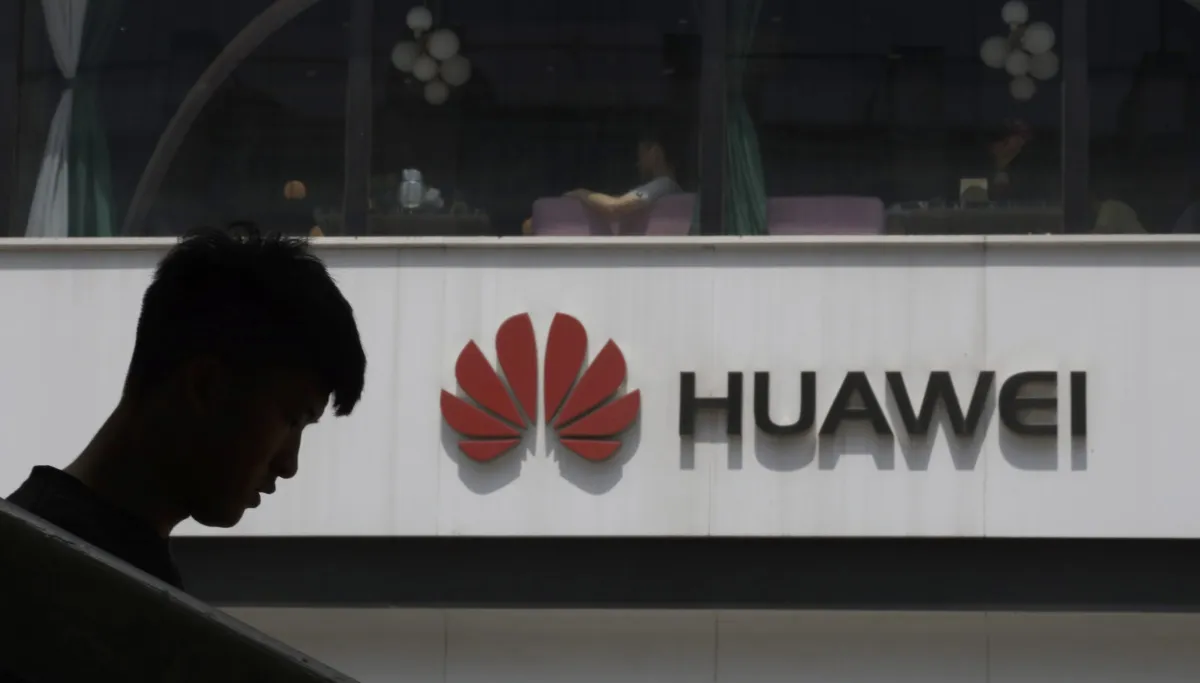
According to Kristian Stout writing in Washington Examiner, Huawei has presented Cairo with a substantial proposal to supply Egypt with approximately 2,000 artificial intelligence chips, marking a significant shift in the Chinese technology giant’s strategy from domestic substitution to international expansion.

The proposed 12-month agreement would establish AI infrastructure for Egyptian military, surveillance, and government operations. Huawei’s offer includes 1,408 advanced Ascend 950-series accelerators designed for training artificial intelligence models, plus an additional 600 Ascend processors for operational deployment. The deal pairs Huawei with iFlytek, a Chinese surveillance technology firm currently blacklisted by Washington.

Limited Computing Power But Strategic Significance

While the computing capacity involved remains modest by global standards—roughly equivalent to only a few hundred of Nvidia’s premier commercial accelerators—the strategic implications extend far beyond raw processing power. American corporations routinely operate substantially larger computing clusters, and this single transaction will not transform Egypt into an artificial intelligence leader.

Nevertheless, the deal demonstrates how export controls designed to slow Chinese technological progress domestically may inadvertently create market opportunities abroad. Chinese firms previously dependent on American semiconductors now face powerful incentives to develop indigenous alternatives, with Beijing providing substantial state financing to support that transition.

Unintended Market Dynamics

Foreign purchasers respond to similar pressures. Licensing uncertainties and access restrictions prompt governments and commercial entities to reconsider procurement decisions, engineering specifications, and software investments. These strategic choices generate demand for alternative suppliers while directing capital and technical expertise toward improving non-American products.

Chinese artificial intelligence developer Z.ai provides evidence of this progression. Its optimized GLM-5.3 model approaches Western performance benchmarks while operating efficiently on Chinese-manufactured infrastructure.

Egypt as Strategic Testing Ground

The Egyptian proposal represents the next phase of Huawei’s international strategy. Having initially developed Ascend processors primarily as domestic substitutes for Nvidia components, the company now actively pursues foreign customers with comprehensive packages combining processors, data centers, software platforms, technical support, and surveillance capabilities.

Smaller markets offer Chinese suppliers easier entry points. American semiconductor corporations have historically treated Egypt as a lower-priority commercial opportunity, and Washington has required export licenses for advanced semiconductor equipment sales to Cairo since 2023. Huawei arrived offering a state-supported integrated solution. American officials are now reportedly attempting to assemble a competing proposal.

Long-Term Infrastructure Implications

That sequence should concern policymakers. Extended licensing procedures constrain American companies seeking to market American-centered technology platforms. Meanwhile, Huawei delivers hardware, financing, software, and support as unified packages. Washington must subsequently expend political and financial resources recovering customers its own regulatory framework pushed toward Chinese suppliers.

Beyond the immediate transaction, initial installations create lasting infrastructure, train local workforces, establish software standards, and produce maintenance relationships and political connections. Each completed project facilitates subsequent sales. Huawei employed this approach successfully in telecommunications, targeting markets Western corporations overlooked before becoming a dominant global supplier.

While Cairo may ultimately reject Huawei’s proposal or select an American alternative, and production constraints continue limiting Chinese manufacturing capacity, the strategic implications extend beyond one data center’s computing power. Export controls impose genuine costs on Chinese firms by denying access to cutting-edge processors and semiconductor manufacturing equipment, reducing efficiency and limiting mass production capabilities.

Huawei’s processors continue trailing Nvidia in processing speed, software compatibility, and energy efficiency—advantages providing American corporations valuable time in rapidly evolving markets. However, those same restrictions fundamentally alter long-term strategic calculations for companies and governments worldwide, potentially accelerating rather than preventing Chinese technological expansion into international markets previously dominated by Western firms.

With information from Washington Examiner
Share:
Eleni Papadaki-Van Der Merwe

She was born in 1986 in Johannesburg, South Africa. She is the granddaughter of an immigrant from Crete who settled in the Greek community of Johannesburg (one of the largest in Africa). She holds a bachelor’s degree in International Relations and Political Science from the University of the Witwatersrand (Wits) in Johannesburg and a master’s degree in Journalism from Rhodes University in Grahamstown. She began her career at English-language media outlets in Johannesburg, covering politics and economics, with a focus on issues related to migration and the diaspora. She moved to Athens in 2015 to “return to her roots,” initially to pursue graduate studies, and has remained there permanently. She is married to an Afrikaner; they have two children and live in the southern suburbs of Athens.

According to Kristian Stout writing in Washington Examiner, Huawei has presented Cairo with a substantial proposal to supply Egypt with approximately 2,000 artificial intelligence chips, marking a significant shift in the Chinese technology giant’s strategy from domestic substitution to international expansion.

The proposed 12-month agreement would establish AI infrastructure for Egyptian military, surveillance, and government operations. Huawei’s offer includes 1,408 advanced Ascend 950-series accelerators designed for training artificial intelligence models, plus an additional 600 Ascend processors for operational deployment. The deal pairs Huawei with iFlytek, a Chinese surveillance technology firm currently blacklisted by Washington.

Limited Computing Power But Strategic Significance

While the computing capacity involved remains modest by global standards—roughly equivalent to only a few hundred of Nvidia’s premier commercial accelerators—the strategic implications extend far beyond raw processing power. American corporations routinely operate substantially larger computing clusters, and this single transaction will not transform Egypt into an artificial intelligence leader.

Nevertheless, the deal demonstrates how export controls designed to slow Chinese technological progress domestically may inadvertently create market opportunities abroad. Chinese firms previously dependent on American semiconductors now face powerful incentives to develop indigenous alternatives, with Beijing providing substantial state financing to support that transition.

Unintended Market Dynamics

Foreign purchasers respond to similar pressures. Licensing uncertainties and access restrictions prompt governments and commercial entities to reconsider procurement decisions, engineering specifications, and software investments. These strategic choices generate demand for alternative suppliers while directing capital and technical expertise toward improving non-American products.

Chinese artificial intelligence developer Z.ai provides evidence of this progression. Its optimized GLM-5.3 model approaches Western performance benchmarks while operating efficiently on Chinese-manufactured infrastructure.

Egypt as Strategic Testing Ground

The Egyptian proposal represents the next phase of Huawei’s international strategy. Having initially developed Ascend processors primarily as domestic substitutes for Nvidia components, the company now actively pursues foreign customers with comprehensive packages combining processors, data centers, software platforms, technical support, and surveillance capabilities.

Smaller markets offer Chinese suppliers easier entry points. American semiconductor corporations have historically treated Egypt as a lower-priority commercial opportunity, and Washington has required export licenses for advanced semiconductor equipment sales to Cairo since 2023. Huawei arrived offering a state-supported integrated solution. American officials are now reportedly attempting to assemble a competing proposal.

Long-Term Infrastructure Implications

That sequence should concern policymakers. Extended licensing procedures constrain American companies seeking to market American-centered technology platforms. Meanwhile, Huawei delivers hardware, financing, software, and support as unified packages. Washington must subsequently expend political and financial resources recovering customers its own regulatory framework pushed toward Chinese suppliers.

Beyond the immediate transaction, initial installations create lasting infrastructure, train local workforces, establish software standards, and produce maintenance relationships and political connections. Each completed project facilitates subsequent sales. Huawei employed this approach successfully in telecommunications, targeting markets Western corporations overlooked before becoming a dominant global supplier.

While Cairo may ultimately reject Huawei’s proposal or select an American alternative, and production constraints continue limiting Chinese manufacturing capacity, the strategic implications extend beyond one data center’s computing power. Export controls impose genuine costs on Chinese firms by denying access to cutting-edge processors and semiconductor manufacturing equipment, reducing efficiency and limiting mass production capabilities.

Huawei’s processors continue trailing Nvidia in processing speed, software compatibility, and energy efficiency—advantages providing American corporations valuable time in rapidly evolving markets. However, those same restrictions fundamentally alter long-term strategic calculations for companies and governments worldwide, potentially accelerating rather than preventing Chinese technological expansion into international markets previously dominated by Western firms.

With information from Washington Examiner