Israel Allows Jewish Prayer Books on Temple Mount for First Time
Israeli authorities have for the first time allowed Jewish worshippers to bring complete prayer books onto the Temple Mount in Jerusalem, marking a significant shift in restrictions at the contested holy site.

The move follows years of gradual relaxation of the status quo arrangements that have governed the contested compound since Israel’s capture of the site in 1967, according to Brussels Signal.
Arnon Segal, a right-wing journalist and activist, shared photographs showing Jewish men openly praying while reading from siddurim—traditional Jewish prayer books—on the mount. He characterized the development as an initial trial rather than a blanket authorization, describing it as historic despite its limited scope.
Palestinian sources reported 179 Jewish visitors to the site that morning, accompanied by rabbis, according to the official Palestinian news agency WAFA and the Jerusalem Governorate.
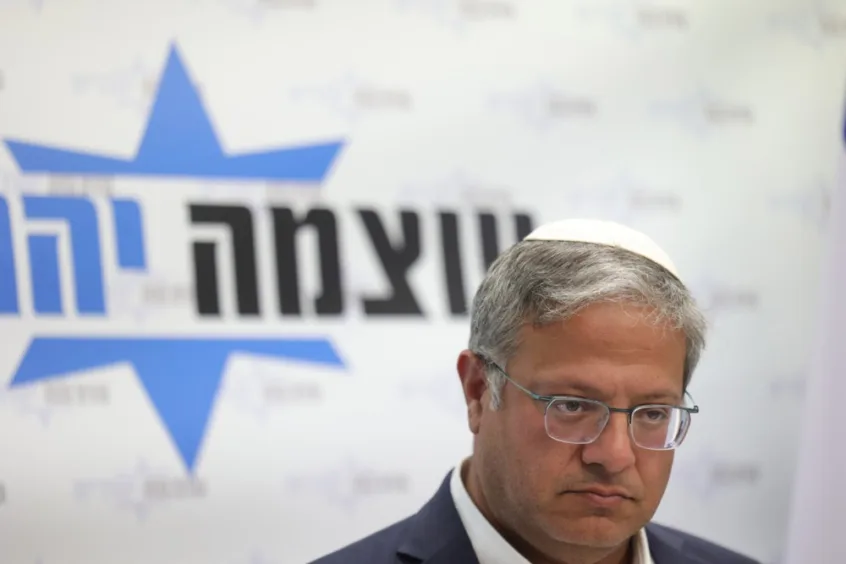
Ben-Gvir confirmed the reports to The Jerusalem Post but declined to elaborate further. Israel Police stated that its operations on the Temple Mount proceed according to political directives, established site regulations, and operational assessments aimed at maintaining public safety and order, though it announced no formal policy change.
The longstanding arrangement since 1967 has permitted Jews and Christians to visit the Temple Mount but generally barred them from praying there, while Muslims retained worship rights. Day-to-day administration remains with the Jerusalem Waqf, a department under Jordan’s Ministry of Awqaf, Islamic Affairs and Holy Sites, a role enshrined in Article 9 of the 1994 peace treaty between Israel and Jordan.
Gradual Erosion of Restrictions
Enforcement of prayer restrictions has steadily loosened in recent years, particularly under Ben-Gvir’s tenure as National Security Minister. Police began permitting Jewish visitors to carry a single pre-printed prayer page in January 2026, and open prayer as well as prostration have increasingly been tolerated without intervention. Full prayer books and ritual objects remained prohibited until the August 16 development.
Prime Minister Benjamin Netanyahu publicly endorsed the changes on January 5, telling reporters that measures introduced by Ben-Gvir do not alter the status quo and are coordinated with his office. Deputy Attorney General Gil Limon had previously cautioned that the minister was unilaterally changing religious arrangements at the site.
Ben-Gvir, whose ministry oversees police operations, himself led prayers at the compound on the fast of Tisha B’Av on July 23. Israeli media reported more than 3,500 Jewish visitors that day, while the Jerusalem Governorate estimated 4,248.
A source from the Jerusalem Islamic Waqf told Middle East Eye that group prayer with prayer books had occurred previously without official sanction, but that formal permission represented the substantive change.
Regional Condemnation and Diplomatic Tensions
The latest development has intensified regional tensions amid already elevated sensitivities over Jerusalem’s holy sites. Arab and Muslim officials convening in Amman on August 5 condemned what they characterized as Israeli escalations affecting the character of Jerusalem’s sacred locations, as Brussels Signal reports.
The meeting, organized by Jordan, brought together the Arab Ministerial Committee on Jerusalem, the secretary-general of the League of Arab States, and foreign ministers from Turkey, Pakistan, Indonesia, and Malaysia. Jordanian Foreign Minister Ayman Safadi warned that Jerusalem confronted growing danger.
The closing statement asserted that the entire 144-dunum compound is exclusively a Muslim place of worship and that the Jerusalem Waqf is its sole legal administrator. Participants called for a joint League of Arab States and Organisation of Islamic Cooperation meeting on the margins of the United Nations General Assembly in September.
The European Union has adopted a similar position on the underlying principle. EU heads of mission in Jerusalem and Ramallah visited the compound on February 3 and subsequently called for full respect of the status quo, backed Jordan’s special role through the Jerusalem Waqf, and warned that unilateral measures to change it risked destabilizing consequences.
The Temple Mount has repeatedly served as a flashpoint for serious violence. Muslims often refer to the entire compound as “Al-Aqsa,” and it contains two principal Islamic structures, a mosque and the Dome of the Rock.
With information from Brussels Signal