Necessary Cookies

Required for the site to function. Cannot be disabled.

Analytics Cookies

Help us understand how visitors interact with our site (Google Analytics via GTM).

Marketing Cookies

Used to track visitors and deliver personalised advertisements.

We use cookies to enhance your browsing experience and analyse site traffic. By clicking Accept All, you consent to our use of cookies. Privacy Policy
NewsFire Global
Home News Europe World Christianity Culture Wars Opinion
Information
About Us Authors Advertising Terms & Conditions Privacy Policy Contact
R2B Media
R2B NEWSFIRE.GR PAPAFOTIS.GR THRACTION HELLENIC CONSERVATIVES RIGHT2THEBONE YT
News Europe

Enterlezi in Thrace: The Alevis’ Dual Struggle for Identity and Memory

Enderlezi in Thrace symbolizes the Alevis' enduring spiritual defiance and cultural identity, blending history, faith, and resistance amidst external pressures for assimilation.
Nikos Arvanitis
Nikos Arvanitis Staff Writer
MAY 8, 2026 AT 12:30 PM Updated: May 19, 2026 3:15 PM

Enterlezi: From the Thracian Horseman to Mikro Dereio – An Anthem that Tames Time and Assimilation

Enterlezi
(or Interlezi) is not simply the musical backdrop of Spring; it is the collective breath of the Balkans and, above all, the spiritual stronghold of the Alevis-Bektashis
of Thrace. From the martyr city of Sarajevo in 1942 to the slopes of Evros and the Turbe of Kizil Deli, this celebration connects the past
with the present, sacrifice with redemption, and the ancient Thracian Horseman with Saint George.

In Evros and Rhodope,
Enterlezi emerges as a supreme act of spiritual
autonomy, proving that the region’s spiritual wealth
remains untouched by external guardianships and attempts at cultural
alteration.

The “Dark” Root and the Global Cry

The story of this symbolic song begins with
a death train. On May 6, 1942, the Ustaše transported 3,000 Serbs
to the Jasenovac extermination camp. Amidst the horror, the voice of a
prisoner singing for Saint George (Djurdjevdan)
transformed despair into spiritual resistance. This melody took deep root
in Thrace, finding its fullest expression in the lyricism of Lina Nikolakopoulou:

“A day like this / at Saint George’s ear / where all songs / cry for love.”

Mikro Dereio & Kizil Deli: The Barrier Against Assimilation

While Sunni centralism and
pro-consulate mechanisms attempt religious homogenization, the
Alevi community offers a model beyond the “system”:

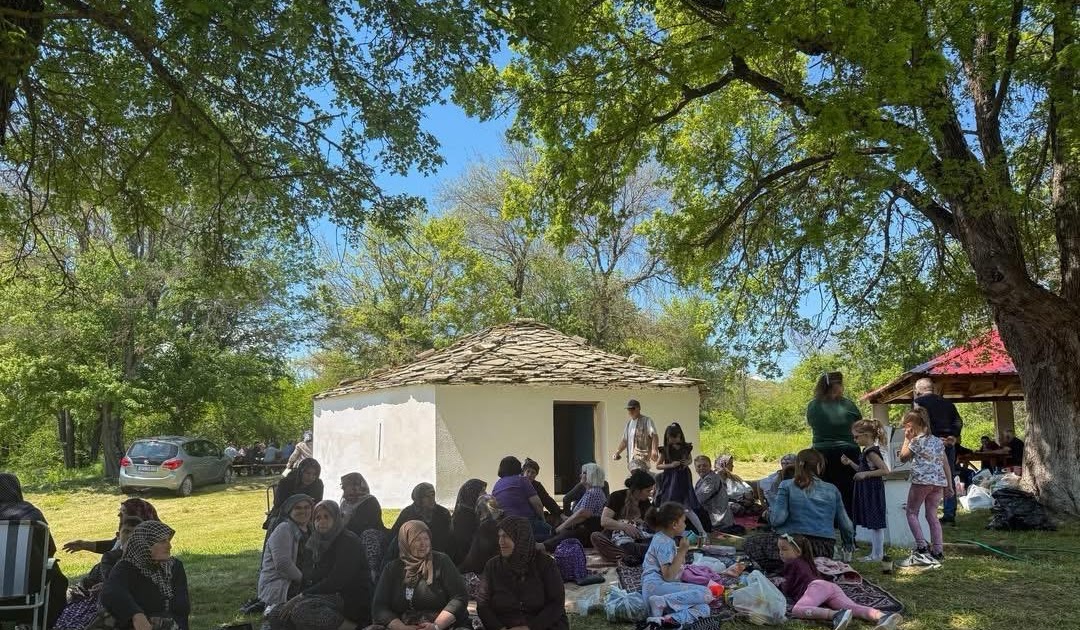
  • Anthropocentric Faith: In the sacred space of the Kato Teke in Mikro Dereio and the Turbe of Kizil Deli,
    the faithful celebrate the meeting of Hidir and Ilya. Women,
    participating equally and often without headscarves in the preparation of the Kurban, highlight a Bektashism that rejects religious conservatism.

  • Institutional Autonomy: The operation of the official Cem Evi (Jem House)
    and the activity of the Vakıf (religious endowment) Administrative Committee protect the
    community, ensuring that the Alevi identity will neither
    be “Turkified” nor erased.

  • The Spirit of Sheikh Bedreddin:
    Over six centuries later, his vision of a world without “mine”
    and “yours” comes alive at the great cauldrons. When the lamb is shared,
    religious identities melt like wax.

Conclusion: The Battle for the Soul of Thrace

The double struggle of the Alevis is a fight
of memory and resistance against decay. In the silence of the Rhodope mountains,
Enterlezi is a crack in time and a revolution of joy. It is the moment when people become “Can” (souls) and share the same breath beneath the same sacred land, effectively nullifying every attempt at political tutelage.

Photos: Zisis Fyllaridis, pameevro Editorial: RodopiPress

Editor’s Note: Mikro Dereio and Kizil Deli remain beacons of freedom.
Far from the political narratives of Ankara and the “national”
banners, the Alevis of Thrace demonstrate that authentic faith is not
confined within national borders. Where history wounds, music and
the shared kurban heal, uniting souls beneath the golden
staff of Saint George. The spiritual wealth of Thrace is not erased;
it is reborn every Spring.

Bahtalo o Ederlezi! Aşk olsun! (May Love Triumph!)

Enterlezi in Thrace: The Alevis’ Double Struggle for Identity and Memory | NEWSFIRE.GR


Source: TAXIARHISpress

Share:
Nikos Arvanitis
Nikos Arvanitis

Nikos Arvanitis is a journalist and analyst, accredited diplomatic correspondent in Belgrade. He has been monitoring developments in Southeast Europe since 1991, manages the Thracian news website KomotiniPress, and also contributes articles to ViaDiplomacy.

Enterlezi: From the Thracian Horseman to Mikro Dereio – An Anthem that Tames Time and Assimilation

Enterlezi
(or Interlezi) is not simply the musical backdrop of Spring; it is the collective breath of the Balkans and, above all, the spiritual stronghold of the Alevis-Bektashis
of Thrace. From the martyr city of Sarajevo in 1942 to the slopes of Evros and the Turbe of Kizil Deli, this celebration connects the past
with the present, sacrifice with redemption, and the ancient Thracian Horseman with Saint George.

In Evros and Rhodope,
Enterlezi emerges as a supreme act of spiritual
autonomy, proving that the region’s spiritual wealth
remains untouched by external guardianships and attempts at cultural
alteration.

The “Dark” Root and the Global Cry

The story of this symbolic song begins with
a death train. On May 6, 1942, the Ustaše transported 3,000 Serbs
to the Jasenovac extermination camp. Amidst the horror, the voice of a
prisoner singing for Saint George (Djurdjevdan)
transformed despair into spiritual resistance. This melody took deep root
in Thrace, finding its fullest expression in the lyricism of Lina Nikolakopoulou:

“A day like this / at Saint George’s ear / where all songs / cry for love.”

Mikro Dereio & Kizil Deli: The Barrier Against Assimilation

While Sunni centralism and
pro-consulate mechanisms attempt religious homogenization, the
Alevi community offers a model beyond the “system”:

Conclusion: The Battle for the Soul of Thrace

The double struggle of the Alevis is a fight
of memory and resistance against decay. In the silence of the Rhodope mountains,
Enterlezi is a crack in time and a revolution of joy. It is the moment when people become “Can” (souls) and share the same breath beneath the same sacred land, effectively nullifying every attempt at political tutelage.

Photos: Zisis Fyllaridis, pameevro Editorial: RodopiPress

Editor’s Note: Mikro Dereio and Kizil Deli remain beacons of freedom.
Far from the political narratives of Ankara and the “national”
banners, the Alevis of Thrace demonstrate that authentic faith is not
confined within national borders. Where history wounds, music and
the shared kurban heal, uniting souls beneath the golden
staff of Saint George. The spiritual wealth of Thrace is not erased;
it is reborn every Spring.

Bahtalo o Ederlezi! Aşk olsun! (May Love Triumph!)

Enterlezi in Thrace: The Alevis’ Double Struggle for Identity and Memory | NEWSFIRE.GR

Enterlezi in Thrace: The Alevis’ Double Struggle for Identity and Memory | NEWSFIRE.GR

Enterlezi in Thrace: The Alevis’ Double Struggle for Identity and Memory | NEWSFIRE.GR

Enterlezi in Thrace: The Alevis’ Double Struggle for Identity and Memory | NEWSFIRE.GR

Enterlezi in Thrace: The Alevis’ Double Struggle for Identity and Memory | NEWSFIRE.GR

Enterlezi in Thrace: The Alevis’ Double Struggle for Identity and Memory | NEWSFIRE.GR


Source: TAXIARHISpress


