Winning in Iran means boots on the ground. Just win, baby
President Trump must choose between accepting limited U.S. combat casualties to decisively defeat Iran or risking a prolonged stalemate that could embolden Tehran and damage American credibility.

According to Henry Olsen writing in Washington Examiner, the commander-in-chief appears to want two mutually exclusive outcomes — total victory over Iran while avoiding even marginal American combat deaths. That calculation may soon need to change if Washington is serious about ending the threat posed by the Islamic Republic.
The conflict began with what appeared to be a swift decapitation strike. Leveraging Israeli intelligence and coordination, the administration eliminated much of Iran’s military and clerical leadership on day one. The operation initially suggested the regime could collapse without significant American ground involvement. Instead, the most radical elements — led by the Islamic Revolutionary Guard Corps — consolidated power and doubled down on their regional ambitions.

Since that opening salvo, the Trump administration has cycled between military action, diplomatic overtures, and public threats. Iran’s navy and air force have been largely dismantled, and its broader military infrastructure severely degraded. Yet rather than capitulate, the IRGC has escalated by threatening to choke off global access to Middle Eastern energy supplies.
Tehran’s position has remained consistent regardless of American pressure. The regime refuses to surrender its nuclear material or abandon its weapons program — which it continues to deny possessing, despite widespread skepticism. It will not relinquish control over the Strait of Hormuz, even insisting on charging tolls for passage. Iran has repeatedly violated ceasefire arrangements by attacking vessels in waters patrolled by Oman, a calculated gambit suggesting the mullahs believe Trump will blink rather than accept casualties.
To his credit, the president resumed hostilities rather than submit to Iranian demands. The limitation, however, is that air power alone cannot win this war. As General Daniel Caine, chairman of the Joint Chiefs of Staff, recently acknowledged, airstrikes can kill and destroy but cannot occupy territory. And territorial control appears necessary to eliminate Iran’s leverage over the Strait and break its strategic position.
Trump has hinted at a shift in approach, saying he is considering a massive attack on Iran in the near future. That could mean an intensified aerial campaign — or it could signal the deployment of ground forces to critical strategic points.
A full-scale invasion comparable to the Iraq wars appears neither feasible nor planned. The United States lacks sufficient ground forces in theater, and key Arab states like Saudi Arabia and Kuwait appear unwilling to host such an operation. But a large-scale invasion may not be necessary.
Seizing the area around Bandar Abbas, Iran’s primary port on the Strait of Hormuz, would dramatically curtail Tehran’s ability to threaten shipping lanes. Depending on how thoroughly air bombardment has degraded Iranian defenses, this could be accomplished with a Marine Expeditionary Unit already deployed in the region, reinforced by additional forces airlifted from the continental United States.
Another option under consideration is Kharg Island, the nerve center of Iran’s oil export infrastructure. Trump has spoken for decades about how capturing Kharg would cripple the mullahs economically. Military planners may determine whether the 101st Airborne Division — designed for large-scale air assault missions — could execute such an operation.
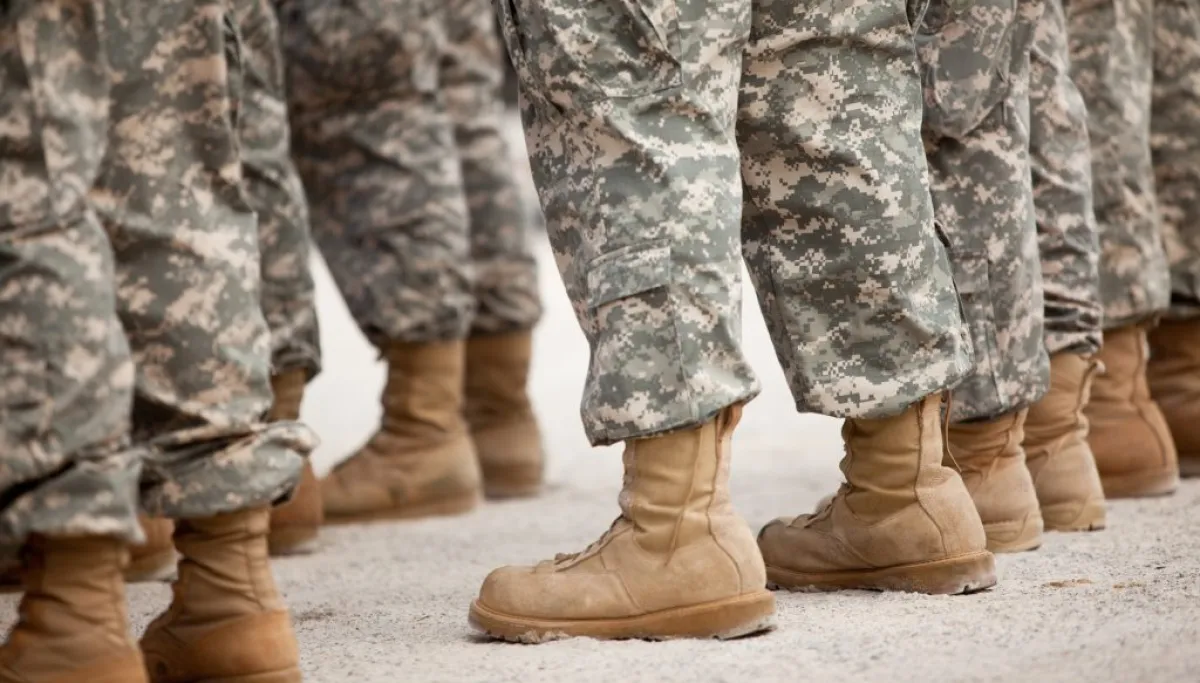
Either scenario would inevitably result in American boots on the ground and combat deaths. Trump would also face criticism for violating what many perceive as an implicit promise to avoid new ground wars. His legacy, and American global standing, would hinge on the success of such an operation.
Yet the alternative may be worse. The current stalemate is already emboldening the Iranian regime, potentially leaving it in a stronger regional and global position than before the conflict began. The mullahs are raising their demands, sensing hesitation in Washington. If the United States accepts a negotiated settlement that leaves Iran’s core capabilities intact, it would represent a strategic defeat with lasting consequences for American deterrence and influence throughout the region.
The window for decisive action may be closing. Trump must soon choose whether to escalate with ground forces and accept the political and human costs, or settle for a partial outcome that could haunt his presidency and embolden adversaries worldwide.
With information from Washington Examiner