Necessary Cookies

Required for the site to function. Cannot be disabled.

Analytics Cookies

Help us understand how visitors interact with our site (Google Analytics via GTM).

Marketing Cookies

Used to track visitors and deliver personalised advertisements.

We use cookies to enhance your browsing experience and analyse site traffic. By clicking Accept All, you consent to our use of cookies. Privacy Policy
NewsFire Global
Home News Europe World Christianity Culture Wars Opinion Video
Information
About Us Authors Advertising Terms & Conditions Privacy Policy Contact
R2B Media
R2B NEWSFIRE.GR PAPAFOTIS.GR THRACTION HELLENIC CONSERVATIVES RIGHT2THEBONE YT
News Culture Wars

Left Defends Abdul el Sayed’s Controversial 9/11 Posts

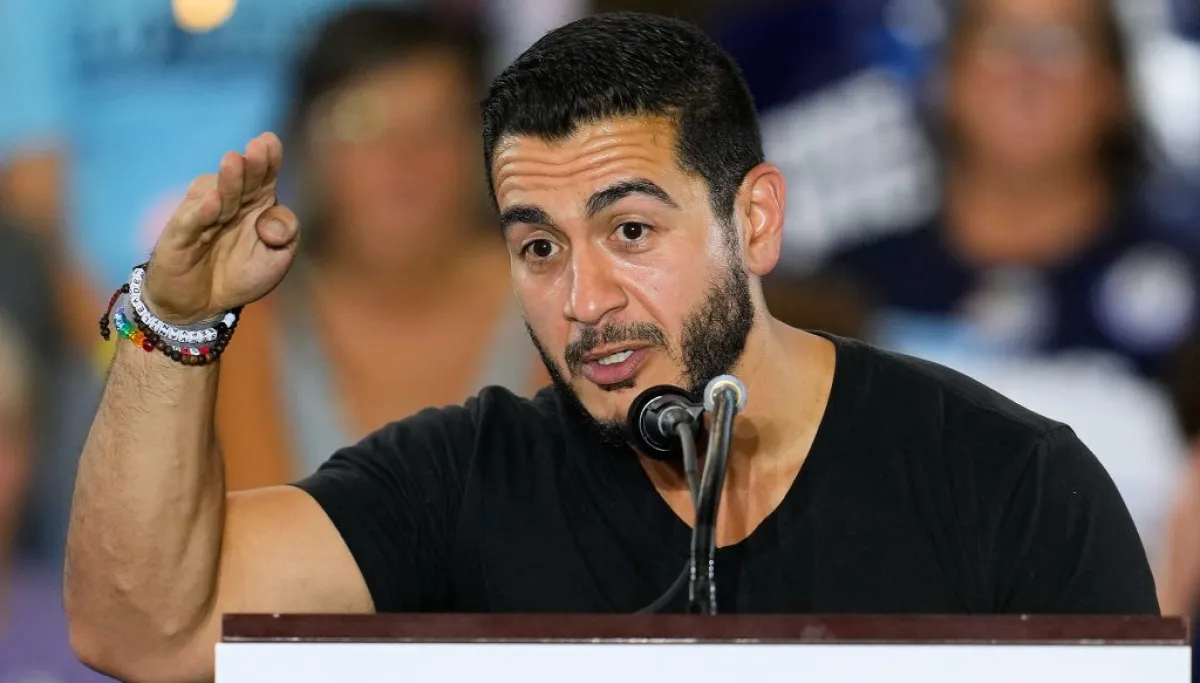
Left-wing media outlets attacked CBS News for reporting on Michigan Democratic Senate candidate Abdul el Sayed's deleted social media posts that compared 9/11 victims to COVID deaths and drew moral equivalence between the terrorist attacks and U.S. counterterrorism operations.
Stefanos Banos
Stefanos Banos Staff Writer
SEPTEMBER 4, 2026 AT 2:07 PM

The controversy erupted after CBS published an article examining social media posts that Abdul el Sayed had previously made public before deleting them, as Ian Haworth argues in Washington Examiner. The posts in question contained troubling commentary comparing the victims of the 2001 terrorist attacks to COVID-19 deaths and drawing moral equivalence between American counterterrorism operations and the September 11 attacks themselves.

Progressive publications immediately accused the network of racism and improper journalistic conduct. Salon claimed CBS had carried out an attack on el Sayed, while the Daily Beast framed the story as evidence of the network’s alleged sympathy toward conservative viewpoints. Defactor went further, accusing CBS of engaging in racism at the behest of Bari Weiss, who oversees editorial content at the outlet.

Deleted Posts Reveal Anti-American Messaging

The CBS article by Zak Hudak documented several deleted posts from el Sayed’s social media accounts. In one, the Democratic candidate compared Americans killed in the September 11 attacks to rising COVID-19 death tolls. In another, he suggested that because more Americans had died from the pandemic than from terrorism, the nation should wage a war on poverty and for public health rather than against terror threats.

Most strikingly, on the 20th anniversary of September 11, el Sayed mourned those lost in attacks he described as perpetrated in the name of his faith, then stated he would subsequently mourn the larger number of deaths, injuries, and destruction caused by actions taken in the name of his country.

Media Backlash Exposes Protection Racket

The firestorm directed at CBS News reveals the extent to which establishment media outlets actively shield Islamist political figures from scrutiny. Rather than questioning why a Senate candidate would make and then delete such controversial statements, left-wing journalists attacked the messenger for simply reporting verified facts.

The Hollywood Reporter characterized the CBS article as one that falsely insinuated el Sayed had ties to the September 11 attacks, though no such claim appeared in the reporting. The network merely presented el Sayed’s own words, which he had chosen to share publicly before removing them from his accounts.

This pattern represents a broader phenomenon in which factual reporting on statements made by Islamist politicians is reflexively labeled as bigotry or racism, effectively creating a protected class immune from the same journalistic scrutiny applied to other public figures.

Campaign Implications for Michigan Senate Race

El Sayed’s deleted posts raise serious questions about his judgment and his views on American foreign policy and national security. The fact that he chose to remove these statements suggests awareness that they could prove politically damaging, yet media allies rushed to his defense rather than examining why a Senate candidate would express such views in the first place.

The controversy also highlights the leftward shift of Michigan Democrats, who selected el Sayed as their Senate nominee despite his history of inflammatory rhetoric. His political survival depends substantially on sympathetic media coverage willing to dismiss legitimate concerns about his past statements as manufactured controversy.

The CBS reporting fulfilled basic journalistic functions by documenting statements a public figure made and then attempted to hide from voters. The hostile reaction from progressive media outlets demonstrates their commitment to narrative management over factual reporting when it comes to preferred political candidates.

With information from Washington Examiner
Share:
Stefanos Banos
Stefanos Banos

Stefanos Banos was born in Piraeus and is an editor at NewsFire.GR, specializing in political analysis and international relations. He graduated from the Department of Communication and Media at the University of Bremen in Germany, where he also completed his Master of Arts in Communication and Media Studies. Married to Zoi, he is a proud father of three boys.

Recent News

The controversy erupted after CBS published an article examining social media posts that Abdul el Sayed had previously made public before deleting them, as Ian Haworth argues in Washington Examiner. The posts in question contained troubling commentary comparing the victims of the 2001 terrorist attacks to COVID-19 deaths and drawing moral equivalence between American counterterrorism operations and the September 11 attacks themselves.

Progressive publications immediately accused the network of racism and improper journalistic conduct. Salon claimed CBS had carried out an attack on el Sayed, while the Daily Beast framed the story as evidence of the network’s alleged sympathy toward conservative viewpoints. Defactor went further, accusing CBS of engaging in racism at the behest of Bari Weiss, who oversees editorial content at the outlet.

Deleted Posts Reveal Anti-American Messaging

The CBS article by Zak Hudak documented several deleted posts from el Sayed’s social media accounts. In one, the Democratic candidate compared Americans killed in the September 11 attacks to rising COVID-19 death tolls. In another, he suggested that because more Americans had died from the pandemic than from terrorism, the nation should wage a war on poverty and for public health rather than against terror threats.

Most strikingly, on the 20th anniversary of September 11, el Sayed mourned those lost in attacks he described as perpetrated in the name of his faith, then stated he would subsequently mourn the larger number of deaths, injuries, and destruction caused by actions taken in the name of his country.

Media Backlash Exposes Protection Racket

The firestorm directed at CBS News reveals the extent to which establishment media outlets actively shield Islamist political figures from scrutiny. Rather than questioning why a Senate candidate would make and then delete such controversial statements, left-wing journalists attacked the messenger for simply reporting verified facts.

The Hollywood Reporter characterized the CBS article as one that falsely insinuated el Sayed had ties to the September 11 attacks, though no such claim appeared in the reporting. The network merely presented el Sayed’s own words, which he had chosen to share publicly before removing them from his accounts.

This pattern represents a broader phenomenon in which factual reporting on statements made by Islamist politicians is reflexively labeled as bigotry or racism, effectively creating a protected class immune from the same journalistic scrutiny applied to other public figures.

Campaign Implications for Michigan Senate Race

El Sayed’s deleted posts raise serious questions about his judgment and his views on American foreign policy and national security. The fact that he chose to remove these statements suggests awareness that they could prove politically damaging, yet media allies rushed to his defense rather than examining why a Senate candidate would express such views in the first place.

The controversy also highlights the leftward shift of Michigan Democrats, who selected el Sayed as their Senate nominee despite his history of inflammatory rhetoric. His political survival depends substantially on sympathetic media coverage willing to dismiss legitimate concerns about his past statements as manufactured controversy.

The CBS reporting fulfilled basic journalistic functions by documenting statements a public figure made and then attempted to hide from voters. The hostile reaction from progressive media outlets demonstrates their commitment to narrative management over factual reporting when it comes to preferred political candidates.

With information from Washington Examiner