Necessary Cookies

Required for the site to function. Cannot be disabled.

Analytics Cookies

Help us understand how visitors interact with our site (Google Analytics via GTM).

Marketing Cookies

Used to track visitors and deliver personalised advertisements.

We use cookies to enhance your browsing experience and analyse site traffic. By clicking Accept All, you consent to our use of cookies. Privacy Policy
NewsFire Global
Home News Europe World Christianity Culture Wars Opinion Video
Information
About Us Authors Advertising Terms & Conditions Privacy Policy Contact
R2B Media
R2B NEWSFIRE.GR PAPAFOTIS.GR THRACTION HELLENIC CONSERVATIVES RIGHT2THEBONE YT
News Europe

Will Germany Get Its Jörg Haider on September 6?

Ulrich Siegmund's potential breakthrough as Germany's first AfD minister-president in Saxony-Anhalt draws comparisons to Jörg Haider's 1989 rise as Austria's first populist regional leader.
Dimitris Papafotis
Dimitris Papafotis Editor in Chief
AUGUST 21, 2026 AT 8:08 AM

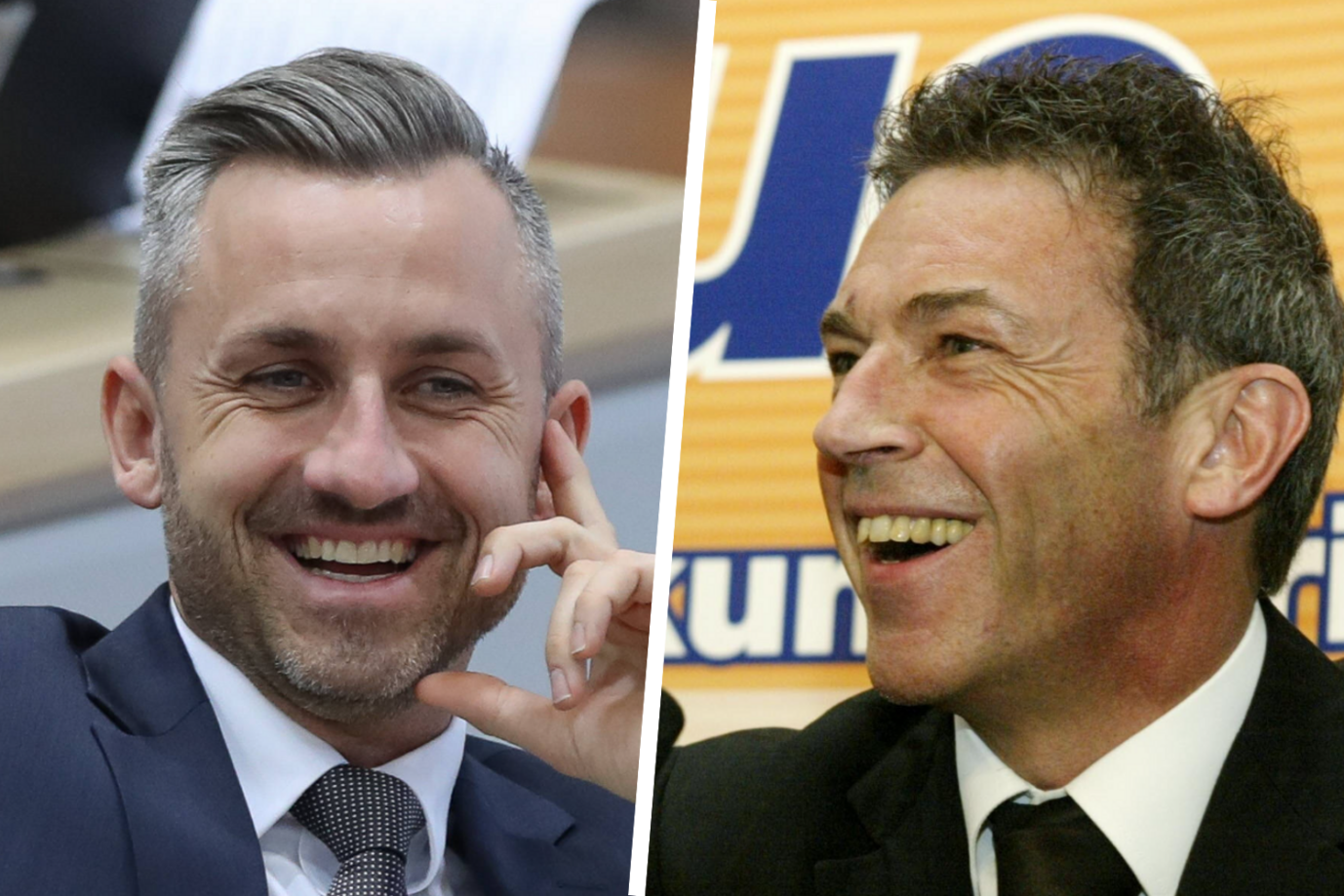
According to Junge Freiheit, Ulrich Siegmund has led the Alternative for Germany (AfD) to the threshold of power in Saxony-Anhalt. Should the new state parliament elect him as head of government after the election, he would become Germany’s first AfD minister-president. This potential breakthrough recalls the rise of a 39-year-old politician from Carinthia who in 1989 became the first Freedom Party of Austria (FPÖ) politician to serve as a state premier: Jörg Haider.

While the Austrian office of Landeshauptmann roughly corresponds to a German minister-president, in Austria the position carries stronger connotations of a regional father figure who embodies his state and exercises power beyond its borders.

The Haider Precedent: Victory Without a Majority

Haider’s election made Carinthia the first independent power center for the FPÖ and a political laboratory for its young federal chairman. Notably, Haider had not actually won the 1989 Carinthian state election. The FPÖ achieved 29 percent and eleven of 36 seats, while the Social Democrats remained the strongest party. Yet the eight representatives of the conservative ÖVP provided him with the necessary 19 votes to become premier.

Two years later, Social Democrats and conservatives voted him out following his clumsy remarks about the “orderly employment policy” of the Third Reich.

Personal Charisma and Modern Media

Those who explain Haider’s success solely through taboo-breaking overlook what was essential, as Junge Freiheit reports. Haider attended church festivals and folk events, laughed, shook hands, and sought physical proximity to people. For his supporters he soon became simply “Jörgl.” Those who met him personally describe his handshake as if he were recharging their internal battery. This mixture of provocation on the grand stage and personal warmth in small circles defined the Austrian Haider phenomenon.

Siegmund likewise shakes hands, takes selfies, and appears more relaxed and genuine among Simson motorcycle riders and visitors to his civic festivals than at a podium. The “eternally smiling Uli” conveys to his supporters not merely political agreement but personal sympathy, much as Haider once did.

In one respect, Siegmund is already ahead of the Austrian. Haider had to deploy his charm anew in every festival tent and television studio; Siegmund can spread every smile millions of times over. By mid-August, nearly 715,000 people followed him on TikTok and more than 460,000 on Instagram.

The Boomerang Effect of Exclusion

Haider’s opponents repeatedly made the same mistake: they considered political exclusion to be political success. When he took over the FPÖ leadership in 1986, Chancellor Franz Vranitzky immediately ended the coalition with the Freedom Party. In the subsequent election, the FPÖ nevertheless rose from five to 9.7 percent. His removal as state premier in 1991 did not diminish Haider but delivered him the role that suited him best: that of the persecuted man whom the red-black power cartel feared.

Siegmund’s opponents risk gifting him the same role. When Der Spiegel declared the friendly smiling 35-year-old the “most dangerous man in Germany,” he called the cover image “very good advertising” and shared it further himself. The more shrilly his opponents warn against him, the more easily Siegmund can play the unruffled man whom the entire political system fears.

42.1 Percent: History Repeating

Haider celebrated his great Carinthian triumph upon his return in 1999. The FPÖ became the strongest force for the first time with 42.1 percent and 16 seats. Siegmund currently stands at precisely the same number: polling trends based on recent surveys show the AfD at exactly 42.1 percent.

Haider lacked three seats for an absolute majority in 1999. Nevertheless, he received the 16 votes of his FPÖ in the election for state premier, while the Social Democratic candidate received twelve. All eight ÖVP representatives did not participate in the vote according to the protocol. The legal construction differed from that in Saxony-Anhalt, but the political parallel is unmistakable: the election winner entered the highest state office without his own seat majority because part of his opponents did not vote against him.

The Magdeburg Path to Power

Such a path is also possible in Magdeburg. After two unsuccessful rounds of voting and a failed vote on dissolving the state parliament, a majority of votes cast is sufficient. The theoretical seat distribution from polling trends allocates 41 of 83 seats to the AfD—only one fewer than the CDU, Left Party, and SPD combined. In the first two voting rounds, Siegmund would need one additional vote. In the subsequent round, two abstentions from the opposing camp could suffice. If the remaining parties distributed their votes among multiple candidates, possibly the 41 AfD votes alone would be sufficient.

Unlike Haider, however, Siegmund could not subsequently rely on the proportional system that existed in Carinthia at the time. There, the FPÖ, Social Democrats, and conservatives automatically belonged to the state government. Siegmund would have to find majorities outside the AfD for budgets and laws. He himself has repeatedly rejected the role of a merely “formal minister-president” without a parliamentary majority and is counting on a sole government with “45 percent plus X.”

With information from Junge Freiheit

Share:
Dimitris Papafotis
Dimitris Papafotis

Dimitris Papafotis is the editor-in-chief of NewsFire.GR. He was born and raised in Athens. He studied at the Journalism Workshop (1991-1993). He currently lives in Pyrgos, Ilia, where he has been active in radio and various newspapers, while also maintaining his personal blog, Papafotis.gr.

Recent News

According to Junge Freiheit, Ulrich Siegmund has led the Alternative for Germany (AfD) to the threshold of power in Saxony-Anhalt. Should the new state parliament elect him as head of government after the election, he would become Germany’s first AfD minister-president. This potential breakthrough recalls the rise of a 39-year-old politician from Carinthia who in 1989 became the first Freedom Party of Austria (FPÖ) politician to serve as a state premier: Jörg Haider.

While the Austrian office of Landeshauptmann roughly corresponds to a German minister-president, in Austria the position carries stronger connotations of a regional father figure who embodies his state and exercises power beyond its borders.

The Haider Precedent: Victory Without a Majority

Haider’s election made Carinthia the first independent power center for the FPÖ and a political laboratory for its young federal chairman. Notably, Haider had not actually won the 1989 Carinthian state election. The FPÖ achieved 29 percent and eleven of 36 seats, while the Social Democrats remained the strongest party. Yet the eight representatives of the conservative ÖVP provided him with the necessary 19 votes to become premier.

Two years later, Social Democrats and conservatives voted him out following his clumsy remarks about the “orderly employment policy” of the Third Reich.

Personal Charisma and Modern Media

Those who explain Haider’s success solely through taboo-breaking overlook what was essential, as Junge Freiheit reports. Haider attended church festivals and folk events, laughed, shook hands, and sought physical proximity to people. For his supporters he soon became simply “Jörgl.” Those who met him personally describe his handshake as if he were recharging their internal battery. This mixture of provocation on the grand stage and personal warmth in small circles defined the Austrian Haider phenomenon.

Siegmund likewise shakes hands, takes selfies, and appears more relaxed and genuine among Simson motorcycle riders and visitors to his civic festivals than at a podium. The “eternally smiling Uli” conveys to his supporters not merely political agreement but personal sympathy, much as Haider once did.

In one respect, Siegmund is already ahead of the Austrian. Haider had to deploy his charm anew in every festival tent and television studio; Siegmund can spread every smile millions of times over. By mid-August, nearly 715,000 people followed him on TikTok and more than 460,000 on Instagram.

Die vierte Simson-Ausfahrt steht an: Seid mit dabei!

Wir sehen uns am Sonntag, den 23.08.2026, um 11:00 Uhr auf dem Marktplatz in Quedlinburg. Abfahrt ist 13:00 Uhr.

Wer die Bilder der letzten Ausfahrten gesehen hat oder mit dabei war, weiß: Es ist ein einzigartiges Erlebnis… pic.twitter.com/RgcbuvQzLM

— Ulrich Siegmund (@UlrichSiegmund) August 13, 2026

Danke @benungeskriptet für das tolle Gespräch und danke an alle, die es sich angeschaut haben.
Wie versprochen hier das unterschriebene Exemplar vom „gefährlichsten Mann Deutschlands“. Es geht heute noch in die Post zu dir! pic.twitter.com/HE0eIhLeUq

— Ulrich Siegmund (@UlrichSiegmund) August 15, 2026

The Boomerang Effect of Exclusion

Haider’s opponents repeatedly made the same mistake: they considered political exclusion to be political success. When he took over the FPÖ leadership in 1986, Chancellor Franz Vranitzky immediately ended the coalition with the Freedom Party. In the subsequent election, the FPÖ nevertheless rose from five to 9.7 percent. His removal as state premier in 1991 did not diminish Haider but delivered him the role that suited him best: that of the persecuted man whom the red-black power cartel feared.

Siegmund’s opponents risk gifting him the same role. When Der Spiegel declared the friendly smiling 35-year-old the “most dangerous man in Germany,” he called the cover image “very good advertising” and shared it further himself. The more shrilly his opponents warn against him, the more easily Siegmund can play the unruffled man whom the entire political system fears.

42.1 Percent: History Repeating

Haider celebrated his great Carinthian triumph upon his return in 1999. The FPÖ became the strongest force for the first time with 42.1 percent and 16 seats. Siegmund currently stands at precisely the same number: polling trends based on recent surveys show the AfD at exactly 42.1 percent.

Haider lacked three seats for an absolute majority in 1999. Nevertheless, he received the 16 votes of his FPÖ in the election for state premier, while the Social Democratic candidate received twelve. All eight ÖVP representatives did not participate in the vote according to the protocol. The legal construction differed from that in Saxony-Anhalt, but the political parallel is unmistakable: the election winner entered the highest state office without his own seat majority because part of his opponents did not vote against him.

The Magdeburg Path to Power

Such a path is also possible in Magdeburg. After two unsuccessful rounds of voting and a failed vote on dissolving the state parliament, a majority of votes cast is sufficient. The theoretical seat distribution from polling trends allocates 41 of 83 seats to the AfD—only one fewer than the CDU, Left Party, and SPD combined. In the first two voting rounds, Siegmund would need one additional vote. In the subsequent round, two abstentions from the opposing camp could suffice. If the remaining parties distributed their votes among multiple candidates, possibly the 41 AfD votes alone would be sufficient.

Unlike Haider, however, Siegmund could not subsequently rely on the proportional system that existed in Carinthia at the time. There, the FPÖ, Social Democrats, and conservatives automatically belonged to the state government. Siegmund would have to find majorities outside the AfD for budgets and laws. He himself has repeatedly rejected the role of a merely “formal minister-president” without a parliamentary majority and is counting on a sole government with “45 percent plus X.”

With information from Junge Freiheit