US Navy Destroyer Adrift Four Days in South China Sea
The USS Benfold suffered a complete power failure in the South China Sea for four days in late July, leaving 300 sailors without electricity or water until tugboats towed it to the Philippines.
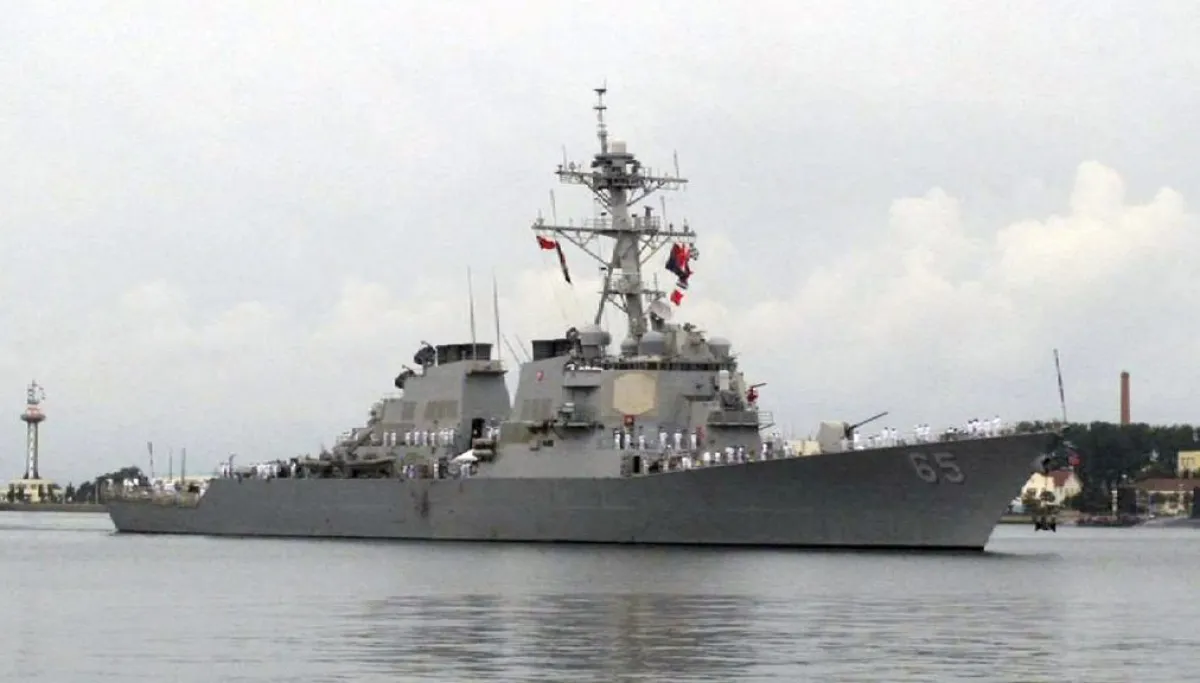

A U.S. Navy guided missile destroyer suffered a catastrophic power failure in the South China Sea, leaving approximately 300 sailors stranded without electricity, fresh water, functioning lavatories, or climate control for four days in late July.
The USS Benfold, an Arleigh Burke-class destroyer, experienced complete power loss on July 24 while deployed with the George Washington carrier strike group, according to Claire Carter writing in Washington Examiner. The vessel was operating in contested waters when generators failed, rendering the approximately three-decade-old warship dead in the water.
Matthew Comer, spokesman for the 7th Fleet, confirmed the incident stemmed from an engineering casualty affecting the ship’s generators. The malfunction eliminated all power systems aboard the destroyer, forcing the crew to endure days without basic necessities in the tropical heat of Southeast Asian waters.

Fellow warships in the strike group provided emergency assistance to the disabled Benfold. The Ticonderoga-class cruiser USS Robert Smalls delivered meals to the destroyer’s crew while commercial tugboats towed the stricken vessel to Subic Bay in the Philippines, where it arrived July 28.
Sailors received shore accommodations while repair teams from Ship Repair Facility Japan Regional Maintenance Center worked to restore functionality. Power returned on July 30, with all systems declared operational by August 8 when the Benfold resumed deployment. No crew members sustained injuries during the incident.
Comer emphasized the crew’s professionalism throughout the ordeal, stating they demonstrated resilience, grit, professionalism, and unwavering steadiness in their response to the crisis.
The breakdown adds to mounting concerns about the strain on U.S. naval forces amid extended deployments supporting operations near Iran. The Trump administration has faced increasing pressure over conditions aboard the USS Abraham Lincoln, whose deployment has been repeatedly extended to maintain presence near the Strait of Hormuz.
That aircraft carrier and its more than 5,000 personnel have spent over eight months at sea. Family members have reported shortages of provisions and water, malfunctioning equipment, and rising mental health issues among exhausted crew members. Some relatives claim sailors have attempted to go overboard due to deployment stress, prompting Democratic legislators to demand accountability from Navy leadership.
President Donald Trump and War Secretary Pete Hegseth have disputed characterizations of conditions aboard the Lincoln as critical.
The George Washington strike group, which was operating alongside the Benfold during its power failure, is now scheduled to deploy toward the Middle East to relieve the Lincoln and its crew.
Comer detailed the full scope of the power outage’s impact on the Benfold, explaining that the loss of electricity affected potable water supplies, galley operations, sanitation systems, and air conditioning throughout the vessel. He praised the rapid recovery and return to operational status as evidence of crew professionalism and the expertise of repair facility personnel.
The Navy has launched an investigation into the cause of the generator failure. The incident raises questions about the maintenance and readiness of aging naval assets amid heightened operational tempo in the Indo-Pacific region.
With information from Washington Examiner