US Lawmakers Target Serbian Officials Over Moscow Ties
A bipartisan US bill targets Serbian officials with sanctions over Belgrade's ties to Russia, China and Iran, escalating pressure on President Vučić to align with Western interests.
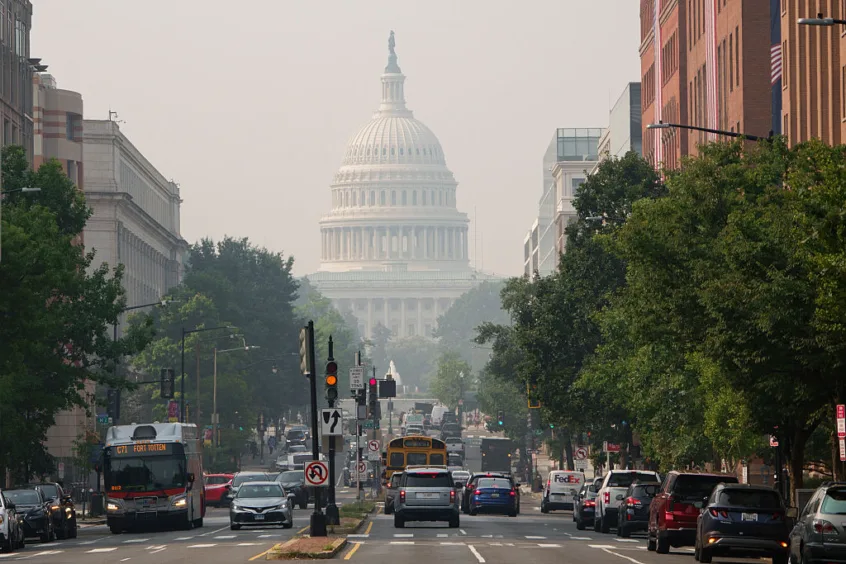

Republican Joe Wilson of South Carolina and Democrat Bill Keating of Massachusetts filed the SRBIJA Act on August 27, according to Brussels Signal. Both serve on the House Foreign Affairs Committee and have positioned the bill as a response to Serbia’s refusal to align with Western strategic interests in the Balkans.
The legislation’s formal title—the Supporting the Rule of law, Building Institutional Justice, and Accountability Act—frames the measure around governance concerns. But its core focus is geopolitical: curtailing Serbian cooperation with nations Washington views as adversaries.
Sanctions Authority and Strategic Reviews
The bill would authorize financial sanctions and visa restrictions on individuals deemed to be destabilizing the Western Balkans, undermining democratic institutions, or threatening regional security. It also mandates comprehensive reporting from the Secretary of State, in coordination with US intelligence and defense agencies, on Russian and Chinese influence inside Serbia.
These reports would assess Moscow’s political, economic, energy and security footprint in the country, as well as Beijing’s investments in infrastructure, telecommunications and political networks. The assessments would determine whether such relationships pose risks to US national security interests.
Iran is explicitly named in the legislation. The bill notes that Serbia has expanded technological and political cooperation with Tehran, including in information and communications technology and artificial intelligence sectors.
In a pointed reference, the measure highlights that Serbia dispatched Boris Bratina, its information and telecommunications minister, to Tehran in July 2026 as Vučić’s personal envoy to attend the funeral of Iranian Supreme Leader Ali Khamenei, who was killed in US-Israeli strikes on February 28. Serbian officials attended alongside Russian and Chinese delegations.
Strategic Dialogue on the Chopping Block
One of the bill’s sharpest tools is its provision to suspend the US-Serbia Strategic Dialogue, which was inaugurated on July 17. The dialogue would be halted unless Secretary of State Marco Rubio can certify that Belgrade has made measurable progress on electoral integrity, anti-corruption efforts, and distancing itself from Moscow, Beijing and Tehran.
Wilson, who serves on both the House Foreign Affairs and Armed Services committees, has been a vocal critic of Vučić’s government. Introducing the bill, he accused Serbia under Vučić of abandoning the rule of law and aligning with enemies of freedom, specifically naming Vladimir Putin, the Chinese Communist Party, and the Iranian regime, as Brussels Signal reports.
Domestic Unrest and Early Elections
The legislative push comes amid sustained domestic turmoil in Serbia. Anti-government protests erupted following the November 1, 2024 collapse of a railway station canopy in Novi Sad, which killed 16 people. The disaster ignited student-led demonstrations that have evolved into the most significant challenge to Vučić’s rule in years.
Protesters have accused the government of systemic corruption, lack of accountability, and retaliatory measures against demonstrators. In response, Vučić announced early parliamentary elections for either October 18 or October 25, more than a year ahead of schedule.
Balancing Act Between East and West
Despite pressure from Washington and Brussels, Vučić has maintained what he describes as a balanced foreign policy, preserving ties with both Western institutions and rivals like Russia and China.
Serbia submitted its EU membership application in 2009, gained candidate status in 2012, and began formal accession negotiations in 2014. By 2026, 22 of the EU’s 35 negotiating chapters had been opened, with two provisionally closed. However, no new chapters have been opened since December 2021.
Brussels remains a major financial supporter of Serbia through pre-accession funding and the Reform and Growth Facility, which provides an indicative €1.58 billion in grants and concessional loans. These funds are conditional on governance and institutional reforms.
Yet Serbia has refused to align with EU foreign policy on Russia, declining to impose sanctions over the invasion of Ukraine. It has also welcomed major Chinese infrastructure investments and maintained military and energy cooperation with Moscow.
The SRBIJA Act signals that Washington’s patience with this balancing strategy may be running out. If enacted, it would represent one of the most direct US interventions in Balkan politics in years, placing Belgrade at a crossroads between integration with the West and continued engagement with its strategic rivals.
With information from Brussels Signal