Necessary Cookies

Required for the site to function. Cannot be disabled.

Analytics Cookies

Help us understand how visitors interact with our site (Google Analytics via GTM).

Marketing Cookies

Used to track visitors and deliver personalised advertisements.

We use cookies to enhance your browsing experience and analyse site traffic. By clicking Accept All, you consent to our use of cookies. Privacy Policy
NewsFire Global
Home News Europe World Christianity Culture Wars Opinion Video
Information
About Us Authors Advertising Terms & Conditions Privacy Policy Contact
R2B Media
R2B NEWSFIRE.GR PAPAFOTIS.GR THRACTION HELLENIC CONSERVATIVES RIGHT2THEBONE YT
News World

US Eyes ‘Most Sophisticated Op’ to Seize Iran Nuclear Material

U.S. special operations forces are preparing for a complex raid to seize enriched uranium from Iran's nuclear facilities, deploying thousands of troops to multiple fortified sites.

JULY 25, 2026 AT 6:38 PM

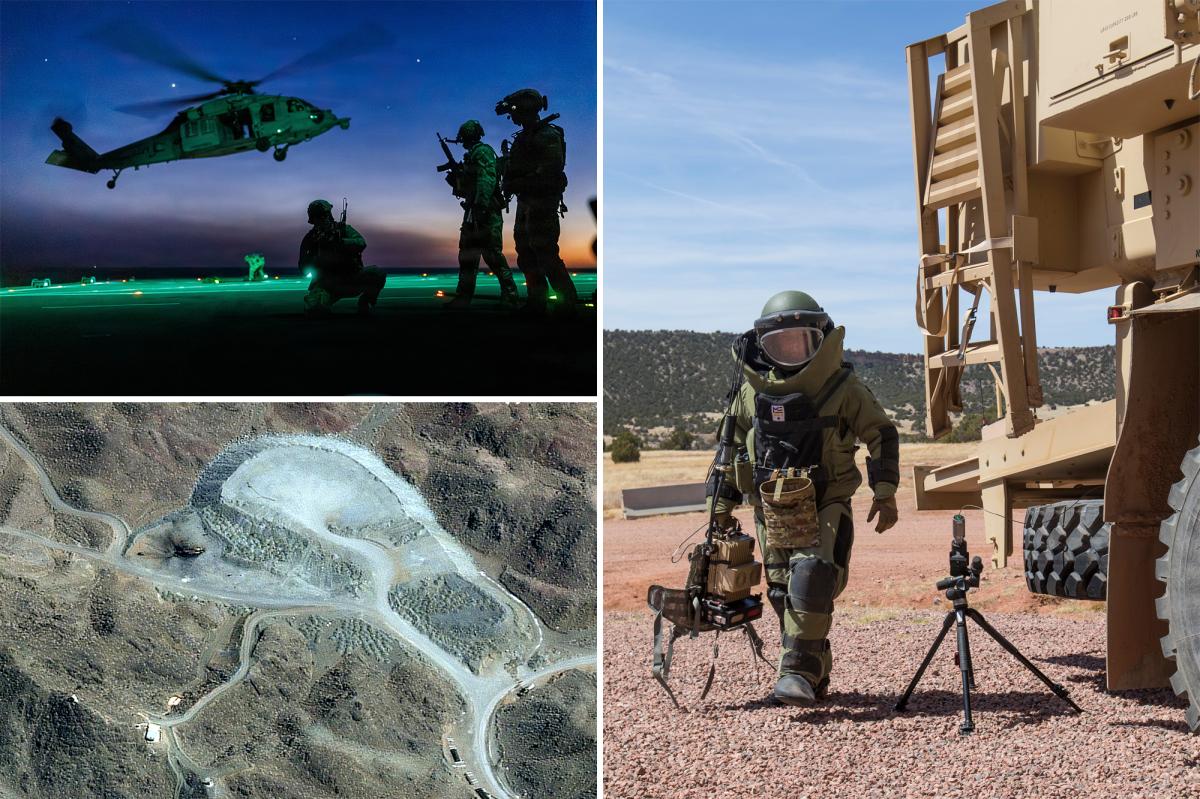
The extraordinary operation would deploy thousands of ground troops to storm multiple Iranian nuclear sites, navigating boobytraps and hostile defenses while engineering teams work to access heavily damaged and deliberately sabotaged facilities. A source with knowledge of military planning revealed the scale and complexity of the proposed action to the outlet.

Joseph Rodgers, deputy director of the Center for Strategic and International Studies, warned that military action may be the only viable option remaining. The negotiations aren’t going anywhere fast, he stated, suggesting that force may be necessary to eliminate Iran’s existing stockpile of nuclear material.

The mission architecture calls for establishing secure perimeters around targeted facilities while special operators conduct the actual retrieval operations. Elite units potentially involved include SEAL Team 6’s Silver Squadron, the 2nd Ranger Battalion, and the Army’s 21st Ordnance Company, according to reporting from independent outlet The High Side.

The 21st Ordnance Company would handle the technical challenge of safely extracting and transporting enriched uranium from the devastated Fordo facility and severely damaged Isfahan site. International Atomic Energy Agency figures from 2025 indicate Iran possesses upwards of 20,000 pounds of enriched uranium.

Logistical Nightmare in Hostile Territory

Rodgers characterized the operation as logistically intensive and exceptionally difficult, far more complex than the recent raid that captured Venezuelan strongman Nicolas Maduro from Cuban guards. Iran’s military capabilities, while degraded by recent strikes, remain formidable.

Military construction crews would need to excavate destroyed facility entrances while ground forces hold defensive positions against Iranian counterattacks. Maintaining a secure convoy route to extraction airstrips while sustaining operations presents a critical challenge, according to Richard Goldberg, who served as director for countering Iranian weapons of mass destruction on the White House National Security Council during the first Trump administration.

Complete aerial dominance over a sustained corridor would be essential to transport forces and seized materials to safe locations.

Iran Fortifies Against Expected Assault

Tehran has been actively preparing defensive measures at Isfahan, with intelligence reports indicating the placement of boobytraps, mines, and explosives throughout facility tunnels. Perimeter defense forces have been stationed in anticipation of an American raid.

Goldberg noted that the element of surprise has been lost. Both sides know the locations of the fixed targets.

A new complication has emerged at Pickaxe Mountain, where Iran recently relocated hundreds of nuclear centrifuges from the Natanz enrichment facility. The number of centrifuges now hidden inside the mountain remains unknown to Western intelligence.

Mission Profiles Vary by Target

The approach to Pickaxe Mountain would likely focus on destruction rather than retrieval, Goldberg explained. If airstrikes cannot collapse the facility, special operators would infiltrate to place explosives and destroy equipment in place before rapid exfiltration.

Success at Pickaxe could mirror the swift Maduro operation in Caracas — infiltrate, set charges, and withdraw quickly. This contrasts sharply with the prolonged defensive operations required at Isfahan and Fordo, where forces must secure perimeters long enough to extract massive quantities of nuclear material.

The intelligence community’s understanding of facility schematics and structural vulnerabilities remains critical to operational planning. Previous bunker-buster strikes successfully targeted the Fordo facility’s airshaft weak point, demonstrating the value of detailed architectural intelligence.

Whether the United States ultimately executes this unprecedented operation depends on diplomatic developments and intelligence assessments of Iran’s nuclear timeline.

With information from New York Post
Share:
Eleni Papadaki-Van Der Merwe

She was born in 1986 in Johannesburg, South Africa. She is the granddaughter of an immigrant from Crete who settled in the Greek community of Johannesburg (one of the largest in Africa). She holds a bachelor’s degree in International Relations and Political Science from the University of the Witwatersrand (Wits) in Johannesburg and a master’s degree in Journalism from Rhodes University in Grahamstown. She began her career at English-language media outlets in Johannesburg, covering politics and economics, with a focus on issues related to migration and the diaspora. She moved to Athens in 2015 to “return to her roots,” initially to pursue graduate studies, and has remained there permanently. She is married to an Afrikaner; they have two children and live in the southern suburbs of Athens.

The extraordinary operation would deploy thousands of ground troops to storm multiple Iranian nuclear sites, navigating boobytraps and hostile defenses while engineering teams work to access heavily damaged and deliberately sabotaged facilities. A source with knowledge of military planning revealed the scale and complexity of the proposed action to the outlet.

Joseph Rodgers, deputy director of the Center for Strategic and International Studies, warned that military action may be the only viable option remaining. The negotiations aren’t going anywhere fast, he stated, suggesting that force may be necessary to eliminate Iran’s existing stockpile of nuclear material.

The mission architecture calls for establishing secure perimeters around targeted facilities while special operators conduct the actual retrieval operations. Elite units potentially involved include SEAL Team 6’s Silver Squadron, the 2nd Ranger Battalion, and the Army’s 21st Ordnance Company, according to reporting from independent outlet The High Side.

The 21st Ordnance Company would handle the technical challenge of safely extracting and transporting enriched uranium from the devastated Fordo facility and severely damaged Isfahan site. International Atomic Energy Agency figures from 2025 indicate Iran possesses upwards of 20,000 pounds of enriched uranium.

Logistical Nightmare in Hostile Territory

Rodgers characterized the operation as logistically intensive and exceptionally difficult, far more complex than the recent raid that captured Venezuelan strongman Nicolas Maduro from Cuban guards. Iran’s military capabilities, while degraded by recent strikes, remain formidable.

Military construction crews would need to excavate destroyed facility entrances while ground forces hold defensive positions against Iranian counterattacks. Maintaining a secure convoy route to extraction airstrips while sustaining operations presents a critical challenge, according to Richard Goldberg, who served as director for countering Iranian weapons of mass destruction on the White House National Security Council during the first Trump administration.

Complete aerial dominance over a sustained corridor would be essential to transport forces and seized materials to safe locations.

Iran Fortifies Against Expected Assault

Tehran has been actively preparing defensive measures at Isfahan, with intelligence reports indicating the placement of boobytraps, mines, and explosives throughout facility tunnels. Perimeter defense forces have been stationed in anticipation of an American raid.

Goldberg noted that the element of surprise has been lost. Both sides know the locations of the fixed targets.

A new complication has emerged at Pickaxe Mountain, where Iran recently relocated hundreds of nuclear centrifuges from the Natanz enrichment facility. The number of centrifuges now hidden inside the mountain remains unknown to Western intelligence.

Mission Profiles Vary by Target

The approach to Pickaxe Mountain would likely focus on destruction rather than retrieval, Goldberg explained. If airstrikes cannot collapse the facility, special operators would infiltrate to place explosives and destroy equipment in place before rapid exfiltration.

Success at Pickaxe could mirror the swift Maduro operation in Caracas — infiltrate, set charges, and withdraw quickly. This contrasts sharply with the prolonged defensive operations required at Isfahan and Fordo, where forces must secure perimeters long enough to extract massive quantities of nuclear material.

The intelligence community’s understanding of facility schematics and structural vulnerabilities remains critical to operational planning. Previous bunker-buster strikes successfully targeted the Fordo facility’s airshaft weak point, demonstrating the value of detailed architectural intelligence.

Whether the United States ultimately executes this unprecedented operation depends on diplomatic developments and intelligence assessments of Iran’s nuclear timeline.

With information from New York Post