Necessary Cookies

Required for the site to function. Cannot be disabled.

Analytics Cookies

Help us understand how visitors interact with our site (Google Analytics via GTM).

Marketing Cookies

Used to track visitors and deliver personalised advertisements.

We use cookies to enhance your browsing experience and analyse site traffic. By clicking Accept All, you consent to our use of cookies. Privacy Policy
NewsFire Global
Home News Europe World Christianity Culture Wars Opinion Video
Information
About Us Authors Advertising Terms & Conditions Privacy Policy Contact
R2B Media
R2B NEWSFIRE.GR PAPAFOTIS.GR THRACTION HELLENIC CONSERVATIVES RIGHT2THEBONE YT
News World

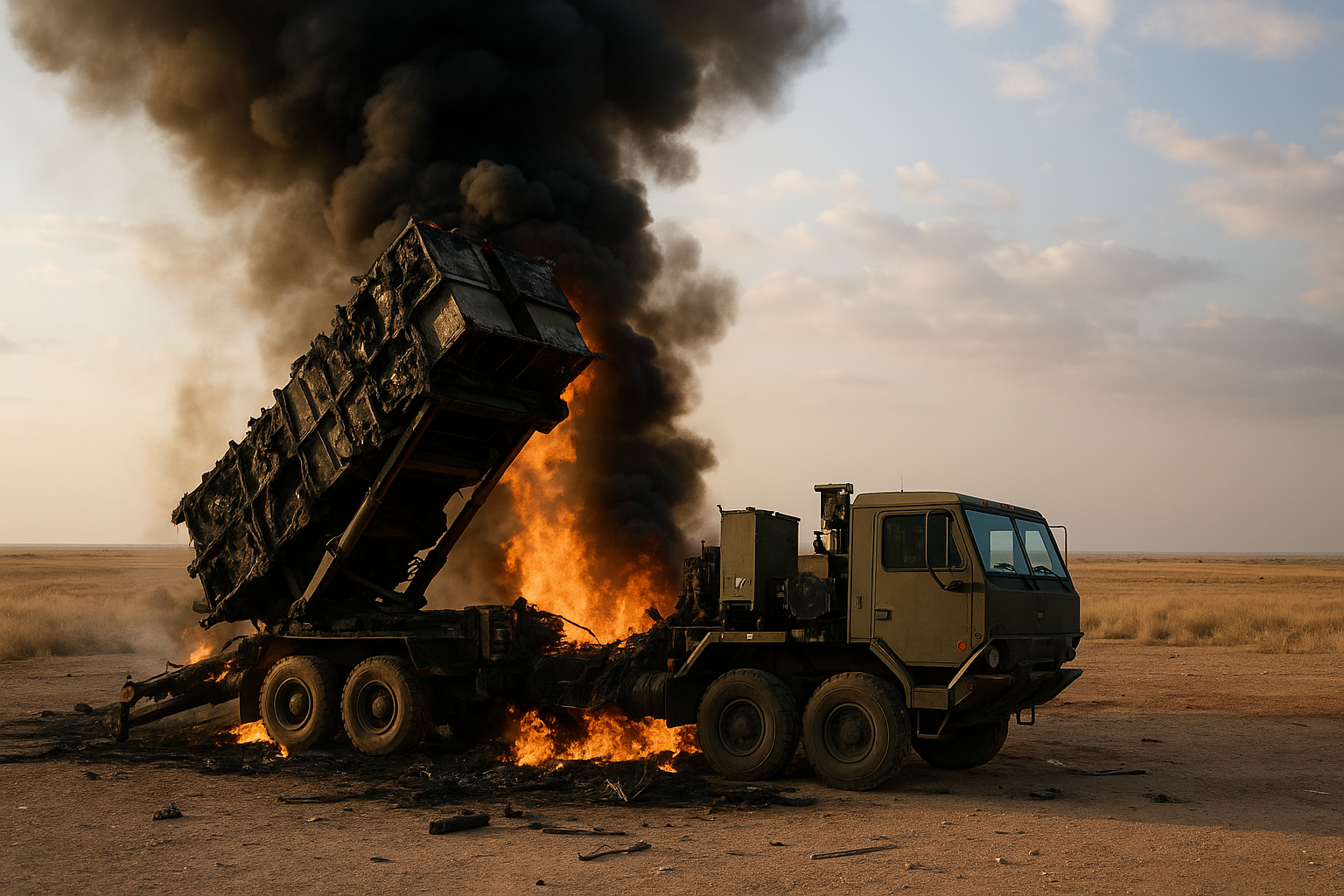
U.S. Patriot Launcher Destroyed by Iranian Drone Strike in Iraq

Greek defense analysts warn that a U.S. decision to supply F-35 stealth fighters to Turkey would give Ankara overwhelming air superiority over Greece's fourth-generation aircraft fleet.

JULY 19, 2026 AT 2:21 PM

The report, citing Greek defense analysts, warns that Ankara’s acquisition of fifth-generation stealth aircraft would grant Turkey an overwhelming air superiority advantage over the Hellenic Air Force, which currently operates fourth-generation platforms including F-16s and Rafale jets.

Strategic Imbalance in the Aegean

Greek military planners have long viewed the F-35 program as a critical component of maintaining regional deterrence. Athens has expressed interest in acquiring its own fleet of the advanced fighters, but any American decision to green-light Turkish procurement before or alongside Greek orders would eliminate Greece’s technological edge.

Turkey was originally a partner in the F-35 development consortium but was expelled from the program in 2019 after Ankara proceeded with the purchase of Russian S-400 air defense systems. Washington imposed sanctions and terminated Turkey’s participation, citing security concerns about Russian technology operating alongside NATO’s most advanced aircraft.

Erdogan’s Renewed Push

Turkish President Recep Tayyip Erdogan has recently intensified diplomatic efforts to rejoin the F-35 program, leveraging Turkey’s strategic position within NATO and its role in ongoing geopolitical tensions. Ankara has signaled willingness to address American concerns, though the S-400 systems remain operational on Turkish soil.

For Greece, the scenario represents a nightmare calculation. Turkish F-35s would possess stealth capabilities that current Greek air defense systems—including the recently upgraded S-300PMU1 batteries on Crete and Patriot systems on the mainland—would struggle to detect and engage effectively.

The Numbers Game

Turkey already maintains a quantitative advantage in military aircraft. If equipped with even a modest squadron of F-35s, Turkish forces could conduct reconnaissance and strike missions over disputed Aegean airspace with near impunity during the initial phases of any potential conflict.

Greek defense officials have privately acknowledged that without parallel or prior acquisition of fifth-generation fighters, the Hellenic Air Force would face severe operational constraints in defending national airspace and maritime zones.

Washington’s Dilemma

The United States faces competing pressures. Turkey remains a NATO ally controlling critical Black Sea access through the Bosporus and hosting vital American military installations. However, Greece has emerged as an increasingly reliable partner, offering expanded base access and aligning closely with Western positions on multiple fronts.

Any decision to restore Turkey’s F-35 access would likely trigger intense opposition in Athens and among Greek diaspora communities with significant political influence in Washington. Congressional opposition previously blocked Turkish acquisition, and similar legislative hurdles could resurface.

The situation underscores the fragile military equilibrium in the Eastern Mediterranean, where historical tensions between Greece and Turkey continue to simmer over territorial waters, airspace rights, and energy exploration zones. A shift in air power balance could embolden Ankara to adopt more aggressive postures in these ongoing disputes.

With information from Telegram @clashreport

Share:
Eleni Papadaki-Van Der Merwe

She was born in 1986 in Johannesburg, South Africa. She is the granddaughter of an immigrant from Crete who settled in the Greek community of Johannesburg (one of the largest in Africa). She holds a bachelor’s degree in International Relations and Political Science from the University of the Witwatersrand (Wits) in Johannesburg and a master’s degree in Journalism from Rhodes University in Grahamstown. She began her career at English-language media outlets in Johannesburg, covering politics and economics, with a focus on issues related to migration and the diaspora. She moved to Athens in 2015 to “return to her roots,” initially to pursue graduate studies, and has remained there permanently. She is married to an Afrikaner; they have two children and live in the southern suburbs of Athens.

The report, citing Greek defense analysts, warns that Ankara’s acquisition of fifth-generation stealth aircraft would grant Turkey an overwhelming air superiority advantage over the Hellenic Air Force, which currently operates fourth-generation platforms including F-16s and Rafale jets.

Strategic Imbalance in the Aegean

Greek military planners have long viewed the F-35 program as a critical component of maintaining regional deterrence. Athens has expressed interest in acquiring its own fleet of the advanced fighters, but any American decision to green-light Turkish procurement before or alongside Greek orders would eliminate Greece’s technological edge.

Turkey was originally a partner in the F-35 development consortium but was expelled from the program in 2019 after Ankara proceeded with the purchase of Russian S-400 air defense systems. Washington imposed sanctions and terminated Turkey’s participation, citing security concerns about Russian technology operating alongside NATO’s most advanced aircraft.

Erdogan’s Renewed Push

Turkish President Recep Tayyip Erdogan has recently intensified diplomatic efforts to rejoin the F-35 program, leveraging Turkey’s strategic position within NATO and its role in ongoing geopolitical tensions. Ankara has signaled willingness to address American concerns, though the S-400 systems remain operational on Turkish soil.

For Greece, the scenario represents a nightmare calculation. Turkish F-35s would possess stealth capabilities that current Greek air defense systems—including the recently upgraded S-300PMU1 batteries on Crete and Patriot systems on the mainland—would struggle to detect and engage effectively.

The Numbers Game

Turkey already maintains a quantitative advantage in military aircraft. If equipped with even a modest squadron of F-35s, Turkish forces could conduct reconnaissance and strike missions over disputed Aegean airspace with near impunity during the initial phases of any potential conflict.

Greek defense officials have privately acknowledged that without parallel or prior acquisition of fifth-generation fighters, the Hellenic Air Force would face severe operational constraints in defending national airspace and maritime zones.

Washington’s Dilemma

The United States faces competing pressures. Turkey remains a NATO ally controlling critical Black Sea access through the Bosporus and hosting vital American military installations. However, Greece has emerged as an increasingly reliable partner, offering expanded base access and aligning closely with Western positions on multiple fronts.

Any decision to restore Turkey’s F-35 access would likely trigger intense opposition in Athens and among Greek diaspora communities with significant political influence in Washington. Congressional opposition previously blocked Turkish acquisition, and similar legislative hurdles could resurface.

The situation underscores the fragile military equilibrium in the Eastern Mediterranean, where historical tensions between Greece and Turkey continue to simmer over territorial waters, airspace rights, and energy exploration zones. A shift in air power balance could embolden Ankara to adopt more aggressive postures in these ongoing disputes.

With information from Telegram @clashreport