Trump Says Iran Deal ‘Largely Negotiated’
President Trump announced that a comprehensive peace agreement between the United States, Iran, and multiple regional partners has been largely negotiated, with provisions including reopening the Strait of Hormuz.
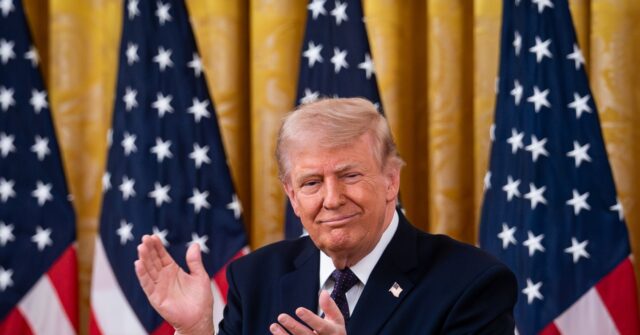

President Trump Announces Iran Peace Deal “Largely Negotiated” as Regional Powers Align
Donald Trump declared on Saturday that a comprehensive peace agreement between the United States, Iran, and multiple regional partners has been substantially finalized, according to Breitbart News. The landmark accord will include provisions to open the Strait of Hormuz, a critical waterway for global commerce that has been the subject of intensifying pressure from American forces.
Through his Truth Social platform, the President revealed that following separate diplomatic calls with Middle Eastern leaders and Israeli Prime Minister Benjamin Netanyahu, a foundational “Memorandum of Understanding” between Washington and Tehran has been reached in principle. The negotiations involved high-level officials including Saudi Crown Prince Mohammed bin Salman, UAE President Mohammed bin Zayed Al Nahyan, Qatari Emir Tamim bin Hamad bin Khalifa Al Thani, Pakistani Chief of Defence Syed Asim Munir Ahmed Shah, Turkish President Recep Tayyip Erdoğan, Egyptian President Abdel Fattah El-Sisi, King Abdullah II of Jordan, and Bahraini King Hamad bin Isa Al Khalifa.
“An Agreement has been largely negotiated, subject to finalization between the United States of America, the Islamic Republic of Iran, and the various other Countries, as listed,” Trump stated, adding that final details are “currently being discussed” with an announcement forthcoming.
The President emphasized that the agreement’s scope extends beyond the Strait’s reopening, signaling a broader diplomatic framework addressing longstanding disputes. His announcement followed a stark warning delivered earlier Saturday, where Trump presented Tehran with a binary choice: negotiate a substantive agreement or face unprecedented military consequences.
“I think one of two things will happen: either I hit them harder than they have ever been hit, or we are going to sign a deal that is good,” Trump told Axios during the same day’s discussions.
The President’s conditions remained non-negotiable: any agreement must comprehensively address Iran’s nuclear weapons program and its enriched uranium stockpile—issues that have remained central to American strategic concerns throughout successive administrations.
Economic Pressure Intensifies Negotiations
The diplomatic breakthrough coincided with escalating economic coercion against the Iranian regime. U.S. Central Command announced Saturday that American naval forces have redirected approximately 100 commercial vessels destined for Iranian ports, effectively strangling the nation’s oil export capabilities and creating severe fiscal strain.
Admiral Brad Cooper, CENTCOM Commander, praised the operation’s effectiveness, stating that “they have been highly effective by executing the mission with precision and professionalism, allowing zero trade into and out of Iranian ports which has squeezed Iran economically.”
This military enforcement strategy, which has persisted even following last month’s ceasefire agreement between the United States, Israel, and Iran, provided crucial leverage for the diplomatic negotiations.
State Department Signals Diplomatic Path Forward
Speaking from India during an official diplomatic visit, U.S. Secretary of State Marco Rubio previewed the emerging consensus, noting that substantive progress had been achieved in recent discussions.
Rubio articulated three non-negotiable American positions: Iran must permanently renounce nuclear weapons development, remove tolls or barriers from the Strait of Hormuz to ensure freedom of navigation, and transfer its enriched uranium reserves. He emphasized that “the president’s preference is always to solve problems such as these through a negotiated diplomatic solution.”
The State Department chief reiterated Trump’s firm resolve that resolution would occur regardless of diplomatic success, suggesting that while Washington prioritizes negotiation, the administration maintains comprehensive contingency options should talks fail.
With information from Breitbart News