Necessary Cookies

Required for the site to function. Cannot be disabled.

Analytics Cookies

Help us understand how visitors interact with our site (Google Analytics via GTM).

Marketing Cookies

Used to track visitors and deliver personalised advertisements.

We use cookies to enhance your browsing experience and analyse site traffic. By clicking Accept All, you consent to our use of cookies. Privacy Policy
NewsFire Global
Home News Europe World Christianity Culture Wars Opinion Video
Information
About Us Authors Advertising Terms & Conditions Privacy Policy Contact
R2B Media
R2B NEWSFIRE.GR PAPAFOTIS.GR THRACTION HELLENIC CONSERVATIVES RIGHT2THEBONE YT
News World

Trump delays 50% Canada tariffs for three days, announces deal

President Trump delayed planned 50% tariffs on Canadian imports for three days amid negotiations that may revive the Keystone XL pipeline project canceled under Biden.
Stefanos Banos
Stefanos Banos Staff Writer
AUGUST 19, 2026 AT 11:17 AM

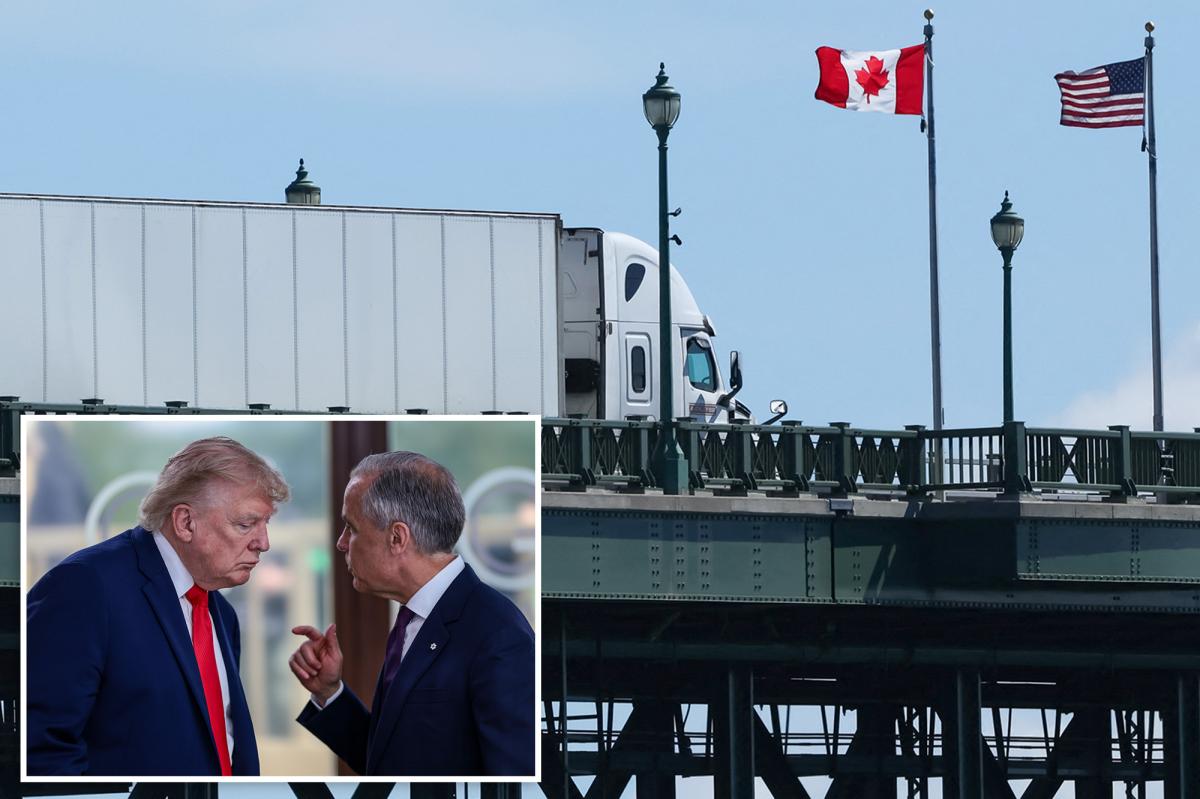
The president revealed the decision on Truth Social late Tuesday, just hours before the sweeping duties were scheduled to take effect, according to Samuel Chamberlain and Victor Nava writing in New York Post.

I have paused the 50% Tariffs against Canada, Trump wrote, citing progress toward finalizing a deal between Washington and Ottawa. He added that the Keystone XL pipeline, previously terminated under former President Joe Biden, may be resurrected from cancellation.

The president subsequently shared an AI-generated image depicting himself pulling a pipeline marked “Keystone” from the earth beside a broken tombstone labeled “Buried by Biden.”

The announcement followed intensive day-long negotiations between Trump and Canadian Prime Minister Mark Carney.

Keystone XL: A Long-Stalled Energy Project

First proposed in 2008, the Keystone XL pipeline was designed to transport up to 830,000 barrels of crude oil daily across approximately 1,200 miles from Alberta, Canada to Nebraska, connecting to Gulf Coast refineries.

Environmental activist pressure halted the project during the Obama administration. Trump revived it near the conclusion of his first term, only for Biden to revoke a critical border-crossing permit in January 2021. Calgary-based TC Energy, the company behind the initiative, formally abandoned the project that July.

Tariff Impact and Trade Tensions

The 50% tariff would have affected roughly $20 billion in Canadian products—approximately 5% of Canada’s annual exports to the United States. Items including wine, hockey sticks, and cement were slated for duties, while critical minerals, fish, potash, and energy products faced exemptions.

Canada had warned of retaliatory measures against any new American tariffs, escalating a trade dispute between nations that exchanged $880 billion in goods and services last year.

Growing frustration in Canada has manifested in a petition demanding the expulsion of U.S. Ambassador Pete Hoekstra, a former Michigan congressman and Trump ally, which has gathered nearly 218,000 signatures since July 21.

Carney addressed reporters Monday in French, acknowledging that negotiations were underway but declining to discuss details publicly.

Legal Framework

Trump invoked Section 338 of the Tariff Act of 1930 to authorize the duties last month, shortly after being photographed with Carney at the World Cup Final between Spain and Argentina.

The Depression-era statute, widely criticized by economists for exacerbating the global economic crisis of that period, permits presidents to impose tariffs up to 50% on imports from countries that discriminate against American businesses.

Trump has maintained that Canada discriminates against U.S. exports of automobiles, alcohol, and cheese. Canada and China were the only nations to impose retaliatory tariffs following Trump’s “Liberation Day” levies last year.

With information from New York Post
Share:
Stefanos Banos
Stefanos Banos

Stefanos Banos was born in Piraeus and is an editor at NewsFire.GR, specializing in political analysis and international relations. He graduated from the Department of Communication and Media at the University of Bremen in Germany, where he also completed his Master of Arts in Communication and Media Studies. Married to Zoi, he is a proud father of three boys.

The president revealed the decision on Truth Social late Tuesday, just hours before the sweeping duties were scheduled to take effect, according to Samuel Chamberlain and Victor Nava writing in New York Post.

I have paused the 50% Tariffs against Canada, Trump wrote, citing progress toward finalizing a deal between Washington and Ottawa. He added that the Keystone XL pipeline, previously terminated under former President Joe Biden, may be resurrected from cancellation.

The president subsequently shared an AI-generated image depicting himself pulling a pipeline marked “Keystone” from the earth beside a broken tombstone labeled “Buried by Biden.”

The announcement followed intensive day-long negotiations between Trump and Canadian Prime Minister Mark Carney.

Keystone XL: A Long-Stalled Energy Project

First proposed in 2008, the Keystone XL pipeline was designed to transport up to 830,000 barrels of crude oil daily across approximately 1,200 miles from Alberta, Canada to Nebraska, connecting to Gulf Coast refineries.

Environmental activist pressure halted the project during the Obama administration. Trump revived it near the conclusion of his first term, only for Biden to revoke a critical border-crossing permit in January 2021. Calgary-based TC Energy, the company behind the initiative, formally abandoned the project that July.

Tariff Impact and Trade Tensions

The 50% tariff would have affected roughly $20 billion in Canadian products—approximately 5% of Canada’s annual exports to the United States. Items including wine, hockey sticks, and cement were slated for duties, while critical minerals, fish, potash, and energy products faced exemptions.

Canada had warned of retaliatory measures against any new American tariffs, escalating a trade dispute between nations that exchanged $880 billion in goods and services last year.

Growing frustration in Canada has manifested in a petition demanding the expulsion of U.S. Ambassador Pete Hoekstra, a former Michigan congressman and Trump ally, which has gathered nearly 218,000 signatures since July 21.

Carney addressed reporters Monday in French, acknowledging that negotiations were underway but declining to discuss details publicly.

Legal Framework

Trump invoked Section 338 of the Tariff Act of 1930 to authorize the duties last month, shortly after being photographed with Carney at the World Cup Final between Spain and Argentina.

The Depression-era statute, widely criticized by economists for exacerbating the global economic crisis of that period, permits presidents to impose tariffs up to 50% on imports from countries that discriminate against American businesses.

Trump has maintained that Canada discriminates against U.S. exports of automobiles, alcohol, and cheese. Canada and China were the only nations to impose retaliatory tariffs following Trump’s “Liberation Day” levies last year.

With information from New York Post