Necessary Cookies

Required for the site to function. Cannot be disabled.

Analytics Cookies

Help us understand how visitors interact with our site (Google Analytics via GTM).

Marketing Cookies

Used to track visitors and deliver personalised advertisements.

We use cookies to enhance your browsing experience and analyse site traffic. By clicking Accept All, you consent to our use of cookies. Privacy Policy
NewsFire Global
Home News Europe World Christianity Culture Wars Opinion Video
Information
About Us Authors Advertising Terms & Conditions Privacy Policy Contact
R2B Media
R2B NEWSFIRE.GR PAPAFOTIS.GR THRACTION HELLENIC CONSERVATIVES RIGHT2THEBONE YT
News Christianity

Too Catholic To Be French Officers, Cadets Told

A French military academy systematically excluded applicants from independent Catholic schools, with officials defending the discriminatory policy in official documents.
Stefanos Banos
Stefanos Banos Staff Writer
JULY 13, 2026 AT 2:49 PM

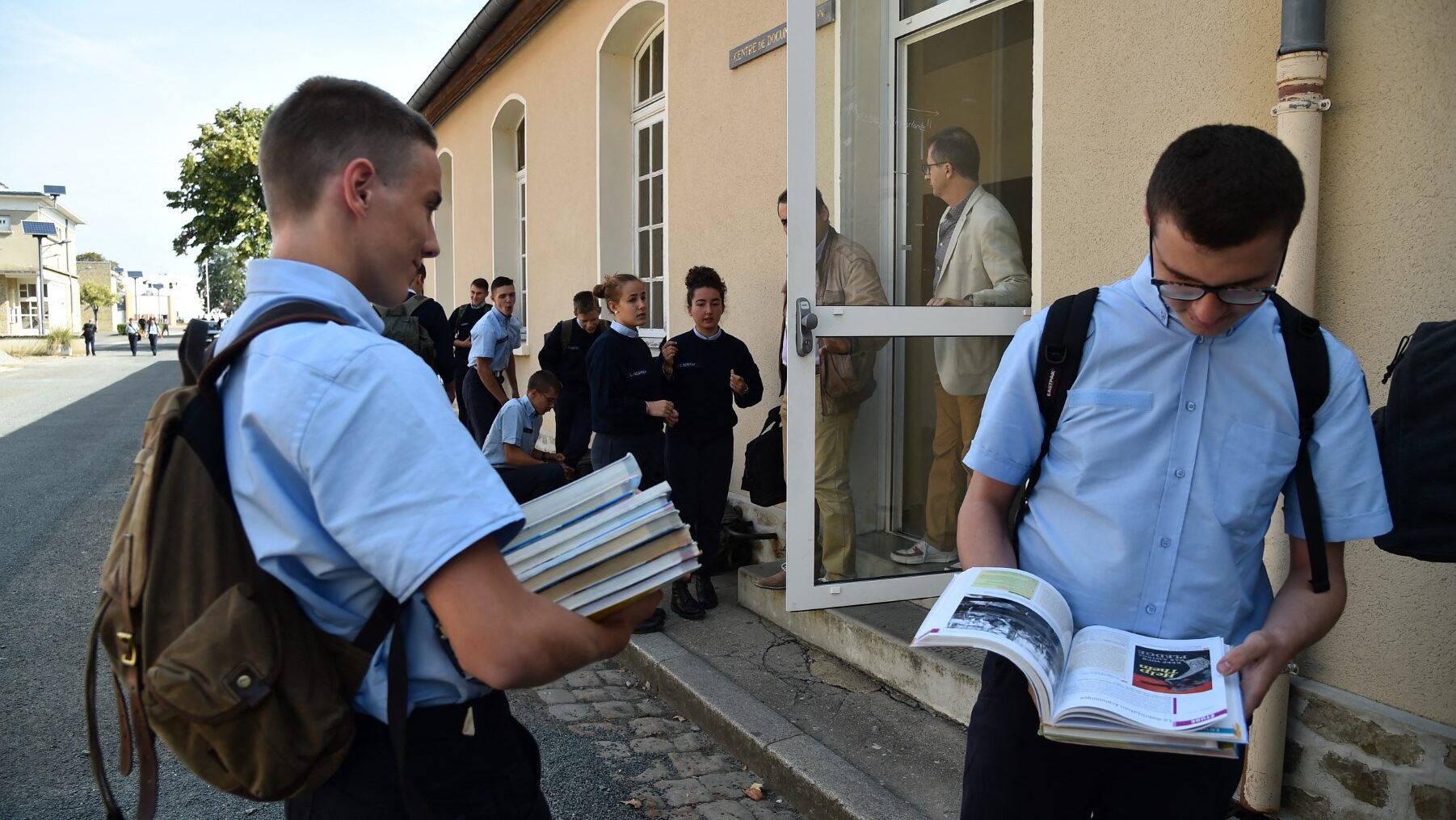
According to The European Conservative, the Prytanée de la Flèche—a renowned military academy that prepares students for elite officer training at Saint-Cyr and the Naval Academy—has been deliberately excluding applications from pupils attending independent Catholic schools.

The revelation came to light through testimony from multiple families whose high-achieving children were rejected without explanation. Far from being an administrative error, school management openly defended the policy in official documentation.

The exclusionary practice was explicitly stated in the institution’s Parcoursup report for the 2025 intake, the centralized system managing French student applications for higher education. Enrollment in non-state-funded schools was listed as a disqualifying criterion, meaning affected applicants were never even ranked or reviewed.

The discriminatory model extends beyond La Flèche to other prominent French military schools, including those in Autun and Aix-en-Provence, suggesting a coordinated policy rather than isolated incidents.

Parents of rejected students—many with outstanding academic records—were bewildered by the decisions. Investigation revealed a clear pattern: all affected pupils had attended traditionalist Catholic schools, either affiliated with the Institute of Christ the King Sovereign Priest or connected to the Priestly Fraternity of St Pius X.

These independent Catholic institutions maintain strong reputations for educational excellence and rigorous academic standards, making the blanket rejections even more suspect.

The case raises a troubling question about the future of France’s military establishment: can the armed forces afford to exclude families who instill both faith and patriotic values in their children—precisely the qualities that have historically produced officers willing to serve and sacrifice for their nation?

This scandal serves as a stark reminder that victims of institutional discrimination are not always those promoted by mainstream narratives or professional advocacy groups. Traditional Catholic families, despite their historic contribution to military service, now find themselves targets of systematic exclusion.

The advocacy organization Créer son école has taken up the cause, challenging what appears to be ideologically motivated discrimination against religious families in France’s military education system.

With information from The European Conservative

Share:
Stefanos Banos
Stefanos Banos

Stefanos Banos was born in Piraeus and is an editor at NewsFire.GR, specializing in political analysis and international relations. He graduated from the Department of Communication and Media at the University of Bremen in Germany, where he also completed his Master of Arts in Communication and Media Studies. Married to Zoi, he is a proud father of three boys.

According to The European Conservative, the Prytanée de la Flèche—a renowned military academy that prepares students for elite officer training at Saint-Cyr and the Naval Academy—has been deliberately excluding applications from pupils attending independent Catholic schools.

The revelation came to light through testimony from multiple families whose high-achieving children were rejected without explanation. Far from being an administrative error, school management openly defended the policy in official documentation.

The exclusionary practice was explicitly stated in the institution’s Parcoursup report for the 2025 intake, the centralized system managing French student applications for higher education. Enrollment in non-state-funded schools was listed as a disqualifying criterion, meaning affected applicants were never even ranked or reviewed.

The discriminatory model extends beyond La Flèche to other prominent French military schools, including those in Autun and Aix-en-Provence, suggesting a coordinated policy rather than isolated incidents.

Parents of rejected students—many with outstanding academic records—were bewildered by the decisions. Investigation revealed a clear pattern: all affected pupils had attended traditionalist Catholic schools, either affiliated with the Institute of Christ the King Sovereign Priest or connected to the Priestly Fraternity of St Pius X.

These independent Catholic institutions maintain strong reputations for educational excellence and rigorous academic standards, making the blanket rejections even more suspect.

The case raises a troubling question about the future of France’s military establishment: can the armed forces afford to exclude families who instill both faith and patriotic values in their children—precisely the qualities that have historically produced officers willing to serve and sacrifice for their nation?

This scandal serves as a stark reminder that victims of institutional discrimination are not always those promoted by mainstream narratives or professional advocacy groups. Traditional Catholic families, despite their historic contribution to military service, now find themselves targets of systematic exclusion.

The advocacy organization Créer son école has taken up the cause, challenging what appears to be ideologically motivated discrimination against religious families in France’s military education system.

With information from The European Conservative