TikTok and Meta Ramp Up Censorship Over Ceuta Migrant Crisis
Meta and TikTok have agreed to increase censorship efforts after Brussels blamed social media disinformation for a migrant surge that saw over 72,000 people storm into Spain's Ceuta from Morocco.
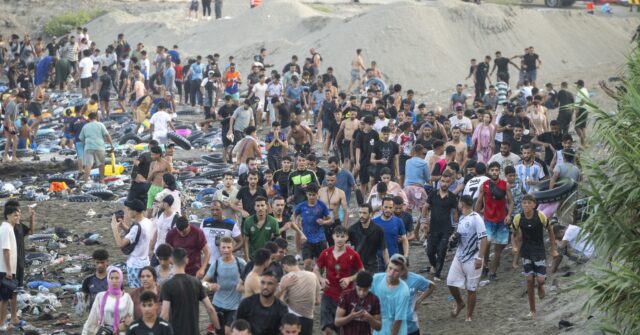
The European Commission revealed last week that after discussions with the two American technology companies—held under the looming threat of substantial financial penalties from the bloc—both Facebook owner Meta and TikTok pledged to enhance their efforts to suppress what Brussels labels disinformation related to the border crisis that saw more than 72,000 illegal migrants storm into Ceuta from Morocco in a single day.
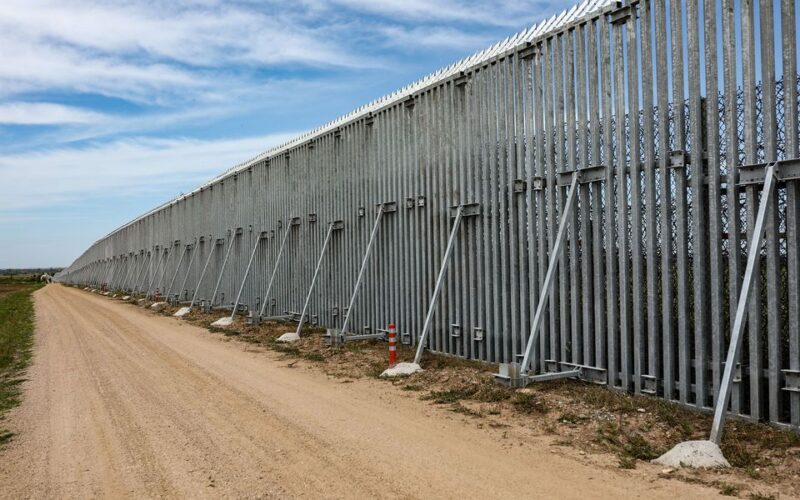
Video footage showing thousands of predominantly young men scaling the poorly defended border provoked widespread criticism of the open borders agenda pursued by Spain’s socialist government in Madrid and the globalist bureaucrats in Brussels.
The unprecedented surge has triggered recriminations across multiple parties, with some in Spain pointing fingers at Morocco’s Islamist government, others blaming Prime Minister Pedro Sánchez‘s pro-mass migration Socialist Workers Party administration in Madrid, and still others identifying people smuggling networks as the driving force behind the migrant invasion.
Brussels, however, appears to be positioning one of its preferred targets—social media platforms—as the scapegoat for the complete failure to secure Spain’s border, and by extension the European Union’s external frontier, against the influx of tens of thousands of illegal aliens. The European Commission claims that rumours circulated in the hours preceding the invasion stating that the Ceuta border was open.
European Commission spokesman Balazs Ujvari stated that the bloc’s federal branch has reached an understanding with Europol and the two social media companies to implement a real-time coordination mechanism during major incidents involving local fact-checkers, as reported by Le Monde.
The mechanism operates under the EU’s Digital Services Act censorship framework and was voluntarily activated by both Meta and TikTok during the Ceuta crisis. The system, coordinated by the European Commission, aims to deliver what Brussels terms better information from fact-checkers and enables the Commission to flag harmful disinformation concerning potential mass border crossings.
Ujvari confirmed that the platforms activated their crisis protocols and that an ad hoc escalation and cooperation mechanism was established. He added that while Brussels currently views this as an effective instrument, the Commission stands ready to escalate measures if necessary.
Under the Digital Services Act, the European Union possesses authority to impose fines of up to 6 per cent of global revenue on large social media companies deemed to have failed in removing so-called disinformation and hate speech. Among major American social media firms, only Elon Musk‘s X platform has faced significant penalties since the DSA took effect.
Though Brussels officially justified the fine based on deceptive practices involving blue checkmark verification, observers have characterized the €120 million penalty as retaliation for Musk’s reduction of censorship on the platform.
A Meta spokesman indicated the company has deployed a dedicated team to monitor the Ceuta situation in real time and remove content violating company policies, including material offering to provide, facilitate, or seek human smuggling services.
With information from Breitbart News