Necessary Cookies

Required for the site to function. Cannot be disabled.

Analytics Cookies

Help us understand how visitors interact with our site (Google Analytics via GTM).

Marketing Cookies

Used to track visitors and deliver personalised advertisements.

We use cookies to enhance your browsing experience and analyse site traffic. By clicking Accept All, you consent to our use of cookies. Privacy Policy
NewsFire Global
Home News Europe World Christianity Culture Wars Opinion Video
Information
About Us Authors Advertising Terms & Conditions Privacy Policy Contact
R2B Media
R2B NEWSFIRE.GR PAPAFOTIS.GR THRACTION HELLENIC CONSERVATIVES RIGHT2THEBONE YT
News Europe

Spain Braces for 104°F Heat as UK Issues Amber Health Warnings

Europe braces for dangerous heatwave with Spain expecting 40C temperatures, Britain issuing amber health warnings, and Romania shutting its nuclear plant due to low Danube levels.

Dimitris Papafotis
Dimitris Papafotis Editor in Chief
AUGUST 13, 2026 AT 12:21 PM

The extreme weather has triggered emergency measures across the continent, with France placing 80 departments under orange heat warning and Romania taking the unprecedented step of shutting down its entire nuclear power infrastructure.

England Could See Hottest August Day on Record

The Met Office has issued an amber warning stretching from London to Sheffield, covering the South East, East Midlands, East of England, West Midlands and South Yorkshire. The warning remains in effect from 9am to midnight on Thursday.

Met Office forecaster Alex Burkill said temperatures in affected areas could reach highs of around 36C, 37C, or possibly 38C, as Guardian Environment reports.

Temperatures could reach highs of around 36, 37, possibly 38C, Burkill stated, warning that such extreme heat could damage infrastructure including railway lines and roads not designed for these conditions.

If temperatures exceed 38.5C, Britain could record its hottest August day ever, though forecasters say this outcome remains unlikely.

Romania Shuts Down Nuclear Plant as Danube Hits Record Lows

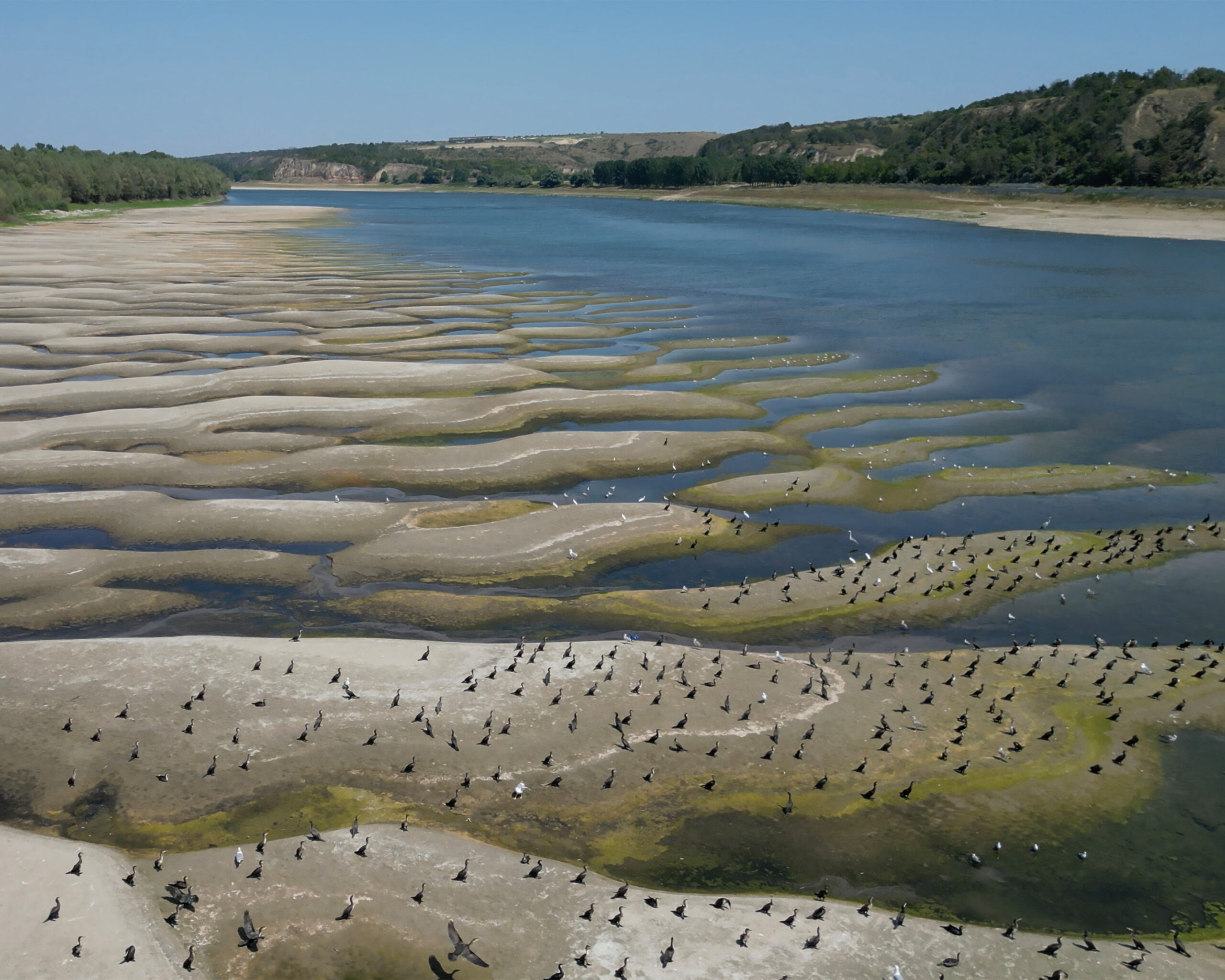
Romania has begun a complete shutdown of its Cernavoda nuclear power plant after water levels in the Danube River, used to cool the facility, dropped to historic lows. The national nuclear energy company Nuclearelectrica had already shut down one of the plant’s two reactors last month.

The plant typically generates one-fifth of Romania’s total electricity supply. Despite desperate measures including blowing up a rock formation and sinking four barges filled with rocks to divert water flows, the second reactor also required shutdown due to the continuing drop in river levels.

Wildfire Crisis Grips United Kingdom

British Prime Minister Andy Burnham announced the government will consider banning disposable barbecues as wildfires continue to devastate areas across the country.

England and Wales have already recorded as many wildfires this year as in all of 2025. Data from the National Fire Chiefs Council shows 1,017 wildfires have been recorded in England and Wales this year, matching last year’s record-breaking total.

Nearly three-quarters of England and all of Wales are now in drought conditions following record dry weather in July and a dry start to August, placing severe pressure on water resources for households, agriculture and the environment.

Eurovision Announces Burgas Venue Amid Controversy

In other news, the European Broadcasting Union has selected Burgas, a Black Sea coastal city in Bulgaria, to host the 2027 Eurovision song contest.

The 71st annual competition follows last year’s controversy over Israel’s participation, which prompted Spain, the Netherlands, Ireland, Iceland and Slovenia to boycott the event in protest against the Gaza war.

The EBU has introduced new rules stipulating that countries involved in armed conflict may not automatically host the final even if their entry wins the contest. However, countries at war will not face automatic exclusion from participation.

Under the new regulations, winning Eurovision no longer guarantees the right to host if armed conflict, sensitive geopolitical situations, or other circumstances materially affect the security, safety or stability of the winning country or its immediate region.

The EBU also reduced the number of votes individual members of the public can cast from 20 to 10, though this change failed to convince the five boycotting nations to return.

With information from Guardian Environment

Share:
Dimitris Papafotis
Dimitris Papafotis

Dimitris Papafotis is the editor-in-chief of NewsFire.GR. He was born and raised in Athens. He studied at the Journalism Workshop (1991-1993). He currently lives in Pyrgos, Ilia, where he has been active in radio and various newspapers, while also maintaining his personal blog, Papafotis.gr.

Recent News

The extreme weather has triggered emergency measures across the continent, with France placing 80 departments under orange heat warning and Romania taking the unprecedented step of shutting down its entire nuclear power infrastructure.

England Could See Hottest August Day on Record

The Met Office has issued an amber warning stretching from London to Sheffield, covering the South East, East Midlands, East of England, West Midlands and South Yorkshire. The warning remains in effect from 9am to midnight on Thursday.

Met Office forecaster Alex Burkill said temperatures in affected areas could reach highs of around 36C, 37C, or possibly 38C, as Guardian Environment reports.

Temperatures could reach highs of around 36, 37, possibly 38C, Burkill stated, warning that such extreme heat could damage infrastructure including railway lines and roads not designed for these conditions.

If temperatures exceed 38.5C, Britain could record its hottest August day ever, though forecasters say this outcome remains unlikely.

Romania Shuts Down Nuclear Plant as Danube Hits Record Lows

Romania has begun a complete shutdown of its Cernavoda nuclear power plant after water levels in the Danube River, used to cool the facility, dropped to historic lows. The national nuclear energy company Nuclearelectrica had already shut down one of the plant’s two reactors last month.

The plant typically generates one-fifth of Romania’s total electricity supply. Despite desperate measures including blowing up a rock formation and sinking four barges filled with rocks to divert water flows, the second reactor also required shutdown due to the continuing drop in river levels.

Wildfire Crisis Grips United Kingdom

British Prime Minister Andy Burnham announced the government will consider banning disposable barbecues as wildfires continue to devastate areas across the country.

England and Wales have already recorded as many wildfires this year as in all of 2025. Data from the National Fire Chiefs Council shows 1,017 wildfires have been recorded in England and Wales this year, matching last year’s record-breaking total.

Nearly three-quarters of England and all of Wales are now in drought conditions following record dry weather in July and a dry start to August, placing severe pressure on water resources for households, agriculture and the environment.

Eurovision Announces Burgas Venue Amid Controversy

In other news, the European Broadcasting Union has selected Burgas, a Black Sea coastal city in Bulgaria, to host the 2027 Eurovision song contest.

The 71st annual competition follows last year’s controversy over Israel’s participation, which prompted Spain, the Netherlands, Ireland, Iceland and Slovenia to boycott the event in protest against the Gaza war.

The EBU has introduced new rules stipulating that countries involved in armed conflict may not automatically host the final even if their entry wins the contest. However, countries at war will not face automatic exclusion from participation.

Under the new regulations, winning Eurovision no longer guarantees the right to host if armed conflict, sensitive geopolitical situations, or other circumstances materially affect the security, safety or stability of the winning country or its immediate region.

The EBU also reduced the number of votes individual members of the public can cast from 20 to 10, though this change failed to convince the five boycotting nations to return.

With information from Guardian Environment