Necessary Cookies

Required for the site to function. Cannot be disabled.

Analytics Cookies

Help us understand how visitors interact with our site (Google Analytics via GTM).

Marketing Cookies

Used to track visitors and deliver personalised advertisements.

We use cookies to enhance your browsing experience and analyse site traffic. By clicking Accept All, you consent to our use of cookies. Privacy Policy
NewsFire Global
Home News Europe World Christianity Culture Wars Opinion Video
Information
About Us Authors Advertising Terms & Conditions Privacy Policy Contact
R2B Media
R2B NEWSFIRE.GR PAPAFOTIS.GR THRACTION HELLENIC CONSERVATIVES RIGHT2THEBONE YT
News World

Red privilege alive and well when it comes to Jews

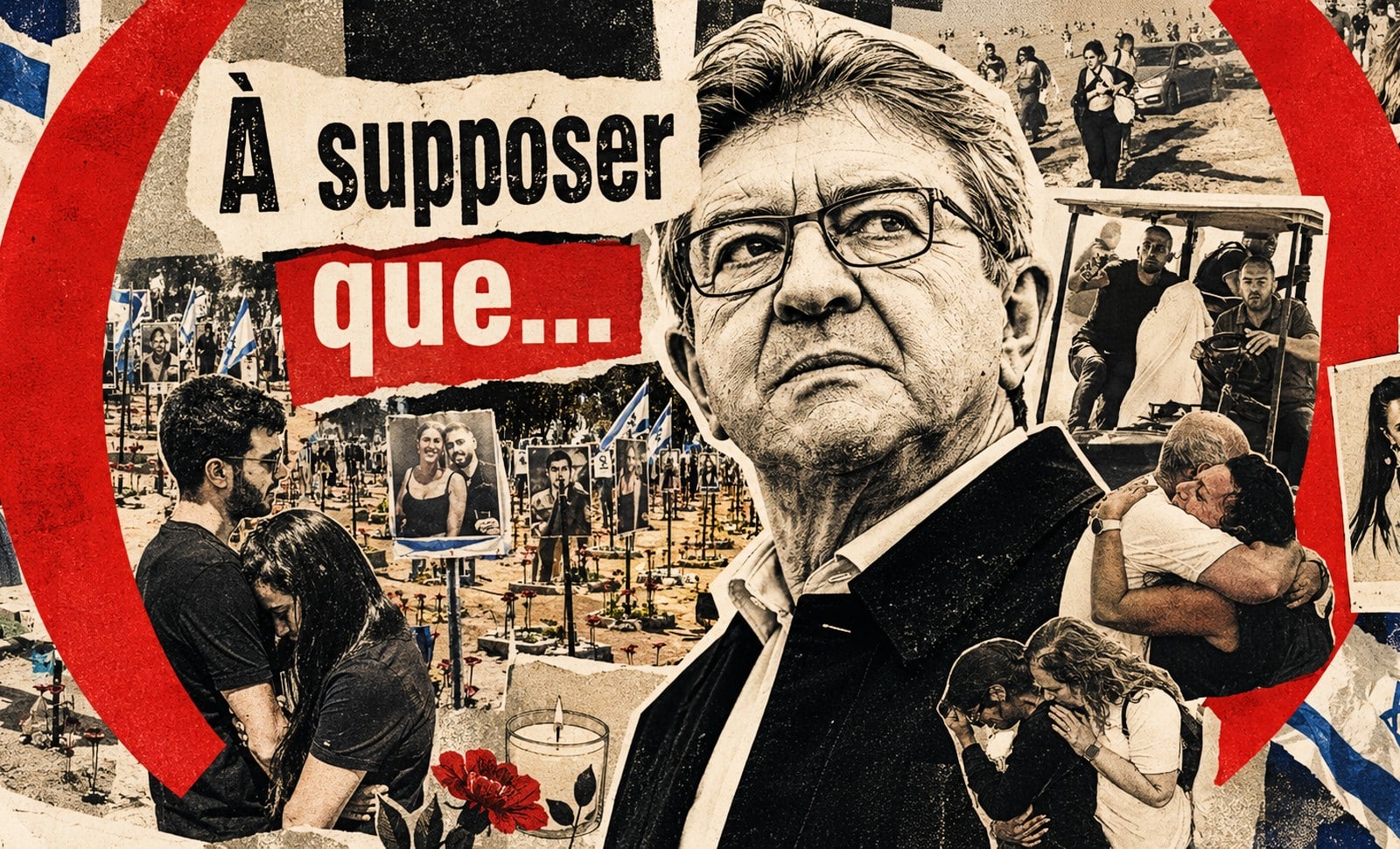
French far-left leader Jean-Luc Mélenchon sparked outrage by questioning whether the October 7th Hamas massacre constituted terrorism while defending an ally facing terrorism apology charges.
JULY 25, 2026 AT 12:49 PM

On June 25th, Mélenchon appeared before a Paris court to support Anasse Kazib, a militant from the Trotskyist group Permanent Revolution who faces prosecution for apology of terrorism. Kazib had described the October 7, 2023 attack as a “surprise offensive against the colonialist state of Israel” and labeled Hamas as “Palestinian resistance,” according to Causeur.

While denouncing France’s terrorism apology law during his court appearance, Mélenchon made a statement that has drawn sharp condemnation. He declared it “rather stupid to believe that there would be among us people who rejoice in terrorism, assuming that the acts we are talking about are indeed terrorism.”

The phrase “assuming that” has triggered accusations of historical revisionism. The October 7th attack resulted in over 1,200 deaths, including men, women, and infants. Civilians were slaughtered in their homes, mass rapes occurred without discrimination by sex, children were burned, and hostages were tortured—all documented on film.

Pattern of Doubt and Deflection

Gilles-William Goldnadel, president of Lawyers Without Borders, writing in Causeur, characterized Mélenchon’s remarks as “low-grade negationism” that introduces doubt through calculated rhetorical maneuvering rather than outright denial.

Mélenchon went further, suggesting that “the question of the form of resistance one opposes to oppression and occupation is a matter for discussion.” This framing appears to treat the deliberate massacre of Jewish civilians targeted specifically as Jews as a debatable tactical choice.

Goldnadel argues this represents not an aberration but a consistent pattern. He points to Mélenchon’s repeated attacks on the Representative Council of Jewish Institutions of France, his references to “international finance,” his defense of Jeremy Corbyn against antisemitism accusations, and his comment about Jesus being “put on the cross by his own compatriots” as forming a coherent record.

Media Double Standard

The response from France’s progressive media has been notably muted, according to the analysis. While these same outlets scrutinize every statement from the political right, they appear reluctant to apply terms like “antisemitism” or “negationism” when addressing statements from the radical left.

Goldnadel contends that Mélenchon represents a particularly insidious form of danger—not a street-level antisemite shouting slogans, but a political figure who provides legitimacy and opens doors for such sentiments. He does so, the argument continues, with the tacit approval of a media class that claims moral authority.

More Than Political Positioning

The October 7th attack was not an “armed offensive” but an Islamist terrorist pogrom, Goldnadel asserts. Casting doubt on this characterization, even through semantic maneuvering, transcends political positioning and enters the realm of moral and historical corruption.

The article concludes that for French Jews, the double standard applied to the radical left—what Goldnadel terms “red privilege”—remains glaringly apparent. A political figure who continues to receive accommodating treatment from portions of the media establishment despite a pattern of statements that leave a “trail of doubt and wounds for French Jews.”

Mélenchon’s France Unbowed party remains a major force in French left-wing politics, making his statements particularly consequential for the country’s Jewish community and broader political discourse around terrorism and antisemitism.

With information from Causeur

Share:
Eleni Papadaki-Van Der Merwe

She was born in 1986 in Johannesburg, South Africa. She is the granddaughter of an immigrant from Crete who settled in the Greek community of Johannesburg (one of the largest in Africa). She holds a bachelor’s degree in International Relations and Political Science from the University of the Witwatersrand (Wits) in Johannesburg and a master’s degree in Journalism from Rhodes University in Grahamstown. She began her career at English-language media outlets in Johannesburg, covering politics and economics, with a focus on issues related to migration and the diaspora. She moved to Athens in 2015 to “return to her roots,” initially to pursue graduate studies, and has remained there permanently. She is married to an Afrikaner; they have two children and live in the southern suburbs of Athens.

On June 25th, Mélenchon appeared before a Paris court to support Anasse Kazib, a militant from the Trotskyist group Permanent Revolution who faces prosecution for apology of terrorism. Kazib had described the October 7, 2023 attack as a “surprise offensive against the colonialist state of Israel” and labeled Hamas as “Palestinian resistance,” according to Causeur.

While denouncing France’s terrorism apology law during his court appearance, Mélenchon made a statement that has drawn sharp condemnation. He declared it “rather stupid to believe that there would be among us people who rejoice in terrorism, assuming that the acts we are talking about are indeed terrorism.”

The phrase “assuming that” has triggered accusations of historical revisionism. The October 7th attack resulted in over 1,200 deaths, including men, women, and infants. Civilians were slaughtered in their homes, mass rapes occurred without discrimination by sex, children were burned, and hostages were tortured—all documented on film.

Pattern of Doubt and Deflection

Gilles-William Goldnadel, president of Lawyers Without Borders, writing in Causeur, characterized Mélenchon’s remarks as “low-grade negationism” that introduces doubt through calculated rhetorical maneuvering rather than outright denial.

Mélenchon went further, suggesting that “the question of the form of resistance one opposes to oppression and occupation is a matter for discussion.” This framing appears to treat the deliberate massacre of Jewish civilians targeted specifically as Jews as a debatable tactical choice.

Goldnadel argues this represents not an aberration but a consistent pattern. He points to Mélenchon’s repeated attacks on the Representative Council of Jewish Institutions of France, his references to “international finance,” his defense of Jeremy Corbyn against antisemitism accusations, and his comment about Jesus being “put on the cross by his own compatriots” as forming a coherent record.

Media Double Standard

The response from France’s progressive media has been notably muted, according to the analysis. While these same outlets scrutinize every statement from the political right, they appear reluctant to apply terms like “antisemitism” or “negationism” when addressing statements from the radical left.

Goldnadel contends that Mélenchon represents a particularly insidious form of danger—not a street-level antisemite shouting slogans, but a political figure who provides legitimacy and opens doors for such sentiments. He does so, the argument continues, with the tacit approval of a media class that claims moral authority.

More Than Political Positioning

The October 7th attack was not an “armed offensive” but an Islamist terrorist pogrom, Goldnadel asserts. Casting doubt on this characterization, even through semantic maneuvering, transcends political positioning and enters the realm of moral and historical corruption.

The article concludes that for French Jews, the double standard applied to the radical left—what Goldnadel terms “red privilege”—remains glaringly apparent. A political figure who continues to receive accommodating treatment from portions of the media establishment despite a pattern of statements that leave a “trail of doubt and wounds for French Jews.”

Mélenchon’s France Unbowed party remains a major force in French left-wing politics, making his statements particularly consequential for the country’s Jewish community and broader political discourse around terrorism and antisemitism.

With information from Causeur