Pride Parades Hijacked by Intersectionality Agenda
Belgium's Pride march has become a political battleground mixing rainbow flags with Palestinian symbols while avoiding Brussels neighborhoods where organizers fear hostility from conservative religious communities.
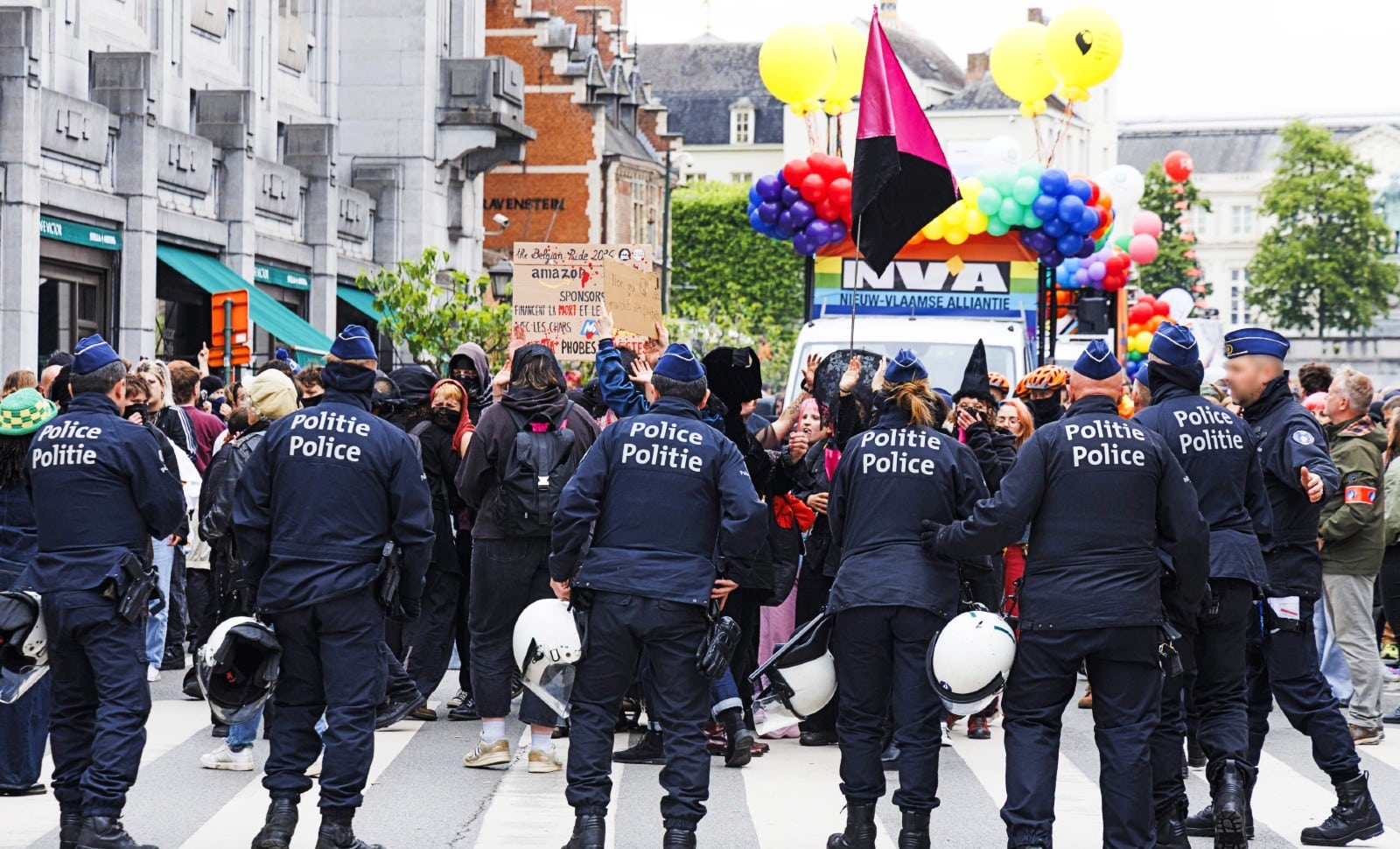

The Brussels Pride took place last Saturday, capping off a week dedicated to LGBTQIA rights in the Belgian capital, according to Causeur. What was once simply known as Gay Pride has evolved into something far more ideologically charged, transforming from a celebration of sexual freedom into a showcase for intersectional leftist causes that paradoxically exclude center-right participation.
The event has become what Causeur describes as an contradictory mishmash where rainbow symbolism blends with the red of socialism, the green of punitive environmentalism, and prominently, Palestinian flags. The absurdity reaches its peak with “Queers for Palestine” activists who would likely not survive three minutes in Gaza under Hamas rule, yet are conspicuously absent from certain Brussels neighborhoods where the Pride parade carefully avoids.
Center-Right Politicians Targeted for Participation
Belgian center-right parties faced hostility for their participation. The Flemish N-VA and Walloon MR parties attempted to show their progressive credentials with their own floats and slogans including “Kiss me, I’m liberal,” but were targeted by what Causeur characterizes as the usual enemies of freedom of thought. Meanwhile, left-wing politicians playing the communitarian card conveniently found themselves at the swimming pool that day, more concerned with avoiding alienating parts of their electoral base than with actually defending gay rights.
None of this actually serves the cause of homosexuals, any more than rainbow-painted crosswalks scattered throughout Brussels, at least in areas where Islamism has not yet become hegemonic, according to Causeur.
The Unspoken Threat
The most glaring omission from progressive discourse is the nature of the actual threats facing gay people in Western countries. These threats do not come from the far right or from average Belgians, who have largely accepted same-sex marriage and adoption. At worst, the typical Belgian might make a few crude jokes after a couple of drinks or at a football stadium, but such behavior is hardly a serious danger.
In a country known for leniency, especially when perpetrators are not native Belgians, assaults against homosexuals are not punished appropriately. Ywein Joris, a Flemish nationalist Vlaams Belang councilor in Ghent, recently caused a stir at the city council when responding to left-wing accusations that his party does not understand the situation of homosexuals. He shared his personal experience walking with his partner: They asked me point-blank if I was gay. I simply answered honestly that yes, the person with me is my boyfriend. The atmosphere immediately changed, he recounted, with the young men from a background he did not need to describe laughing and shouting about fighting.
A Middle Ground Exists
Reality, inevitably, does not please progressists, Causeur notes. There exists a middle ground between LGBT propaganda and homophobia, where sexual preferences are not ideological billboards and where an individual should never reduce his identity to what happens in the bedroom. Security should be the primary right of homosexuals, contrary to what propagandists attempt to impose through victimization narratives involving conversion therapy fears, drag queens in schools, removal of biological sex from identity cards, and non-gendered toilets.
The time has come to close what Causeur calls the “cage of phobes” and address the genuine security concerns facing gay people in Western Europe, rather than allowing Pride events to be captured by intersectional ideologies that actively avoid confronting the communities and belief systems that pose the greatest actual threat to homosexual safety.
With information from Causeur