Necessary Cookies

Required for the site to function. Cannot be disabled.

Analytics Cookies

Help us understand how visitors interact with our site (Google Analytics via GTM).

Marketing Cookies

Used to track visitors and deliver personalised advertisements.

We use cookies to enhance your browsing experience and analyse site traffic. By clicking Accept All, you consent to our use of cookies. Privacy Policy
NewsFire Global
Home News Europe World Christianity Culture Wars Opinion Video
Information
About Us Authors Advertising Terms & Conditions Privacy Policy Contact
R2B Media
R2B NEWSFIRE.GR PAPAFOTIS.GR THRACTION HELLENIC CONSERVATIVES RIGHT2THEBONE YT
News World

Powerful Iranian Gen. Ahmad Vahidi Emerges From Hiding Ahead of Funeral

Iran's Revolutionary Guard chief Ahmad Vahidi has made his first public appearance in months at Ayatollah Khamenei's funeral after staying out of view since before the late leader's death.
JULY 3, 2026 AT 3:31 PM

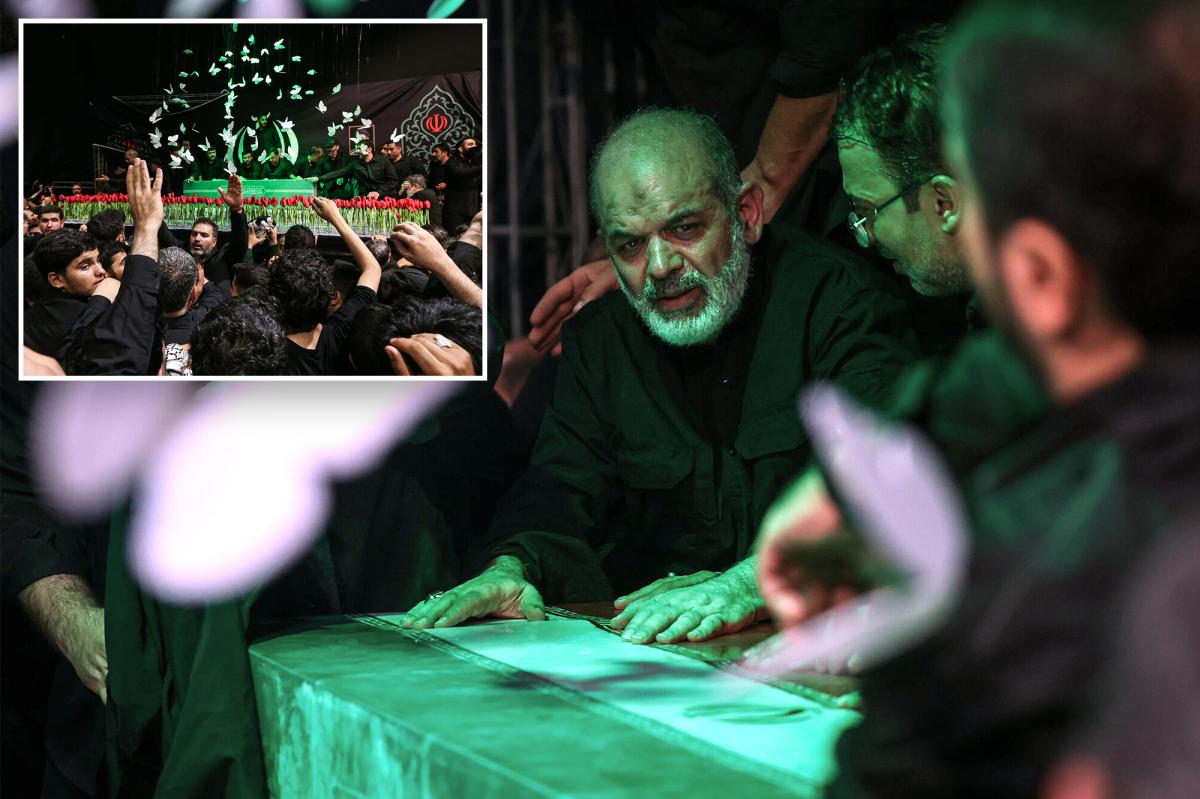
Gen. Ahmad Vahidi, a figure sanctioned by the United States and wanted internationally for alleged terrorism links, was photographed Thursday with his hands resting on Khamenei’s coffin as Tehran organized the extended funeral rites for the deceased leader, according to Chris Bradford writing in New York Post.

Vahidi emerged from seclusion to attend planning sessions for Khamenei’s funeral and a private service ahead of Iran’s 40-day national mourning period set to begin Saturday.

The IRGC chief had remained out of public view since February 8, roughly three weeks before Ayatollah Khamenei and multiple Revolutionary Guard officials, including Vahidi’s predecessor Mohammad Pakpour, were killed on February 28 during the opening day of Operation Epic Fury.

Wanted by Interpol for 1994 Buenos Aires Bombing

Working behind closed doors, Vahidi has been instrumental in shaping the Islamic Republic’s aggressive posture during the four-month conflict. The general is wanted by Interpol in connection with the 1994 bombing of the Asociación Mutual Israelita Argentina Jewish community center in Buenos Aires, an attack that claimed 85 lives and wounded more than 300.

The Buenos Aires bombing stands as the deadliest antisemitic attack in the Western Hemisphere since the Second World War.

In May, Vahidi declared Iran victorious following what he termed the terrorist attack of the Zionist-American enemy, claiming Washington sought a cease-fire in humiliation, the semi-official Tasnim News Agency reported at the time.

He warned that future aggression would provoke a devastating and hellish response across regional and trans-regional theaters.

Key Voice in Iran’s Hardline Leadership Circle

Vahidi, who took command of the IRGC following Pakpour’s death, is understood to belong to an inner circle advising the severely wounded Ayatollah Mojtaba Khamenei.

Ali Vaez, Iran project director at the International Crisis Group, described him as influential within a system where decisions emerge from consensus, noting that Vahidi possesses a very loud voice in deliberations.

Danny Citrinowicz, former head of the Iran branch in Israeli military intelligence, told reporters that no agreement can be reached without passing through Vahidi.

Decades-Long Career in Revolutionary Guard

Now 67, Vahidi enlisted in the IRGC after the 1979 Revolution and later commanded Iran’s elite Quds Force in the late 1980s. During his tenure, he expanded Tehran’s influence throughout the Middle East before passing command to notorious terror orchestrator Qasem Soleimani.

Vahidi and Soleimani are widely credited with establishing the foundation for Iran’s network of terror proxies abroad, including Hezbollah in Lebanon.

Argentine authorities have accused Vahidi of being among nine senior Hezbollah and Iranian officials who helped plan the 1994 Jewish community center bombing. Investigators in Argentina have also tied him to the 1992 Israeli Embassy bombing in Buenos Aires.

American investigators suspect Vahidi played a role in organizing the 1996 Khobar Towers bombing in Saudi Arabia, which killed 19 U.S. service members.

Subject to International Sanctions

The United States has imposed sanctions on Vahidi for his connections to Iran’s nuclear and missile programs. He faced additional sanctions in 2022 following the regime’s violent suppression of protests sparked by the death of Mahsa Amini.

The European Union likewise sanctioned Vahidi in 2022 after the regime deployed live ammunition against demonstrators, killing nearly 500 people according to human rights organizations.

Interpol issued a red notice for Vahidi, calling on law enforcement worldwide to locate and arrest the IRGC commander, making him an internationally wanted terrorist figure.

Citrinowicz summed up the general’s status simply: He is a wanted man and a figure to be reckoned with.

With information from New York Post

Share:
Eleni Papadaki-Van Der Merwe

She was born in 1986 in Johannesburg, South Africa. She is the granddaughter of an immigrant from Crete who settled in the Greek community of Johannesburg (one of the largest in Africa). She holds a bachelor’s degree in International Relations and Political Science from the University of the Witwatersrand (Wits) in Johannesburg and a master’s degree in Journalism from Rhodes University in Grahamstown. She began her career at English-language media outlets in Johannesburg, covering politics and economics, with a focus on issues related to migration and the diaspora. She moved to Athens in 2015 to “return to her roots,” initially to pursue graduate studies, and has remained there permanently. She is married to an Afrikaner; they have two children and live in the southern suburbs of Athens.

Gen. Ahmad Vahidi, a figure sanctioned by the United States and wanted internationally for alleged terrorism links, was photographed Thursday with his hands resting on Khamenei’s coffin as Tehran organized the extended funeral rites for the deceased leader, according to Chris Bradford writing in New York Post.

Vahidi emerged from seclusion to attend planning sessions for Khamenei’s funeral and a private service ahead of Iran’s 40-day national mourning period set to begin Saturday.

The IRGC chief had remained out of public view since February 8, roughly three weeks before Ayatollah Khamenei and multiple Revolutionary Guard officials, including Vahidi’s predecessor Mohammad Pakpour, were killed on February 28 during the opening day of Operation Epic Fury.

Wanted by Interpol for 1994 Buenos Aires Bombing

Working behind closed doors, Vahidi has been instrumental in shaping the Islamic Republic’s aggressive posture during the four-month conflict. The general is wanted by Interpol in connection with the 1994 bombing of the Asociación Mutual Israelita Argentina Jewish community center in Buenos Aires, an attack that claimed 85 lives and wounded more than 300.

The Buenos Aires bombing stands as the deadliest antisemitic attack in the Western Hemisphere since the Second World War.

In May, Vahidi declared Iran victorious following what he termed the terrorist attack of the Zionist-American enemy, claiming Washington sought a cease-fire in humiliation, the semi-official Tasnim News Agency reported at the time.

He warned that future aggression would provoke a devastating and hellish response across regional and trans-regional theaters.

Key Voice in Iran’s Hardline Leadership Circle

Vahidi, who took command of the IRGC following Pakpour’s death, is understood to belong to an inner circle advising the severely wounded Ayatollah Mojtaba Khamenei.

Ali Vaez, Iran project director at the International Crisis Group, described him as influential within a system where decisions emerge from consensus, noting that Vahidi possesses a very loud voice in deliberations.

Danny Citrinowicz, former head of the Iran branch in Israeli military intelligence, told reporters that no agreement can be reached without passing through Vahidi.

Decades-Long Career in Revolutionary Guard

Now 67, Vahidi enlisted in the IRGC after the 1979 Revolution and later commanded Iran’s elite Quds Force in the late 1980s. During his tenure, he expanded Tehran’s influence throughout the Middle East before passing command to notorious terror orchestrator Qasem Soleimani.

Vahidi and Soleimani are widely credited with establishing the foundation for Iran’s network of terror proxies abroad, including Hezbollah in Lebanon.

Argentine authorities have accused Vahidi of being among nine senior Hezbollah and Iranian officials who helped plan the 1994 Jewish community center bombing. Investigators in Argentina have also tied him to the 1992 Israeli Embassy bombing in Buenos Aires.

American investigators suspect Vahidi played a role in organizing the 1996 Khobar Towers bombing in Saudi Arabia, which killed 19 U.S. service members.

Subject to International Sanctions

The United States has imposed sanctions on Vahidi for his connections to Iran’s nuclear and missile programs. He faced additional sanctions in 2022 following the regime’s violent suppression of protests sparked by the death of Mahsa Amini.

The European Union likewise sanctioned Vahidi in 2022 after the regime deployed live ammunition against demonstrators, killing nearly 500 people according to human rights organizations.

Interpol issued a red notice for Vahidi, calling on law enforcement worldwide to locate and arrest the IRGC commander, making him an internationally wanted terrorist figure.

Citrinowicz summed up the general’s status simply: He is a wanted man and a figure to be reckoned with.

With information from New York Post