Necessary Cookies

Required for the site to function. Cannot be disabled.

Analytics Cookies

Help us understand how visitors interact with our site (Google Analytics via GTM).

Marketing Cookies

Used to track visitors and deliver personalised advertisements.

We use cookies to enhance your browsing experience and analyse site traffic. By clicking Accept All, you consent to our use of cookies. Privacy Policy
NewsFire Global
Home News Europe World Christianity Culture Wars Opinion Video
Information
About Us Authors Advertising Terms & Conditions Privacy Policy Contact
R2B Media
R2B NEWSFIRE.GR PAPAFOTIS.GR THRACTION HELLENIC CONSERVATIVES RIGHT2THEBONE YT
News World

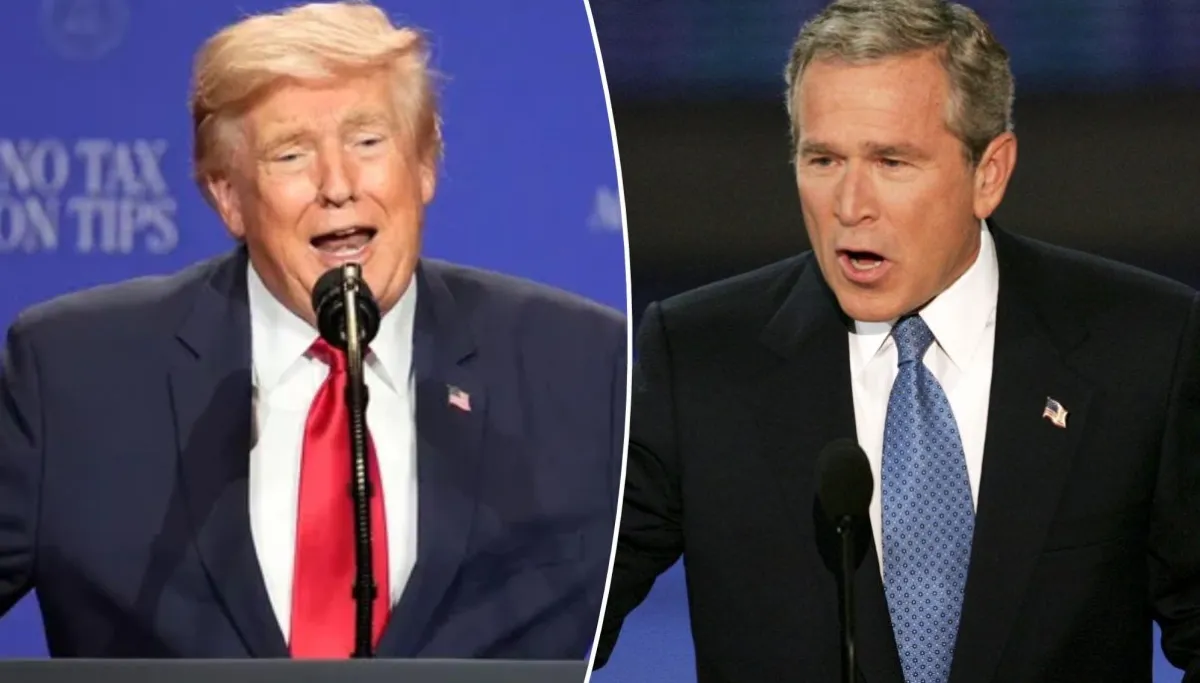
Trump Risks Repeating Bush’s Iran Mistakes After 9/11

Professor Matthew Warshauer argues America repeats the same military mistakes from Vietnam to Iraq to Iran, relying on hubris and superior firepower rather than learning from past defeats.
Stefanos Banos
Stefanos Banos Staff Writer
AUGUST 31, 2026 AT 6:24 PM

As the United States approaches the 25th anniversary of the September 11 attacks, America continues to demonstrate a troubling inability to learn from its own military failures—a pattern of hubris that stretches from Vietnam through the War on Terror to the current Iran conflict.

Writing in Washington Examiner, Professor Matthew Warshauer argues that the nation repeatedly falls into the same trap: believing that superior military power and overconfidence alone can guarantee victory against any adversary.

For the neoconservative architects of President George W. Bush‘s administration, the War on Terror—particularly the invasion of Iraq—was designed to erase the humiliation of Vietnam. Following America’s first military defeat, widespread concern emerged about national decline and whether the United States remained a force for good on the world stage.

Bush’s advisers, nicknamed the Vulcans after the God of Fire, rejected such pessimism outright. According to Warshauer’s analysis, they envisioned an unchallengeable America whose military might was so overwhelming it no longer needed to make compromises or accommodations with anyone.

The swift victory in Iraq was supposed to validate that vision. Instead, like Vietnam before it, Iraq descended into chaos and ultimate defeat.

Trump Repeats Bush’s Mistakes

President Donald Trump now suffers from the same afflictions that plagued his predecessor: arrogance and a catastrophic failure of imagination. It has become absurdly clear that America’s high-technology weaponry—a cornerstone of the Donald Rumsfeld school of warfare—does not automatically produce victory. Nations Trump has dismissed with crude language, calling their people “scum” and “cuckoo,” have proven they can stand against what America perceives as its moral and military superiority.

Like Bush, Trump believes that conviction and expensive weapons systems equal certainty. Bush’s “Shock and Awe” bombing campaign began on March 20, 2003; a mere five weeks later, on May 1, he delivered his now-infamous “Mission Accomplished” speech aboard the USS Abraham Lincoln.

Trump’s Iran war launched on February 28, 2026. With lightning speed, on March 7, he assured the nation that America was “winning the war, by a lot.” Just four days later, he went even further, declaring that the war had already been won in the first hour of combat.

While Trump is notorious for exaggeration, these claims represent more than one president’s overstatements. They exemplify a consistent American blunder: conflating military force and first-world hubris with instantaneous victory. Neither will cow a committed enemy into submission nor guarantee success in armed conflict. The now-closed Strait of Hormuz and sailors reportedly living in squalor aboard the USS Lincoln in the Gulf of Oman provide stark evidence of this reality.

Lessons America Refuses to Learn

The tragic truth is that America should have absorbed these lessons decades ago. In Vietnam, massive bombing campaigns failed to defeat what officials dismissively called a nation of rice farmers. Though that conflict—a proxy battle in the larger Cold War—ended in defeat, American commitment to vanquishing the Soviet Union did not waver.

Ironically, Washington then embraced the same asymmetric, guerrilla warfare strategy the Vietcong had used against American forces. After the USSR invaded Afghanistan in 1979, the CIA financed and trained Islamic Mujahedin fighters who forced a Soviet withdrawal in less than ten years. Moscow even warned the United States to stop training the most radical Islamists in modern warfare techniques. The CIA’s response: they make the best fighters. Al Qaeda was born from this shortsightedness.

Why couldn’t American leaders anticipate that these same fundamentalists might turn their newly acquired skills against the United States? More accurately, the nation’s decision-makers simply dismissed the threat, concluding that fighters they viewed as goat herders living in caves posed no danger to the mighty superpower—until iconic towers in New York City came crashing down on a clear September morning.

The 9/11 Commission noted ominously that the attacks succeeded because the nation’s leaders suffered from a failure of imagination.

The Pattern Continues

Nothing changed. No lessons were learned.

Bush’s “Shock and Awe” bombing strategy was built on the military doctrine of “rapid dominance”—the theory that massive destruction paralyzes an enemy’s will to fight through overwhelming force and confusion. Apparently no one considered that America itself had refused to surrender following the 9/11 attacks, which revealed Osama bin Laden‘s own shock and awe calculation.

There was, however, a critical difference. The mastermind of 9/11 had studied American history. He understood U.S. arrogance, frequently writing that America viewed itself as the “master of the world.” Bin Laden counted on American vanity. The September 11 attacks were a trap designed to draw an overconfident United States into a prolonged, grinding struggle—exactly the type of conflict that has now repeated itself with Iran.

The question remains whether American leadership will ever develop the humility and strategic imagination necessary to break this destructive cycle, or whether the nation will continue stumbling from one miscalculated conflict to the next, always confident that this time will be different.

With information from Washington Examiner

Share:
Stefanos Banos
Stefanos Banos

Stefanos Banos was born in Piraeus and is an editor at NewsFire.GR, specializing in political analysis and international relations. He graduated from the Department of Communication and Media at the University of Bremen in Germany, where he also completed his Master of Arts in Communication and Media Studies. Married to Zoi, he is a proud father of three boys.

As the United States approaches the 25th anniversary of the September 11 attacks, America continues to demonstrate a troubling inability to learn from its own military failures—a pattern of hubris that stretches from Vietnam through the War on Terror to the current Iran conflict.

Writing in Washington Examiner, Professor Matthew Warshauer argues that the nation repeatedly falls into the same trap: believing that superior military power and overconfidence alone can guarantee victory against any adversary.

For the neoconservative architects of President George W. Bush‘s administration, the War on Terror—particularly the invasion of Iraq—was designed to erase the humiliation of Vietnam. Following America’s first military defeat, widespread concern emerged about national decline and whether the United States remained a force for good on the world stage.

Bush’s advisers, nicknamed the Vulcans after the God of Fire, rejected such pessimism outright. According to Warshauer’s analysis, they envisioned an unchallengeable America whose military might was so overwhelming it no longer needed to make compromises or accommodations with anyone.

The swift victory in Iraq was supposed to validate that vision. Instead, like Vietnam before it, Iraq descended into chaos and ultimate defeat.

Trump Repeats Bush’s Mistakes

President Donald Trump now suffers from the same afflictions that plagued his predecessor: arrogance and a catastrophic failure of imagination. It has become absurdly clear that America’s high-technology weaponry—a cornerstone of the Donald Rumsfeld school of warfare—does not automatically produce victory. Nations Trump has dismissed with crude language, calling their people “scum” and “cuckoo,” have proven they can stand against what America perceives as its moral and military superiority.

Like Bush, Trump believes that conviction and expensive weapons systems equal certainty. Bush’s “Shock and Awe” bombing campaign began on March 20, 2003; a mere five weeks later, on May 1, he delivered his now-infamous “Mission Accomplished” speech aboard the USS Abraham Lincoln.

Trump’s Iran war launched on February 28, 2026. With lightning speed, on March 7, he assured the nation that America was “winning the war, by a lot.” Just four days later, he went even further, declaring that the war had already been won in the first hour of combat.

While Trump is notorious for exaggeration, these claims represent more than one president’s overstatements. They exemplify a consistent American blunder: conflating military force and first-world hubris with instantaneous victory. Neither will cow a committed enemy into submission nor guarantee success in armed conflict. The now-closed Strait of Hormuz and sailors reportedly living in squalor aboard the USS Lincoln in the Gulf of Oman provide stark evidence of this reality.

Lessons America Refuses to Learn

The tragic truth is that America should have absorbed these lessons decades ago. In Vietnam, massive bombing campaigns failed to defeat what officials dismissively called a nation of rice farmers. Though that conflict—a proxy battle in the larger Cold War—ended in defeat, American commitment to vanquishing the Soviet Union did not waver.

Ironically, Washington then embraced the same asymmetric, guerrilla warfare strategy the Vietcong had used against American forces. After the USSR invaded Afghanistan in 1979, the CIA financed and trained Islamic Mujahedin fighters who forced a Soviet withdrawal in less than ten years. Moscow even warned the United States to stop training the most radical Islamists in modern warfare techniques. The CIA’s response: they make the best fighters. Al Qaeda was born from this shortsightedness.

Why couldn’t American leaders anticipate that these same fundamentalists might turn their newly acquired skills against the United States? More accurately, the nation’s decision-makers simply dismissed the threat, concluding that fighters they viewed as goat herders living in caves posed no danger to the mighty superpower—until iconic towers in New York City came crashing down on a clear September morning.

The 9/11 Commission noted ominously that the attacks succeeded because the nation’s leaders suffered from a failure of imagination.

The Pattern Continues

Nothing changed. No lessons were learned.

Bush’s “Shock and Awe” bombing strategy was built on the military doctrine of “rapid dominance”—the theory that massive destruction paralyzes an enemy’s will to fight through overwhelming force and confusion. Apparently no one considered that America itself had refused to surrender following the 9/11 attacks, which revealed Osama bin Laden‘s own shock and awe calculation.

There was, however, a critical difference. The mastermind of 9/11 had studied American history. He understood U.S. arrogance, frequently writing that America viewed itself as the “master of the world.” Bin Laden counted on American vanity. The September 11 attacks were a trap designed to draw an overconfident United States into a prolonged, grinding struggle—exactly the type of conflict that has now repeated itself with Iran.

The question remains whether American leadership will ever develop the humility and strategic imagination necessary to break this destructive cycle, or whether the nation will continue stumbling from one miscalculated conflict to the next, always confident that this time will be different.

With information from Washington Examiner