Necessary Cookies

Required for the site to function. Cannot be disabled.

Analytics Cookies

Help us understand how visitors interact with our site (Google Analytics via GTM).

Marketing Cookies

Used to track visitors and deliver personalised advertisements.

We use cookies to enhance your browsing experience and analyse site traffic. By clicking Accept All, you consent to our use of cookies. Privacy Policy
NewsFire Global
Home News Europe World Christianity Culture Wars Opinion Video
Information
About Us Authors Advertising Terms & Conditions Privacy Policy Contact
R2B Media
R2B NEWSFIRE.GR PAPAFOTIS.GR THRACTION HELLENIC CONSERVATIVES RIGHT2THEBONE YT
News World

Newly Found Hiroshima Eyewitness Account Reveals Atomic Horror

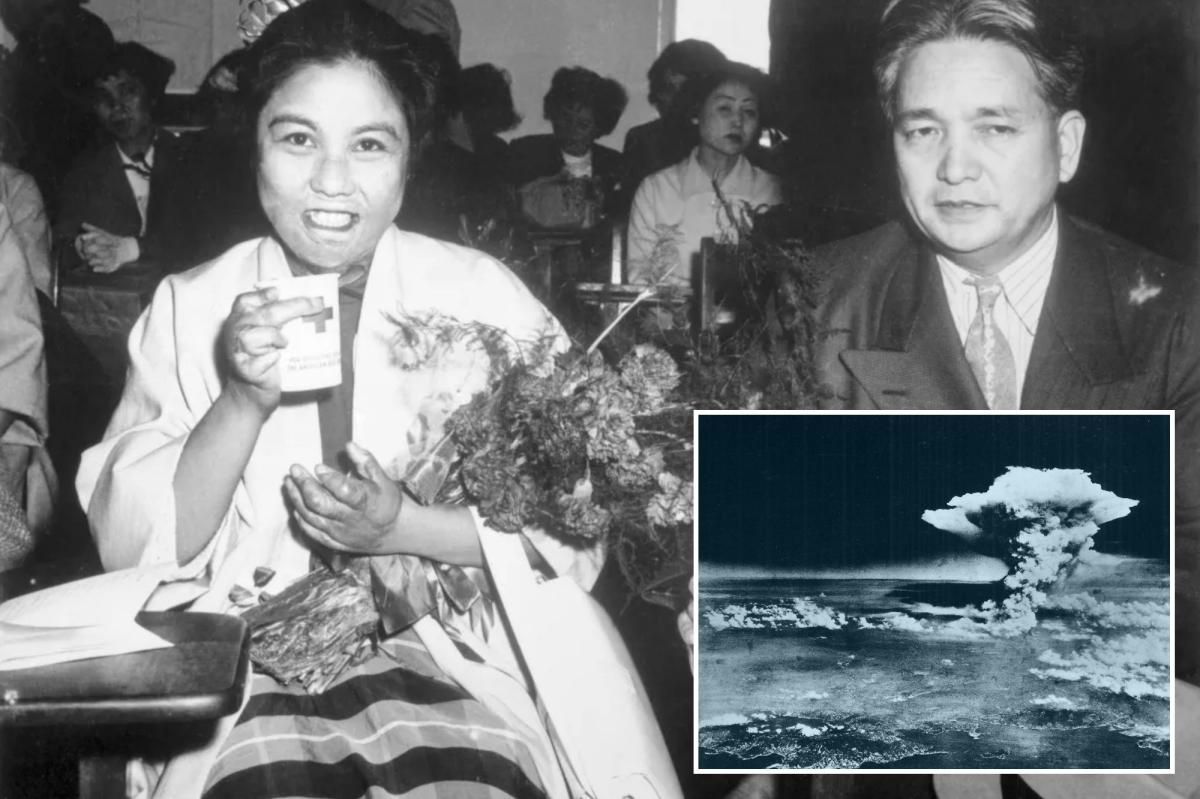
A 400-page memoir by Japanese pastor Kiyoshi Tanimoto, who survived the 1945 Hiroshima bombing, has been published for the first time 81 years after the attack.
AUGUST 5, 2026 AT 11:35 PM

The extraordinary 400-page memoir, titled “Hiroshima, 8:15: The Lost Memoir,” was penned by Kiyoshi Tanimoto, a 36-year-old pastor who had studied theology at Emory University in Atlanta, according to Isabel Vincent writing in New York Post. The manuscript was released Thursday, marking more than eight decades since American forces dropped the atomic bomb on Hiroshima at 8:15 a.m. on August 6, 1945.

Tanimoto documented the moment of the blast in vivid detail, describing a sharp flash of light and a powerful wind blast accompanied by a tremendous explosion. At the time, he was on the city’s outskirts helping to relocate his church’s piano. His wife, Chisa Tanimoto, and their eight-month-old daughter were at home when the bomb struck, becoming partially buried under rubble. The infant’s cries alerted the mother, who frantically dug through the debris to rescue them both.

That baby, now 81 years old and known as Kondo, has dedicated most of her life to peace activism, advocating against nuclear weapons.

Discovery in Archives

The manuscript had been sent decades ago to Pulitzer Prize-winning reporter John Hersey, the first American journalist to document the atomic bomb’s impact on Hiroshima’s civilian population. The memoir was only recently unearthed by Hersey’s grandson, Cannon Hersey, and Japanese filmmaker Taku Nishimae while examining archived files. It remains unclear whether John Hersey, who interviewed Tanimoto in 1946, ever read the pastor’s complete account.

Scenes of Devastation

In harrowing passages, Tanimoto described rushing through the destroyed city to locate his family, stepping over the dead and dying. He wrote of people buried beneath collapsed structures everywhere, with no possibility for a single person to rescue them.

The minister documented survivors with skin fallen from their bodies, covered in festering burns infested with maggots that had to be extracted with pincers. A critical shortage of medical personnel meant patients died while others were being treated. Tanimoto himself experienced severe diarrhea and fever but emerged largely unharmed—unlike more than 140,000 residents who perished from burns, injuries, and what he termed “the atomic disease,” referring to radiation sickness.

No Resentment Toward America

Despite the catastrophic loss of life, Tanimoto became known as a “rescuing angel” for his relentless efforts aiding fellow survivors, though he rejected the heroic label. Notably, he harbored no bitterness toward the United States for deploying the weapon.

Tanimoto explained that the bomb’s immense destructive force led Hiroshima’s survivors to embrace the goal of eliminating all wars from the earth, rather than fostering resentment against America.

The pastor went on to have four more children—two daughters and two sons—and continued his ministry work.

Film Adaptation in Development

The memoir is being adapted into a feature film directed by Phil Joanou, with “Shogun” actor Takehiro Hira cast as Tanimoto. The production is scheduled for release at the 2028 Cannes Film Festival.

With information from New York Post

Share:
Eleni Papadaki-Van Der Merwe

She was born in 1986 in Johannesburg, South Africa. She is the granddaughter of an immigrant from Crete who settled in the Greek community of Johannesburg (one of the largest in Africa). She holds a bachelor’s degree in International Relations and Political Science from the University of the Witwatersrand (Wits) in Johannesburg and a master’s degree in Journalism from Rhodes University in Grahamstown. She began her career at English-language media outlets in Johannesburg, covering politics and economics, with a focus on issues related to migration and the diaspora. She moved to Athens in 2015 to “return to her roots,” initially to pursue graduate studies, and has remained there permanently. She is married to an Afrikaner; they have two children and live in the southern suburbs of Athens.

The extraordinary 400-page memoir, titled “Hiroshima, 8:15: The Lost Memoir,” was penned by Kiyoshi Tanimoto, a 36-year-old pastor who had studied theology at Emory University in Atlanta, according to Isabel Vincent writing in New York Post. The manuscript was released Thursday, marking more than eight decades since American forces dropped the atomic bomb on Hiroshima at 8:15 a.m. on August 6, 1945.

Tanimoto documented the moment of the blast in vivid detail, describing a sharp flash of light and a powerful wind blast accompanied by a tremendous explosion. At the time, he was on the city’s outskirts helping to relocate his church’s piano. His wife, Chisa Tanimoto, and their eight-month-old daughter were at home when the bomb struck, becoming partially buried under rubble. The infant’s cries alerted the mother, who frantically dug through the debris to rescue them both.

That baby, now 81 years old and known as Kondo, has dedicated most of her life to peace activism, advocating against nuclear weapons.

Discovery in Archives

The manuscript had been sent decades ago to Pulitzer Prize-winning reporter John Hersey, the first American journalist to document the atomic bomb’s impact on Hiroshima’s civilian population. The memoir was only recently unearthed by Hersey’s grandson, Cannon Hersey, and Japanese filmmaker Taku Nishimae while examining archived files. It remains unclear whether John Hersey, who interviewed Tanimoto in 1946, ever read the pastor’s complete account.

Scenes of Devastation

In harrowing passages, Tanimoto described rushing through the destroyed city to locate his family, stepping over the dead and dying. He wrote of people buried beneath collapsed structures everywhere, with no possibility for a single person to rescue them.

The minister documented survivors with skin fallen from their bodies, covered in festering burns infested with maggots that had to be extracted with pincers. A critical shortage of medical personnel meant patients died while others were being treated. Tanimoto himself experienced severe diarrhea and fever but emerged largely unharmed—unlike more than 140,000 residents who perished from burns, injuries, and what he termed “the atomic disease,” referring to radiation sickness.

No Resentment Toward America

Despite the catastrophic loss of life, Tanimoto became known as a “rescuing angel” for his relentless efforts aiding fellow survivors, though he rejected the heroic label. Notably, he harbored no bitterness toward the United States for deploying the weapon.

Tanimoto explained that the bomb’s immense destructive force led Hiroshima’s survivors to embrace the goal of eliminating all wars from the earth, rather than fostering resentment against America.

The pastor went on to have four more children—two daughters and two sons—and continued his ministry work.

Film Adaptation in Development

The memoir is being adapted into a feature film directed by Phil Joanou, with “Shogun” actor Takehiro Hira cast as Tanimoto. The production is scheduled for release at the 2028 Cannes Film Festival.

With information from New York Post

