Ukraine’s ‘Pantheon Law’ Deepens Rift with Poland
Ukraine's new law creating a national pantheon of heroes has escalated tensions with Poland by potentially honoring figures linked to World War II massacres of Polish civilians.
The Verkhovna Rada, Ukraine’s parliament, passed the controversial law on July 1 following its submission by President Volodymyr Zelensky, according to Brussels Signal.
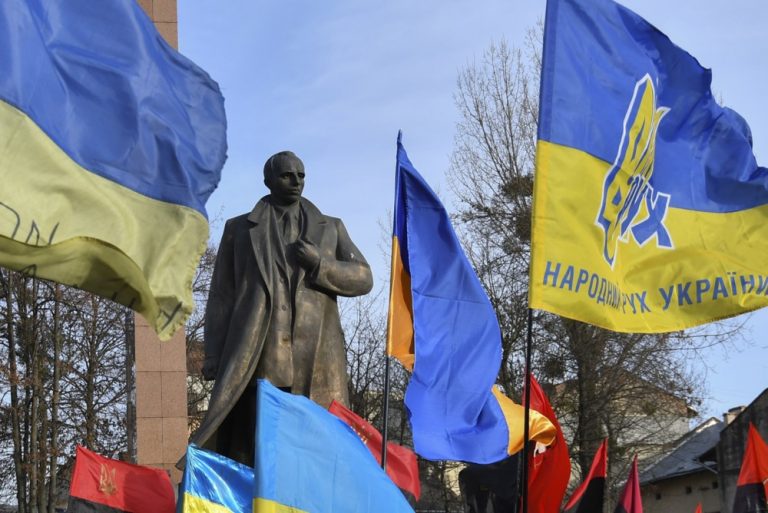
The new pantheon is designed to honor prominent figures from Ukrainian history. While the specific names have not yet been announced, the fact that Ukrainians venerate the Ukrainian Insurgent Army (UPA) as freedom fighters against Soviet occupation suggests their leaders, including Stepan Bandera, are likely candidates for inclusion.
Zelensky made clear Ukraine would not bow to external pressure on the matter. No one will tell us which heroes to respect, he stated, in an apparent response to Polish objections regarding his recent decision to name an elite Ukrainian military unit after the UPA. Ruslan Stefanchuk, Speaker of the Verkhovna Rada, declared the pantheon would honor the best sons and daughters of the Ukrainian nation.
A Memorial Complex With State Funding
The Ukrainian National Pantheon will consist of a memorial complex, a standing commission, and individual laws for each person inducted, maintained by an eternal guard funded through the state budget.
Ukrainian authorities frame the initiative as an effort to unite society around a shared historical narrative. The pantheon aims to draw a direct connection between anti-Soviet fighters of the past and contemporary Ukrainian soldiers, portraying them as participants in a continuous struggle for independence from Moscow. This narrative serves to legitimize the current war effort and reinforce national unity.
The Volhynia Massacres and Polish Outrage
The issue strikes a particularly raw nerve in Poland due to the actions of the Ukrainian Insurgent Army. Historical records show that UPA units conducted coordinated assaults on approximately 150 Polish-inhabited towns and villages in the Volhynia region during July 1943.
Poland has formally classified these killings as genocide. Ukrainian historians, however, characterize the events as part of a wider wartime Polish-Ukrainian conflict. Their attempts to equate military engagements and isolated incidents with the systematic murder of over 100,000 civilians driven by a nationalist ideology demanding ethnic cleansing of Poles from Ukrainian territory have only deepened Polish anger and offense.
Bandera remains completely unacceptable to Poles because of his ideology and his collaboration with Nazi Germany. Ukrainians, by contrast, view him as a symbol of resistance to Soviet domination and a martyr for independence.
Polish Government Responds With Condemnation
The pantheon law follows Zelensky’s earlier decision to name a Ukrainian military unit after the Heroes of the UPA. That move prompted the opposition Conservative-aligned President Karol Nawrocki to revoke the highest Polish state honor previously awarded to the Ukrainian president.
Zbigniew Bogucki, President Nawrocki’s chief of staff, condemned the pantheon legislation, stating that glorifying Bandera and criminals does not align with the values of Western civilization.
He emphasized that Poland would not accept such actions and that the voices of the victims cannot be silenced by Bandera’s followers.
The Polish foreign ministry issued a statement expressing hope that the pantheon would exclude individuals responsible for crimes against Poles, while acknowledging Ukraine’s sovereign right to construct its own national identity.
Only Parliamentary Speaker Włodzimierz Czarzasty, who leads the Left Party in Prime Minister Tusk’s coalition, urged restraint until the names proposed for the pantheon are revealed. He advocated for a measured response and keeping dialogue channels open, while noting that the final decision belongs to Ukraine and Kyiv must bear responsibility for it.
Right-Wing Opposition Demands Diplomatic Action
Opposition parties on the right, including PiS and Confederation, have called for diplomatic retaliation. They argue the pantheon demonstrates that Ukraine only respects strength and will take advantage of any perceived weakness.
Ukrainian officials have dismissed the Polish criticism. Lawmaker Mykola Kniazhytskyi insisted the law represents an internal Ukrainian matter not directed against any other country.
He also accused Poland of serving the interests of Ukraine’s adversaries, including Russia, by allowing itself to become entangled in a historical dispute.
The controversy underscores the deepening rift between the two nations over historical memory, even as Poland remains one of Ukraine’s most significant supporters in its conflict with Russia.
With information from Brussels Signal