
AESC Begins Mass Production of 46120 Battery Cells for BMW iX5
AESC has begun mass production of 46120 cylindrical battery cells with 30 percent more energy that will power BMW electric vehicles starting with the iX5 in late 2026.
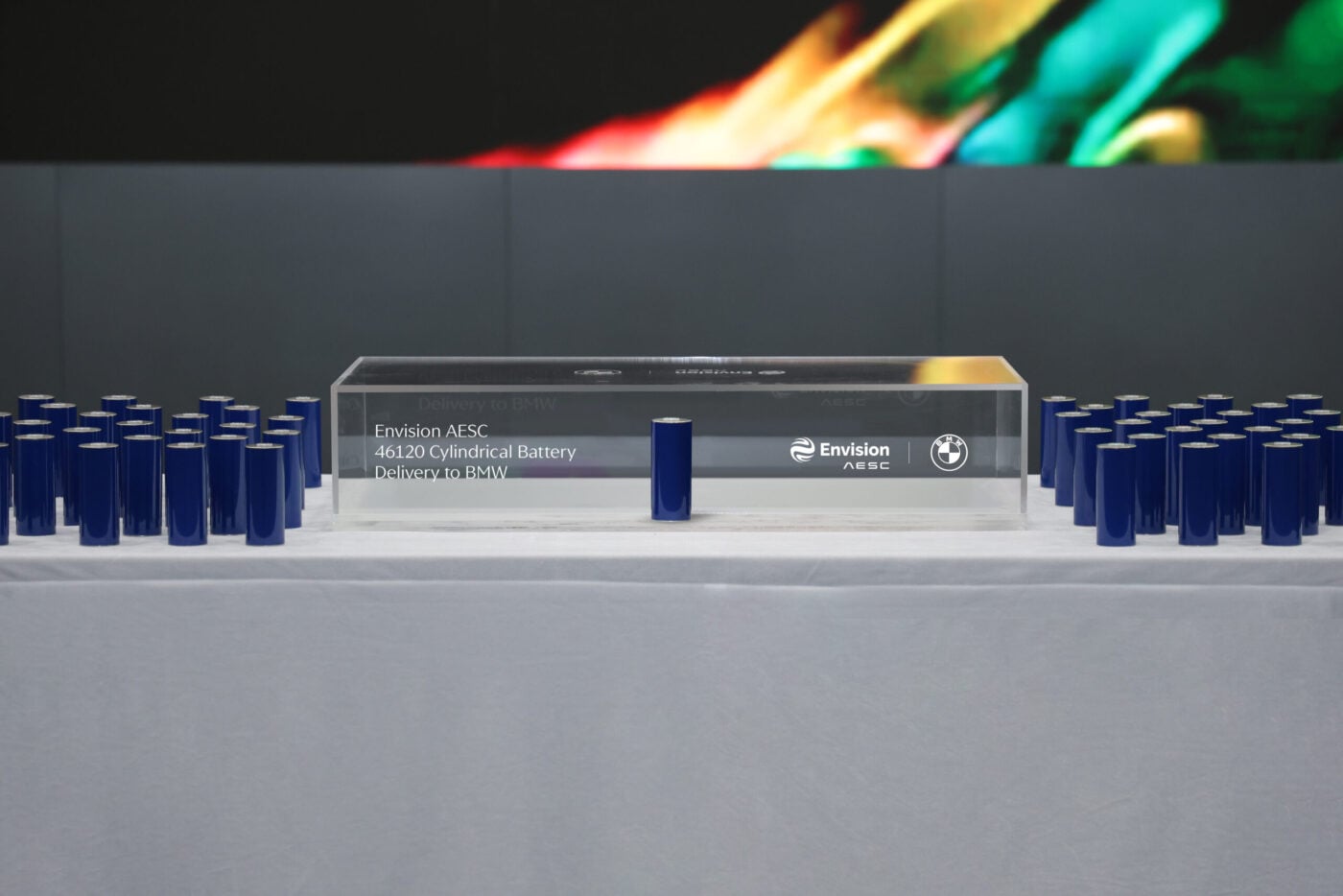

The new battery cell format measures 46 millimeters in diameter and 120 millimeters in height, according to Electrive (EU ηλεκτροκίνηση). AESC reports that usable energy per cell has increased by nearly 30 percent compared to previous cell formats, while simultaneously reducing the total number of cells and components required in battery pack assembly. This reduction simplifies system integration and provides automotive designers with greater flexibility in vehicle architecture.
The cathode utilizes nickel-rich chemistry, while the anode incorporates silicon doping. AESC states the cells achieve an energy density of up to 310 watt-hours per kilogram. Enhanced thermal management systems and structural improvements are expected to bolster both safety performance and long-term battery stability.
AESC’s production process incorporates over 1,000 camera-based inspection stations throughout the manufacturing line, supplemented by full X-ray inspection of every individual battery cell. Material transport relies on a magnetic levitation system enabling manufacturing precision down to 0.01 millimeters. David Wan, Global CEO of AESC, stated that years of research and development and manufacturing expertise have enabled the mass production and global rollout of the 46120 cells.
The production launch positions AESC as a critical supplier for BMW’s next-generation battery systems. The BMW iX5 will be the first announced vehicle featuring these cylindrical cells, with production planned at BMW’s Spartanburg plant in the United States. Although the SUV utilizes the existing CLAR platform rather than the forthcoming Neue Klasse architecture, it will incorporate battery technology from BMW’s sixth-generation eDrive system.
The iX5 will enter the market equipped with a 141 kilowatt-hour net battery capacity and an 800-volt electrical architecture. BMW anticipates that the large-format cylindrical cells will deliver superior energy density, reduced charging times, and extended range compared to the previous generation of prismatic cells.
AESC has not disclosed which manufacturing facility is producing the new cells. The company stated only that mass production has begun at its advanced manufacturing sites. AESC operates production facilities across China, Japan, the United States, the United Kingdom, France, and Spain.
To supply BMW operations in the United States, AESC announced construction of a new plant in Florence County, South Carolina, following a major order secured in 2022. However, the company paused that project in mid-2025. It remains unclear whether cylindrical cells for the iX5 will be sourced from the South Carolina facility or from alternative AESC production locations.
The development carries significant implications for European automotive competitiveness as manufacturers race to secure advanced battery technology amid intensifying global competition. The shift to larger cylindrical cell formats represents a strategic pivot for the industry, promising cost reductions through simplified assembly and improved energy performance critical for consumer adoption of electric vehicles.
With information from Electrive (EU ηλεκτροκίνηση)





