Poland Marks Volhynia Massacre as Ukraine Tensions Flare
Poland marks the 83rd anniversary of the Volhynia massacre with calls for Ukraine to stop glorifying nationalist forces that killed over 100,000 Polish civilians during World War II.
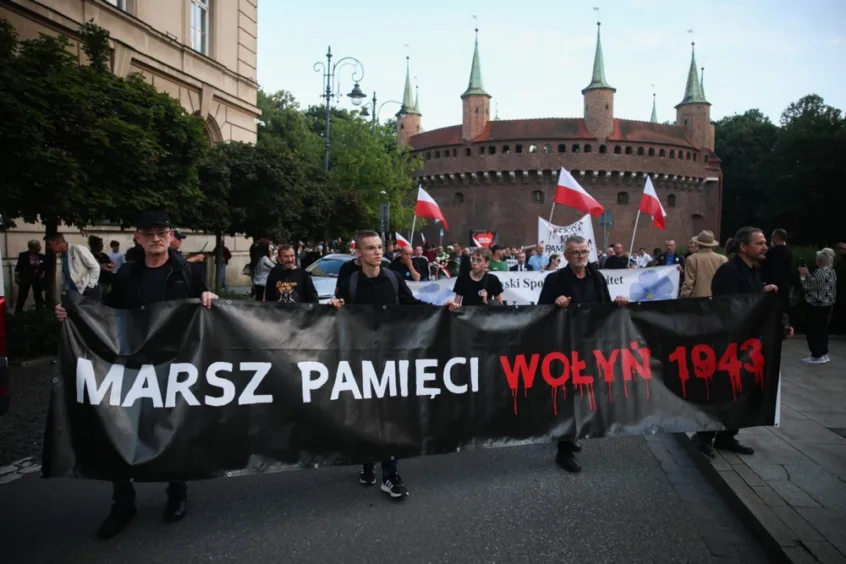
According to Brussels Signal, Polish Prime Minister Donald Tusk announced plans for a Wall of Remembrance in Warsaw bearing the names of every identified victim, while opposition conservatives demand legislation that would mandate the government to halt Ukraine’s EU accession until it ceases honoring the Ukrainian Insurgent Army, known as UPA.
July 11, 1943 remains seared in Polish memory as Bloody Sunday, the day the Volhynia massacre reached its horrific peak. On that date, the UPA, supported by segments of the local civilian population, launched coordinated attacks against Polish villages in the Volhynia region. The killings continued through 1945, claiming an estimated 120,000 Polish lives, predominantly women, children, and elderly civilians.
Tusk’s announcement of the memorial comes as Warsaw grows increasingly concerned about Ukraine’s plans to establish a pantheon of heroes that Poles fear will include UPA fighters and nationalist leaders such as Stepan Bandera. The Polish leader stressed that those murdered cannot remain nameless or without dignified burial, calling remembrance a duty to their families, the nation, and the Polish state.
While Tusk struck a measured tone, insisting that nationalism cannot be answered with more nationalism, he made clear that any country seeking to join Europe must be ready to accept the truth about its past. He emphasized that European peace and reconciliation have been built on truth, not historical revisionism.
Polish President Karol Nawrocki took a harder line during commemorations at Radruż, a small village less than a kilometer from the Ukrainian border where the UPA and the Organization of Ukrainian Nationalists massacred Polish civilians. Nawrocki condemned what he called the evil ideology of Ukrainian nationalism and vowed that Poland would refuse to allow the 120,000 murdered Poles to be forgotten.
The president has been at the center of recent diplomatic tensions after Ukrainian President Volodymyr Zelensky decided to name a military unit after the UPA. In response, Nawrocki stripped the Ukrainian leader of Poland’s highest honor, the Order of the White Eagle. The snub triggered tit-for-tat diplomatic moves that saw numerous high-profile political figures on both sides return state honors.
Nawrocki has also submitted legislation to Parliament that would outlaw Ukrainian nationalism as propagated by Bandera and the UPA, placing it on par with fascism and communism, which are already banned in Poland.
The opposition Law and Justice party, known as PiS, has escalated the confrontation further. Prime ministerial candidate Przemysław Czarnek announced draft legislation that would oppose Ukraine’s EU membership unless Kyiv stops glorifying the military group linked to the wartime massacre.
Speaking at a monument in the eastern city of Lublin, Czarnek declared that Ukraine will not enter the EU while glorifying the perpetrators of genocide responsible for exceptionally brutal killings against the Polish nation.
In 2016, Poland’s parliament declared July 11 a day of remembrance for Volhynia and formally characterized the massacres as genocide. Ukraine protested the resolution at the time, claiming it contradicted the spirit of good neighborly relations and did not contribute to mutual understanding.
The current tension reveals deep historical wounds that continue to complicate Poland’s otherwise strong support for Ukraine in its war against Russia. Warsaw has been one of Kyiv’s most steadfast allies, providing military aid and hosting millions of Ukrainian refugees. However, Polish politicians across the spectrum have made clear that historical truth cannot be sacrificed on the altar of contemporary geopolitical convenience.
The dispute also highlights broader questions about how the EU evaluates candidate countries’ readiness for membership, particularly regarding historical memory and the glorification of controversial wartime figures. As Ukraine seeks accelerated EU accession, Poland appears determined to use its influence within the bloc to ensure that Kyiv confronts uncomfortable truths about elements of its national narrative.
With information from Brussels Signal