Necessary Cookies

Required for the site to function. Cannot be disabled.

Analytics Cookies

Help us understand how visitors interact with our site (Google Analytics via GTM).

Marketing Cookies

Used to track visitors and deliver personalised advertisements.

We use cookies to enhance your browsing experience and analyse site traffic. By clicking Accept All, you consent to our use of cookies. Privacy Policy
NewsFire Global
Home News Europe World Christianity Culture Wars Opinion Video
Information
About Us Authors Advertising Terms & Conditions Privacy Policy Contact
R2B Media
R2B NEWSFIRE.GR PAPAFOTIS.GR THRACTION HELLENIC CONSERVATIVES RIGHT2THEBONE YT
News Europe

Migration as Weapon: How Geopolitical Power Struggles Impact Europe’s Borders

A migrant surge in Spain's Ceuta has triggered EU-wide border control reinstatements, with 22 member states demanding tougher policies despite the migration commissioner's claims of success.

Dimitris Papafotis
Dimitris Papafotis Editor in Chief
AUGUST 14, 2026 AT 2:00 PM

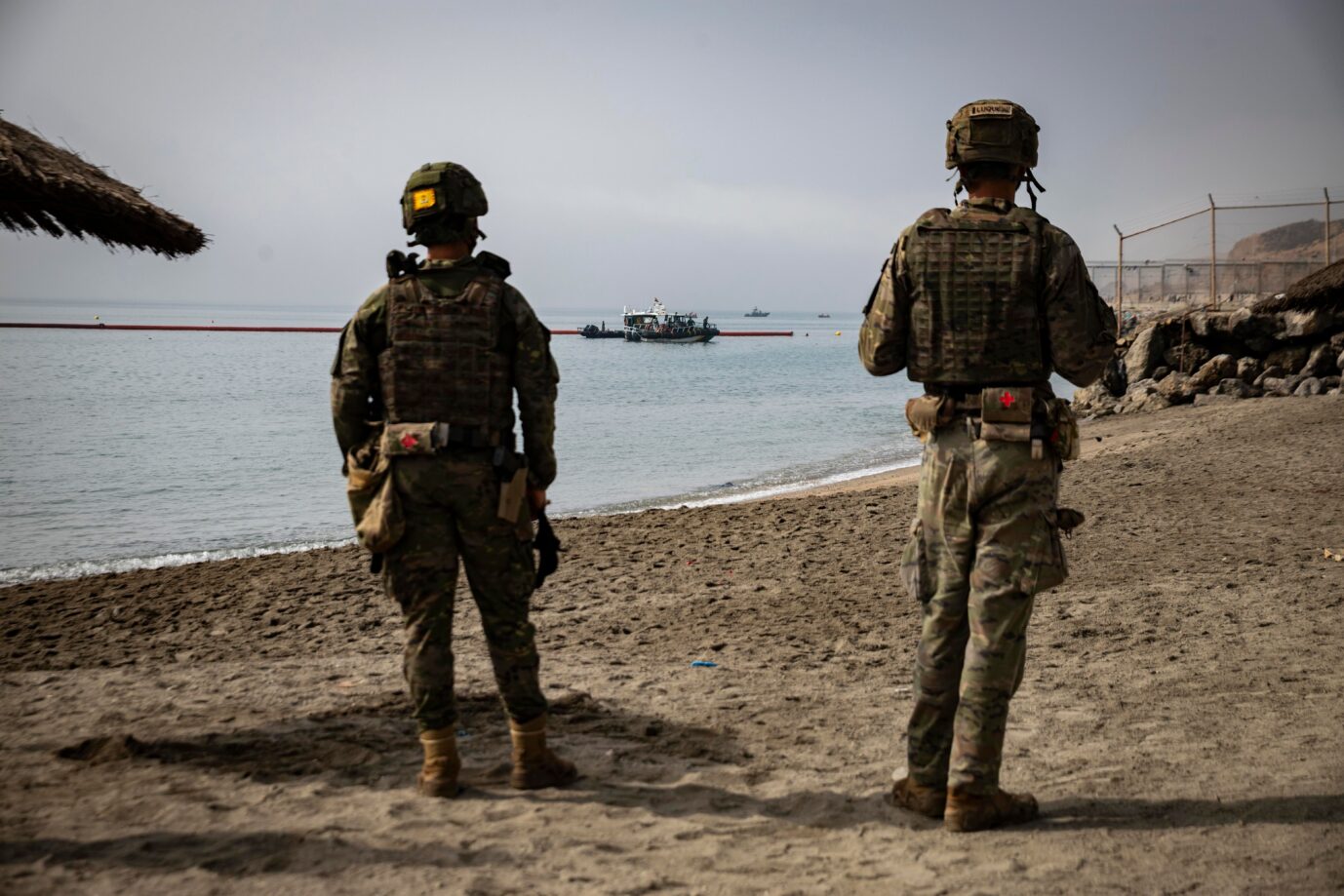
The European Union’s border security framework has come under severe strain following a mass migrant surge on the Spanish exclave of Ceuta, exposing deep cracks in Brussels’ migration policy and prompting member states to reimpose internal border controls against one another.

When Austrian EU Migration Commissioner Magnus Brunner declared on August 4 that the Ceuta crisis constituted a test of resilience that Europe had passed, his assessment seemed designed to quickly close the chapter on an uncomfortable incident. According to Junge Freiheit, Brunner insisted the situation was under control, no one had reached the Spanish mainland, and the Schengen area remained unaffected.

Reality, however, rapidly undermined that narrative. Local authorities in Ceuta continue to report around 11,000 migrants present in the territory, describing the situation as absolutely untenable. More than a thousand unaccompanied minors are being distributed across other Spanish regions. Brunner’s claim that Schengen remained untouched proved equally short-lived: Italy introduced controls on travelers from Spain, Madrid responded with an ultimatum and then implemented its own controls on Italian travelers.

What began as a border surge on a Spanish exclave has escalated within days into a European-wide crisis. Twenty-two member states backed a letter led by Italy and Denmark calling for a tougher approach. Finland and Denmark supported demands for a temporary suspension of Schengen free movement with respect to Spain, France strengthened its controls, and Germany issued calls for more robust protection of Europe’s external borders.

Petra Steger, an Austrian member of the European Parliament representing the Freedom Party, told Junge Freiheit that Brunner’s optimism was incomprehensible. She remarked that if the migration commissioner declares the test passed while thousands of migrants live on Ceuta’s streets and EU states reintroduce border controls against each other due to the crisis, then Europe is not resilient but Brussels is reality-resistant.

Even voices on the political left have begun expressing doubts about Europe’s migration architecture, though their proposed solutions differ sharply. Social media commentary from progressive circles calls not for deportations but for greater solidarity, redistribution, and legal pathways. Yet the diagnosis converges: without a functioning common response, the continent faces national unilateralism, mutual blame, and the gradual erosion of the shared system.

Geopolitical Weaponization of Migration

The Ceuta crisis extends far beyond traditional asylum debates. Increasingly urgent questions have emerged about whether the events resulted merely from social media-driven mass movement or whether migration was deliberately weaponized as a geopolitical tool.

Spanish intelligence agencies suspect Morocco, while not directly orchestrating the surge, at minimum allowed the movement to proceed and subsequently exploited it politically. This would repeat a familiar pattern: during the 2021 Ceuta crisis, the kingdom was accused of deliberately loosening border security to pressure Madrid.

More explosive still are suggestions, advanced by Chinese intelligence according to Junge Freiheit, that Israel may have played a role. The analysis points to the extremely close relationship between Rabat and Jerusalem, suggesting the Mossad could have leveraged enhanced security and intelligence cooperation with Morocco to pressure Pedro Sánchez’s government over its Israel-critical Middle East policy while simultaneously exacerbating intra-European tensions. No publicly verifiable evidence of direct Israeli involvement has emerged, yet the fact that such interpretations are now discussed not only in security policy circles but also in mainstream media demonstrates how thoroughly migration has come to be viewed as an instrument of hybrid power politics.

Eastern Borders Under Assault

Those tempted to view this as peculiar to Spanish-Moroccan relations need only look eastward. Lithuanian border guards discovered another tunnel beneath the fence with Belarus in early August, approximately one and a half meters deep, reinforced with timber, and extending several meters onto Lithuanian territory. It marked the third such discovery within weeks.

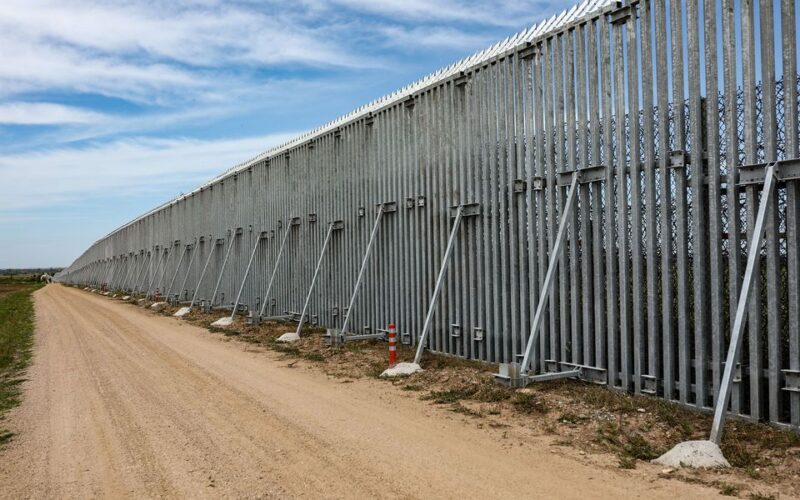
Brussels has long recognized Minsk’s deliberate funneling of migrants to the European Union’s external border as a textbook example of migration instrumentalization. In the south, European border installations are being overrun; in the east, they are being undermined. Between these fronts, member states quarrel over whether they must reintroduce mutual controls to protect themselves from the consequences.

Migration Commissioner Brunner may have declared the Ceuta test passed, but the episode more likely constitutes a warning. The decisive question for European migration policy will no longer be simply how many people are registered, distributed, or eventually returned, but whether Europe is prepared to recognize that its external borders have become part of a geopolitical battlefield where hostile actors actively exploit migration flows as weapons of statecraft.

With information from Junge Freiheit
Share:
Dimitris Papafotis
Dimitris Papafotis

Dimitris Papafotis is the editor-in-chief of NewsFire.GR. He was born and raised in Athens. He studied at the Journalism Workshop (1991-1993). He currently lives in Pyrgos, Ilia, where he has been active in radio and various newspapers, while also maintaining his personal blog, Papafotis.gr.

The European Union’s border security framework has come under severe strain following a mass migrant surge on the Spanish exclave of Ceuta, exposing deep cracks in Brussels’ migration policy and prompting member states to reimpose internal border controls against one another.

When Austrian EU Migration Commissioner Magnus Brunner declared on August 4 that the Ceuta crisis constituted a test of resilience that Europe had passed, his assessment seemed designed to quickly close the chapter on an uncomfortable incident. According to Junge Freiheit, Brunner insisted the situation was under control, no one had reached the Spanish mainland, and the Schengen area remained unaffected.

Reality, however, rapidly undermined that narrative. Local authorities in Ceuta continue to report around 11,000 migrants present in the territory, describing the situation as absolutely untenable. More than a thousand unaccompanied minors are being distributed across other Spanish regions. Brunner’s claim that Schengen remained untouched proved equally short-lived: Italy introduced controls on travelers from Spain, Madrid responded with an ultimatum and then implemented its own controls on Italian travelers.

What began as a border surge on a Spanish exclave has escalated within days into a European-wide crisis. Twenty-two member states backed a letter led by Italy and Denmark calling for a tougher approach. Finland and Denmark supported demands for a temporary suspension of Schengen free movement with respect to Spain, France strengthened its controls, and Germany issued calls for more robust protection of Europe’s external borders.

Petra Steger, an Austrian member of the European Parliament representing the Freedom Party, told Junge Freiheit that Brunner’s optimism was incomprehensible. She remarked that if the migration commissioner declares the test passed while thousands of migrants live on Ceuta’s streets and EU states reintroduce border controls against each other due to the crisis, then Europe is not resilient but Brussels is reality-resistant.

Even voices on the political left have begun expressing doubts about Europe’s migration architecture, though their proposed solutions differ sharply. Social media commentary from progressive circles calls not for deportations but for greater solidarity, redistribution, and legal pathways. Yet the diagnosis converges: without a functioning common response, the continent faces national unilateralism, mutual blame, and the gradual erosion of the shared system.

Geopolitical Weaponization of Migration

The Ceuta crisis extends far beyond traditional asylum debates. Increasingly urgent questions have emerged about whether the events resulted merely from social media-driven mass movement or whether migration was deliberately weaponized as a geopolitical tool.

Spanish intelligence agencies suspect Morocco, while not directly orchestrating the surge, at minimum allowed the movement to proceed and subsequently exploited it politically. This would repeat a familiar pattern: during the 2021 Ceuta crisis, the kingdom was accused of deliberately loosening border security to pressure Madrid.

More explosive still are suggestions, advanced by Chinese intelligence according to Junge Freiheit, that Israel may have played a role. The analysis points to the extremely close relationship between Rabat and Jerusalem, suggesting the Mossad could have leveraged enhanced security and intelligence cooperation with Morocco to pressure Pedro Sánchez’s government over its Israel-critical Middle East policy while simultaneously exacerbating intra-European tensions. No publicly verifiable evidence of direct Israeli involvement has emerged, yet the fact that such interpretations are now discussed not only in security policy circles but also in mainstream media demonstrates how thoroughly migration has come to be viewed as an instrument of hybrid power politics.

Eastern Borders Under Assault

Those tempted to view this as peculiar to Spanish-Moroccan relations need only look eastward. Lithuanian border guards discovered another tunnel beneath the fence with Belarus in early August, approximately one and a half meters deep, reinforced with timber, and extending several meters onto Lithuanian territory. It marked the third such discovery within weeks.

Brussels has long recognized Minsk’s deliberate funneling of migrants to the European Union’s external border as a textbook example of migration instrumentalization. In the south, European border installations are being overrun; in the east, they are being undermined. Between these fronts, member states quarrel over whether they must reintroduce mutual controls to protect themselves from the consequences.

Migration Commissioner Brunner may have declared the Ceuta test passed, but the episode more likely constitutes a warning. The decisive question for European migration policy will no longer be simply how many people are registered, distributed, or eventually returned, but whether Europe is prepared to recognize that its external borders have become part of a geopolitical battlefield where hostile actors actively exploit migration flows as weapons of statecraft.

With information from Junge Freiheit