Meloni Migration Pact Divides European Socialists
Denmark's Social Democrat prime minister faces criticism from fellow leftists after partnering with Italy's Giorgia Meloni on immigration enforcement following a migration surge in Spain's Ceuta.
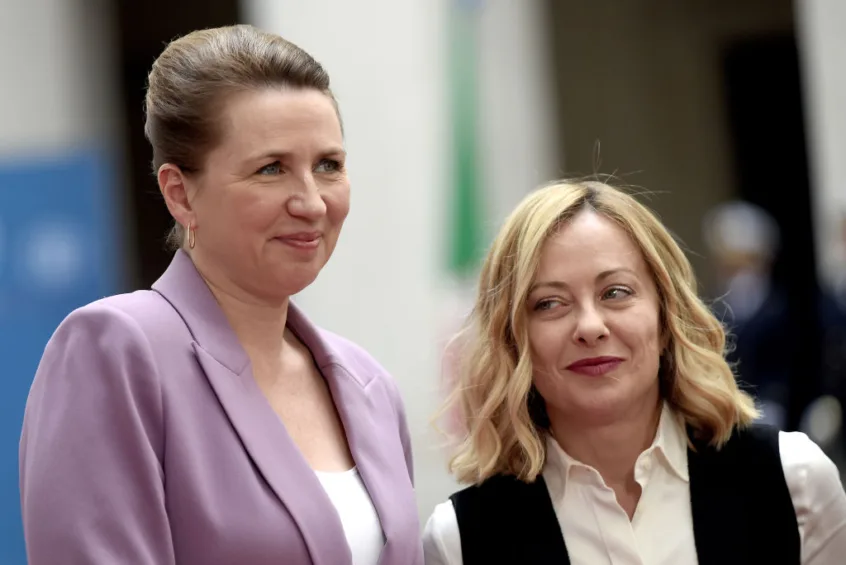

The dispute, reported by Brussels Signal, exposes fundamental disagreements among European social democrats over border security and whether collaboration with centre-right governments can be justified in pursuit of stricter migration controls.
The controversy erupted following the migration crisis that hit Ceuta, Spain’s North African enclave, on July 30. Spanish interior ministry figures show approximately 72,000 individuals crossed from Morocco in just over 24 hours, though the majority returned within two days.
On August 1, Mette Frederiksen and Giorgia Meloni spearheaded a joint letter addressed to European Council President António Costa, European Commission President Ursula von der Leyen, and Ireland’s Council presidency. The document ultimately secured backing from 22 of the EU’s 27 member states, with Spain, France, Portugal, Ireland and Luxembourg notably refusing to sign.
The letter demanded robust EU action against illegal migration, asserting the bloc has a duty to deter and combat unlawful entry effectively. It advocated for reinforced external borders and targeted Spain’s regularisation programmes for irregular migrants, while pointing to a Spanish Supreme Court ruling on pushbacks as having precipitated the Ceuta influx.
Cross-Ideological Alliance Deepens
According to Brussels Signal, the partnership between the Italian and Danish leaders intensified on August 10 when they released a separate joint declaration titled “A joint message for Europe” via social media. Despite their divergent political origins, both stressed their shared commitment to defending Europe.
The statement rejected uncontrolled immigration into Europe, contending that illegal migration fuels rising crime, strains public services and undermines public confidence. They advocated for enhanced deportation mechanisms and proposed establishing repatriation centres in third countries and other solutions beyond European borders.
The declaration ventured beyond immigration policy, with both leaders emphasising the necessity of safeguarding Europe’s Christian cultural heritage and insisting newcomers must respect European values.
Socialist Backlash Against Frederiksen
Javi López, a European Parliament vice-president representing Spain’s Socialist Workers’ Party (PSOE), and Peppe Provenzano, foreign affairs chief of Italy’s Democratic Party (PD), responded with a letter to Stefan Löfven, president of the Party of European Socialists (PES), dated August 17 and published the following day.
Both officials, who serve on the PES presidency, have requested Löfven place the matter before the party’s upcoming session for a vote.
The letter condemned what it described as selective European solidarity, characterising it as unacceptable that while a European partner faced extraordinary pressure, a member of their political family opted to coordinate with Meloni instead. They also criticised Rome’s suspension of Schengen checks with Spain as propaganda, noting no free movement exists between Ceuta and the broader EU.
López and Provenzano accused the Danish prime minister of adopting the radical right’s perspective, which frames migration as a perpetual emergency despite irregular arrivals to Europe having declined roughly 40 per cent since the year began.
The socialist critics argued the disagreement transcends specific migration policy differences. They contended the fundamental question is whether European socialists will permit the extreme right to define the parameters of continental debate.
The confrontation highlights growing tensions within the European Left over whether traditional social democratic parties should accommodate public concerns about border security or maintain ideological purity on immigration, even as conservative and populist movements gain ground across the continent.
With information from Brussels Signal