Mediapart’s Plenel Praises LFI Mayors for Skin Color
Mediapart co-founder Edwy Plenel sparked controversy by celebrating the election of several Seine-Saint-Denis mayors based explicitly on their Black identity rather than policies or qualifications.
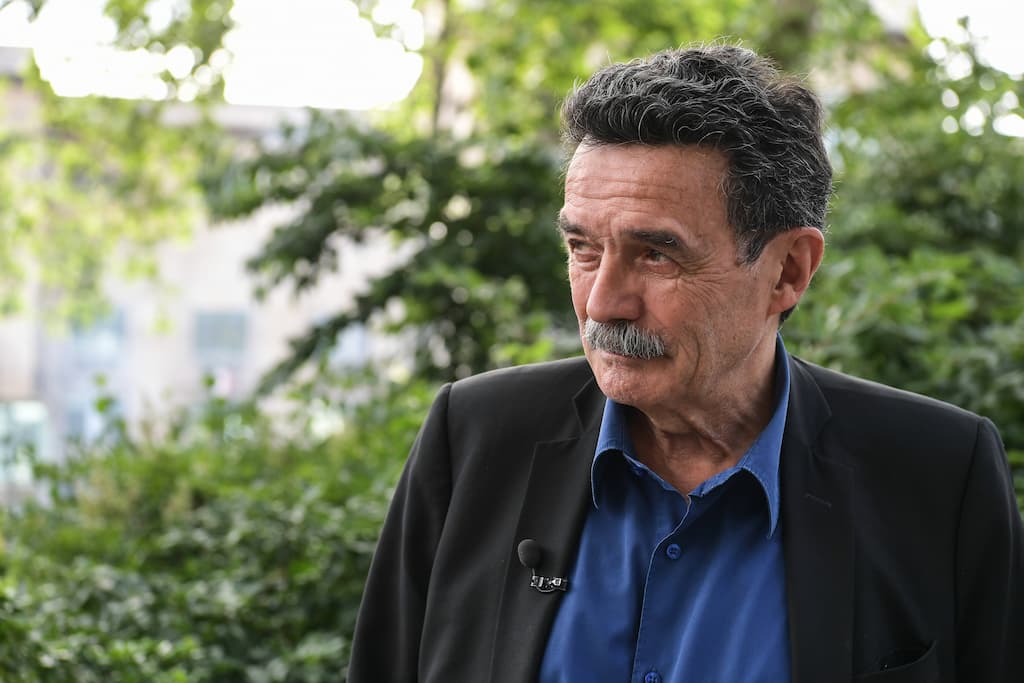

In a video widely circulated on social media this week, extracted from a livestream hosted by far-left influencer Jean Massiet on August 18, Plenel addressed his audience with the words “Ladies and gentlemen, racists” before proceeding to list the names of newly elected municipal officials from the department northeast of Paris.
Among those he named were Mélissa Youssouf, the Green Party mayor of Villepinte, Bally Bagayoko, the far-left LFI mayor of Saint-Denis, Aly Diouara, LFI mayor of La Courneuve, as well as Demba Traoré in Blanc-Mesnil, Mohamed Gnabaly in L’Île-Saint-Denis, and Dieunor Excellent in Villetaneuse. Several of these victories had been notable during the March municipal elections, including Bagayoko’s first-round win in Saint-Denis and Traoré’s success in Blanc-Mesnil.
While Plenel initially noted that these officials all belong to the left “in its diversity,” he then chose a different criterion to explain why he wished to pay them tribute. They all share a common feature, he stated: they are all Black.
The veteran journalist went on to declare that France is also Black, before referencing an Arab, Asian, and mixed-race France as well. His remarks represented an explicitly racial framing of political representation, celebrating elected officials primarily on the basis of their ethnic identity rather than their policies or qualifications.
Mediapart’s Pattern of Racialized Political Coverage
This is not the first time Plenel’s publication has emphasized the racial characteristics of political candidates. On March 18, Mediapart published an article celebrating the electoral success of what it termed “racialized candidates” in suburban areas, specifically highlighting Bagayoko and Diouara and arguing that their results raised questions about “representativeness” on the left.
The outlet subsequently devoted a lengthy profile to Bagayoko, presenting the new mayor of Saint-Denis as the target of a “racist onslaught” following his election. The LFI official himself had placed anti-racism among the defining themes of his mandate.
A Double Standard on Identity Politics
With his latest declaration, Plenel has taken this reasoning to its logical conclusion. While his critics are routinely accused of viewing these political leaders through the lens of their origin or skin color, the journalist himself has now openly claimed race as the explicit basis for his tribute.
The incident highlights the contradictions inherent in contemporary left-wing identity politics in France. Those who raise concerns about demographic change or question the backgrounds of public figures are condemned as racists, yet progressive activists feel entitled to celebrate politicians specifically because of their ethnic background.
Plenel’s remarks represent a highly identitarian approach to celebrating French “diversity,” one that prioritizes racial categorization over individual merit or political substance. His framing suggests that what matters most about these mayors is not their governance, their programs, or their connection to local communities, but rather the color of their skin.
The video has generated significant backlash on social media, with critics pointing out that reducing elected officials to their racial identity is precisely the kind of thinking that genuine anti-racism should oppose. By making race the primary lens through which to view political achievement, Plenel has revealed the extent to which identity politics has displaced universalist principles within segments of the French left.
With information from Valeurs Actuelles