Necessary Cookies

Required for the site to function. Cannot be disabled.

Analytics Cookies

Help us understand how visitors interact with our site (Google Analytics via GTM).

Marketing Cookies

Used to track visitors and deliver personalised advertisements.

We use cookies to enhance your browsing experience and analyse site traffic. By clicking Accept All, you consent to our use of cookies. Privacy Policy
NewsFire Global
Home News Europe World Christianity Culture Wars Opinion Video
Information
About Us Authors Advertising Terms & Conditions Privacy Policy Contact
R2B Media
R2B NEWSFIRE.GR PAPAFOTIS.GR THRACTION HELLENIC CONSERVATIVES RIGHT2THEBONE YT
News Europe

Leftist Mayor Opposes 2004 Ban on Islamic Veils in Schools

Saint-Denis's far-left mayor criticized France's 2004 law banning conspicuous religious symbols in schools, claiming it targets Muslims under the guise of secularism, drawing rebukes even from the left.

Dimitris Papafotis
Dimitris Papafotis Editor in Chief
AUGUST 14, 2026 AT 6:32 PM

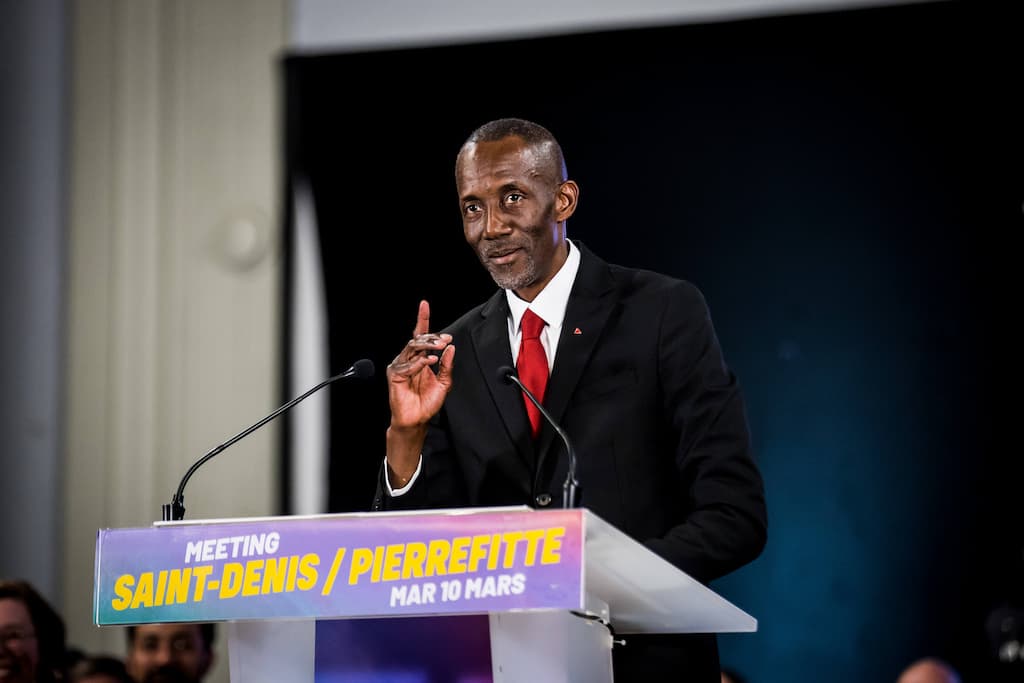
Bally Bagayoko, who represents the hard-left La France Insoumise party, attempted to walk a tightrope on the Islamic veil issue during an interview with Le Point on August 12, according to Valeurs Actuelles. While the mayor insisted his municipality embodies the principle of secularism, he simultaneously attacked the March 15, 2004 law that regulates the wearing of religious symbols in schools.

The legislation, still in force today, prohibits students in public primary schools, middle schools, and high schools from wearing signs or clothing that conspicuously display their religious affiliation. The ban applies equally to Islamic headscarves, Jewish kippas, and large crosses. When lawmakers passed the measure, they explicitly grounded the prohibition in the principle of secularism.

Bagayoko offered a radically different interpretation. As reported by Le Point, the mayor claimed that certain laws undermine fundamental rights and seek to target the Muslim community under cover of the principle of secularism.

A Challenge to Republican Values

His position stands in stark contrast to the spirit articulated when the law was adopted. The implementation circular signed in May 2004 by François Fillon presented the legislation as a means to strengthen the Republic’s schools and reaffirm a principle of secularism based both on freedom of conscience and on common values.

The Saint-Denis mayor’s comments drew a rebuke from within the left itself. Michaël Delafosse, the Socialist mayor of Montpellier, defended maintaining the 2004 law on X. The Socialist official stated that secularism represents France’s greatness and argued it should be strengthened rather than weakened. For Delafosse, the prohibition on conspicuous religious symbols precisely serves to protect public schools from religious pressure and guarantee students’ freedom of conscience.

A Pattern of Opposition

This is not Bagayoko’s first public stand against restrictions on Islamic veil wearing. In February 2025, he praised senators who opposed a proposal to ban conspicuous religious symbols in sporting competitions. At the time, he denounced the measure as an attack on Muslim women.

The controversy highlights the deepening divide within France’s political left over secularism and the accommodation of Islamic religious practices. While traditional Socialist voices continue to defend strict separation of religion from public institutions, far-left figures increasingly frame enforcement of secular laws as discrimination against Muslims.

The 2004 law remains a cornerstone of French secularism policy, designed to ensure that public education remains free from religious influence and that students of all backgrounds can learn in an environment protected from communitarian pressures.

With information from Valeurs Actuelles

Share:
Dimitris Papafotis
Dimitris Papafotis

Dimitris Papafotis is the editor-in-chief of NewsFire.GR. He was born and raised in Athens. He studied at the Journalism Workshop (1991-1993). He currently lives in Pyrgos, Ilia, where he has been active in radio and various newspapers, while also maintaining his personal blog, Papafotis.gr.

Bally Bagayoko, who represents the hard-left La France Insoumise party, attempted to walk a tightrope on the Islamic veil issue during an interview with Le Point on August 12, according to Valeurs Actuelles. While the mayor insisted his municipality embodies the principle of secularism, he simultaneously attacked the March 15, 2004 law that regulates the wearing of religious symbols in schools.

The legislation, still in force today, prohibits students in public primary schools, middle schools, and high schools from wearing signs or clothing that conspicuously display their religious affiliation. The ban applies equally to Islamic headscarves, Jewish kippas, and large crosses. When lawmakers passed the measure, they explicitly grounded the prohibition in the principle of secularism.

Bagayoko offered a radically different interpretation. As reported by Le Point, the mayor claimed that certain laws undermine fundamental rights and seek to target the Muslim community under cover of the principle of secularism.

A Challenge to Republican Values

His position stands in stark contrast to the spirit articulated when the law was adopted. The implementation circular signed in May 2004 by François Fillon presented the legislation as a means to strengthen the Republic’s schools and reaffirm a principle of secularism based both on freedom of conscience and on common values.

The Saint-Denis mayor’s comments drew a rebuke from within the left itself. Michaël Delafosse, the Socialist mayor of Montpellier, defended maintaining the 2004 law on X. The Socialist official stated that secularism represents France’s greatness and argued it should be strengthened rather than weakened. For Delafosse, the prohibition on conspicuous religious symbols precisely serves to protect public schools from religious pressure and guarantee students’ freedom of conscience.

A Pattern of Opposition

This is not Bagayoko’s first public stand against restrictions on Islamic veil wearing. In February 2025, he praised senators who opposed a proposal to ban conspicuous religious symbols in sporting competitions. At the time, he denounced the measure as an attack on Muslim women.

The controversy highlights the deepening divide within France’s political left over secularism and the accommodation of Islamic religious practices. While traditional Socialist voices continue to defend strict separation of religion from public institutions, far-left figures increasingly frame enforcement of secular laws as discrimination against Muslims.

The 2004 law remains a cornerstone of French secularism policy, designed to ensure that public education remains free from religious influence and that students of all backgrounds can learn in an environment protected from communitarian pressures.

With information from Valeurs Actuelles