Necessary Cookies

Required for the site to function. Cannot be disabled.

Analytics Cookies

Help us understand how visitors interact with our site (Google Analytics via GTM).

Marketing Cookies

Used to track visitors and deliver personalised advertisements.

We use cookies to enhance your browsing experience and analyse site traffic. By clicking Accept All, you consent to our use of cookies. Privacy Policy
NewsFire Global
Home News Europe World Christianity Culture Wars Opinion Video
Information
About Us Authors Advertising Terms & Conditions Privacy Policy Contact
R2B Media
R2B NEWSFIRE.GR PAPAFOTIS.GR THRACTION HELLENIC CONSERVATIVES RIGHT2THEBONE YT
News World

Jordan: Caught Between Iranian Hammer and Popular Anvil

Jordan faces a strategic dilemma after Iranian strikes killed three Americans at a Jordanian base, exposing tensions between its Western alliances and a population hostile to the U.S. and Israel.

JULY 22, 2026 AT 7:39 PM

According to Causeur, the July 17 missile and drone attack on the Muwaffaq-Salti air base near Azraq, located approximately 100 kilometers east of Amman, marked a dangerous escalation in the conflict between the United States and Iran. The strike represented the first American casualties directly caused by Iranian fire since fighting resumed twelve days earlier.

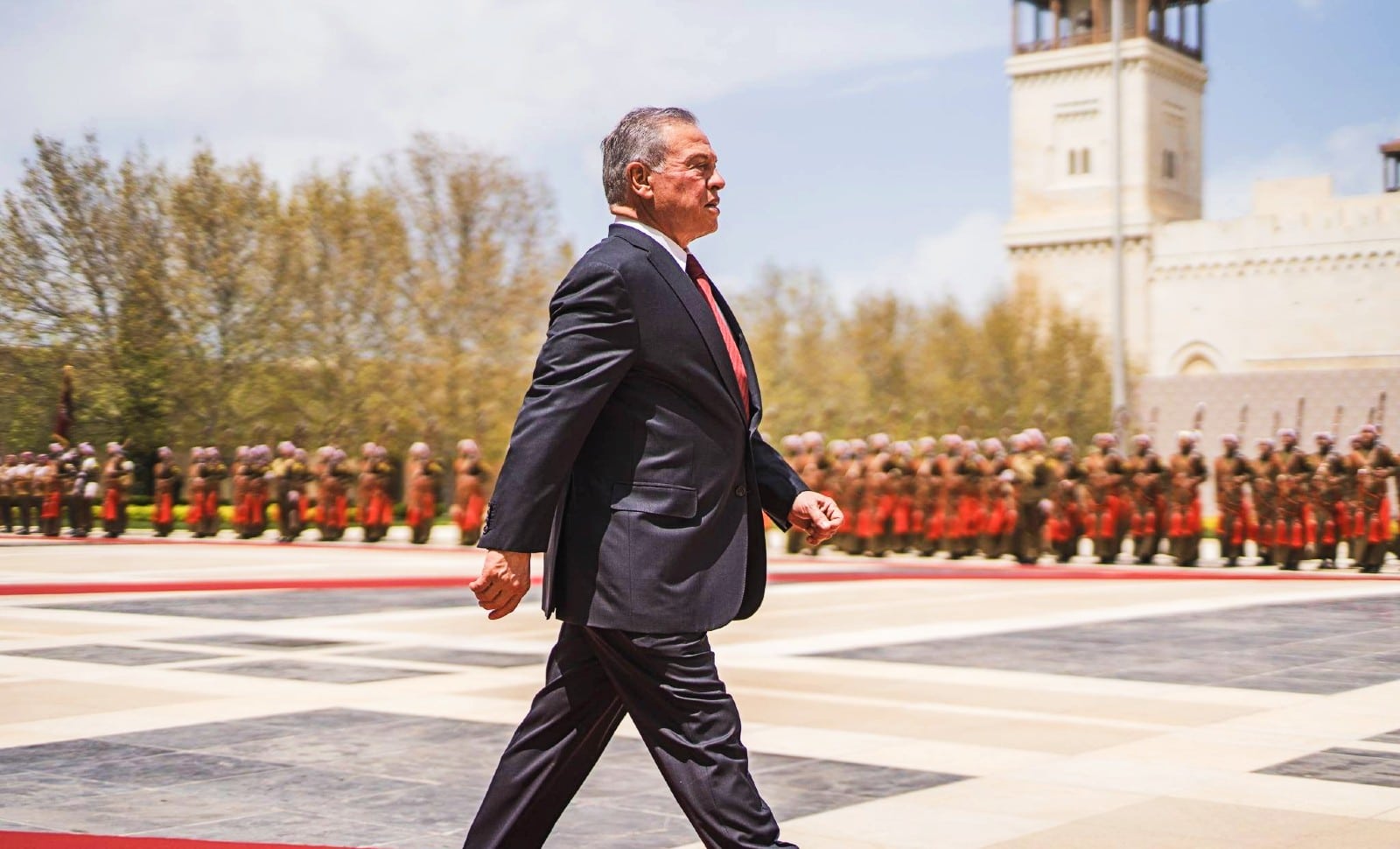
King Abdullah II now faces the same impossible dilemma that confronted his father and great-grandfather before him: reconciling the strategic interests of the Jordanian state with the passions of the Arab street. Historically, when this contradiction becomes too acute, Jordan’s rulers have typically yielded ground to popular sentiment.

Strategic Asset Becomes Iranian Target

The Iranian assault employed Kheibar Shekan missiles, whose speed and maneuvering capabilities complicate interception efforts. One missile struck prefabricated housing units where American soldiers lived. The casualties belonged to U.S. Army air defense and anti-missile units tasked with protecting the base against drones and low-altitude projectiles.

Muwaffaq-Salti, inaugurated in 1980 on a site used by Lawrence of Arabia in 1918, is not legally an American base. It belongs to the Jordanian armed forces, remains under Royal Air Force control, and hosts three Jordanian F-16 squadrons that form the core of the kingdom’s fighter capability. The base bears the name of Muwaffaq Salti, a Jordanian pilot killed in November 1966 during combat with Israeli aviation, when his British-made Hawker Hunter was shot down by an Israeli Dassault Mirage.

American Presence Expands Dramatically

Since the campaign against the Islamic State organization, American presence at Muwaffaq-Salti has grown substantially. The base serves as operational headquarters for the 332nd Air Expeditionary Wing of the U.S. Air Force, responsible for conducting operations throughout the Levant. Its missions include precision strikes, surveillance, intelligence, aerial refueling, combat search and rescue, and support for operations in Syria and Iraq.

On a regional scale, the wing utilizes rotating deployments of F-15E, F-16, A-10, KC-135 tankers, MQ-9 Reaper drones, HC-130 aircraft, and rescue helicopters. Since the war with Iran began, additional fighters, surveillance drones, transport aircraft, and air defense units have deployed to Azraq.

This deployment is no longer provisional. Beginning in 2019, Washington committed over 140 million dollars to expand and modernize Muwaffaq-Salti. New parking areas were developed for transport aircraft, close air support planes, intelligence drones, and special forces assets. Taxiways, logistics facilities, a cargo consolidation area, and a new control tower were constructed.

Double Function Explains Iranian Targeting

Muwaffaq-Salti has thus become a dual-purpose platform, serving simultaneously as an essential combat base for the Jordanian air force and an advanced support point enabling the United States to operate between Iraq, Syria, the Arabian Peninsula, and the eastern Mediterranean.

This dual function explains precisely why Tehran selected it for attack. By striking the site, Iran can claim it targets American forces engaged in the war while placing Amman before a politically dangerous contradiction: continue hosting military assets at the risk of transforming one of its principal national bases into a target, or curtail cooperation with Washington and jeopardize the financial and security assistance upon which the kingdom depends.

Jordan relies heavily on American financial support and maintains a peace treaty with Israel, making it a key strategic partner for Washington in the region. Yet the kingdom’s population remains profoundly hostile to Israel and increasingly suspicious of the United States, as Causeur reports.

King Abdullah cannot openly embrace this strategic alignment without provoking domestic unrest. The Iranian strike has transformed Jordan from merely a territory overflown by Iranian missiles aimed at Israel into a direct target itself, forcing the Hashemite monarch into an increasingly untenable position where the interests of state security collide with popular sentiment.

With information from Causeur

Share:
Eleni Papadaki-Van Der Merwe

She was born in 1986 in Johannesburg, South Africa. She is the granddaughter of an immigrant from Crete who settled in the Greek community of Johannesburg (one of the largest in Africa). She holds a bachelor’s degree in International Relations and Political Science from the University of the Witwatersrand (Wits) in Johannesburg and a master’s degree in Journalism from Rhodes University in Grahamstown. She began her career at English-language media outlets in Johannesburg, covering politics and economics, with a focus on issues related to migration and the diaspora. She moved to Athens in 2015 to “return to her roots,” initially to pursue graduate studies, and has remained there permanently. She is married to an Afrikaner; they have two children and live in the southern suburbs of Athens.

According to Causeur, the July 17 missile and drone attack on the Muwaffaq-Salti air base near Azraq, located approximately 100 kilometers east of Amman, marked a dangerous escalation in the conflict between the United States and Iran. The strike represented the first American casualties directly caused by Iranian fire since fighting resumed twelve days earlier.

King Abdullah II now faces the same impossible dilemma that confronted his father and great-grandfather before him: reconciling the strategic interests of the Jordanian state with the passions of the Arab street. Historically, when this contradiction becomes too acute, Jordan’s rulers have typically yielded ground to popular sentiment.

Strategic Asset Becomes Iranian Target

The Iranian assault employed Kheibar Shekan missiles, whose speed and maneuvering capabilities complicate interception efforts. One missile struck prefabricated housing units where American soldiers lived. The casualties belonged to U.S. Army air defense and anti-missile units tasked with protecting the base against drones and low-altitude projectiles.

Muwaffaq-Salti, inaugurated in 1980 on a site used by Lawrence of Arabia in 1918, is not legally an American base. It belongs to the Jordanian armed forces, remains under Royal Air Force control, and hosts three Jordanian F-16 squadrons that form the core of the kingdom’s fighter capability. The base bears the name of Muwaffaq Salti, a Jordanian pilot killed in November 1966 during combat with Israeli aviation, when his British-made Hawker Hunter was shot down by an Israeli Dassault Mirage.

American Presence Expands Dramatically

Since the campaign against the Islamic State organization, American presence at Muwaffaq-Salti has grown substantially. The base serves as operational headquarters for the 332nd Air Expeditionary Wing of the U.S. Air Force, responsible for conducting operations throughout the Levant. Its missions include precision strikes, surveillance, intelligence, aerial refueling, combat search and rescue, and support for operations in Syria and Iraq.

On a regional scale, the wing utilizes rotating deployments of F-15E, F-16, A-10, KC-135 tankers, MQ-9 Reaper drones, HC-130 aircraft, and rescue helicopters. Since the war with Iran began, additional fighters, surveillance drones, transport aircraft, and air defense units have deployed to Azraq.

This deployment is no longer provisional. Beginning in 2019, Washington committed over 140 million dollars to expand and modernize Muwaffaq-Salti. New parking areas were developed for transport aircraft, close air support planes, intelligence drones, and special forces assets. Taxiways, logistics facilities, a cargo consolidation area, and a new control tower were constructed.

Double Function Explains Iranian Targeting

Muwaffaq-Salti has thus become a dual-purpose platform, serving simultaneously as an essential combat base for the Jordanian air force and an advanced support point enabling the United States to operate between Iraq, Syria, the Arabian Peninsula, and the eastern Mediterranean.

This dual function explains precisely why Tehran selected it for attack. By striking the site, Iran can claim it targets American forces engaged in the war while placing Amman before a politically dangerous contradiction: continue hosting military assets at the risk of transforming one of its principal national bases into a target, or curtail cooperation with Washington and jeopardize the financial and security assistance upon which the kingdom depends.

Jordan relies heavily on American financial support and maintains a peace treaty with Israel, making it a key strategic partner for Washington in the region. Yet the kingdom’s population remains profoundly hostile to Israel and increasingly suspicious of the United States, as Causeur reports.

King Abdullah cannot openly embrace this strategic alignment without provoking domestic unrest. The Iranian strike has transformed Jordan from merely a territory overflown by Iranian missiles aimed at Israel into a direct target itself, forcing the Hashemite monarch into an increasingly untenable position where the interests of state security collide with popular sentiment.

With information from Causeur