Necessary Cookies

Required for the site to function. Cannot be disabled.

Analytics Cookies

Help us understand how visitors interact with our site (Google Analytics via GTM).

Marketing Cookies

Used to track visitors and deliver personalised advertisements.

We use cookies to enhance your browsing experience and analyse site traffic. By clicking Accept All, you consent to our use of cookies. Privacy Policy
NewsFire Global
Home News Europe World Christianity Culture Wars Opinion Video
Information
About Us Authors Advertising Terms & Conditions Privacy Policy Contact
R2B Media
R2B NEWSFIRE.GR PAPAFOTIS.GR THRACTION HELLENIC CONSERVATIVES RIGHT2THEBONE YT
News World

Iran Vows Washington Won’t Dictate Its National Interests

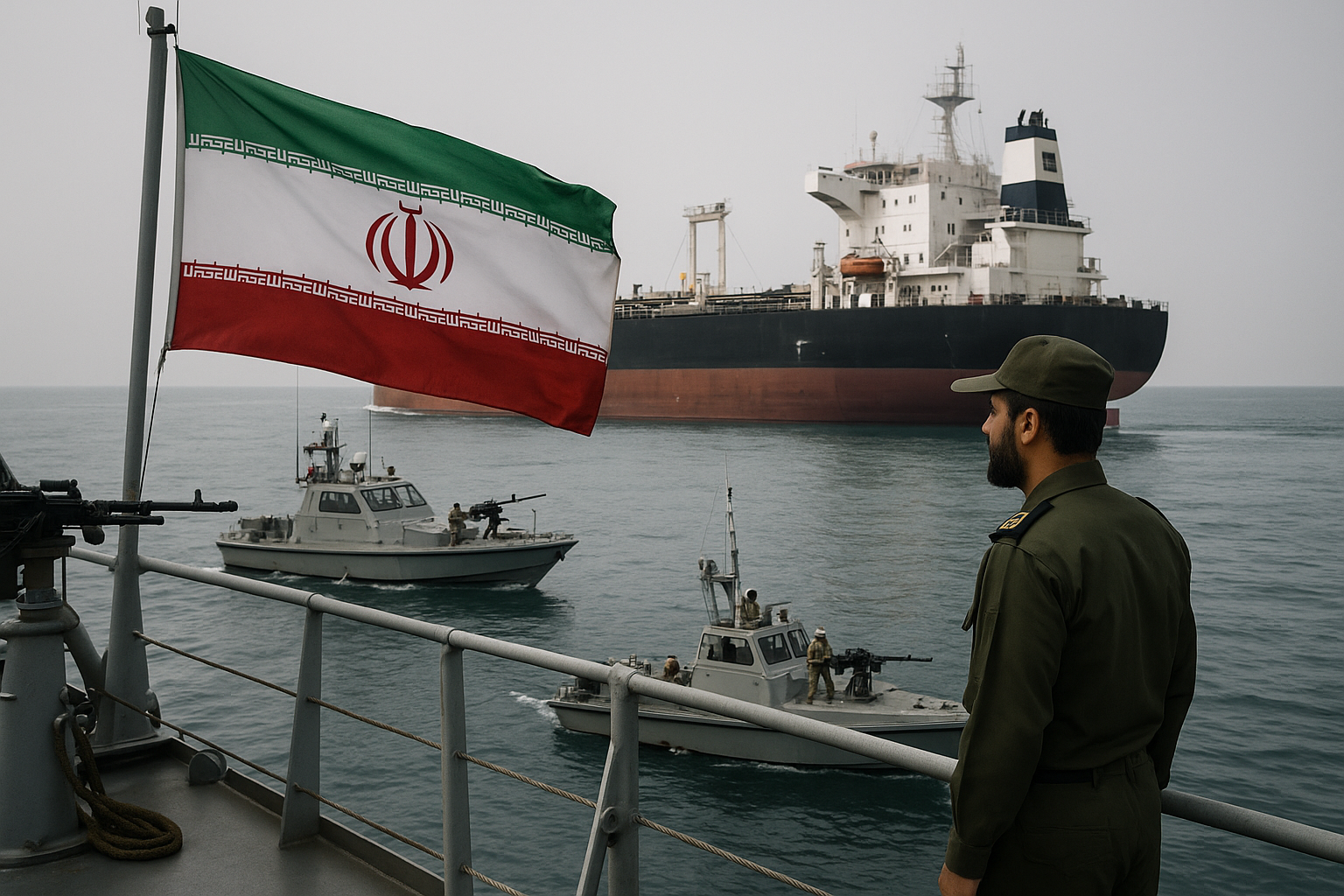
Iran seized a commercial vessel in the Persian Gulf, raising fears the incident could escalate into a broader regional crisis affecting global energy supplies.

JULY 27, 2026 AT 5:19 PM

According to Telegram @me_observer_TG, the incident represents the latest in a series of aggressive maneuvers by Tehran aimed at asserting dominance over strategic waterways through which a significant portion of the world’s energy supplies transit.

Strategic Chokepoint Under Threat

The Persian Gulf serves as a critical artery for international commerce, particularly oil and liquefied natural gas shipments destined for Western markets and allied nations. Iranian Revolutionary Guard Corps naval units have repeatedly demonstrated their willingness to disrupt freedom of navigation in these waters, employing harassment tactics against merchant shipping and naval vessels alike.

Western naval analysts warn that Iran’s pattern of provocative behavior in the Gulf follows a calculated strategy designed to test international resolve while maintaining plausible deniability. The regime in Tehran appears emboldened by perceived hesitation from major powers to respond decisively to such violations of maritime law.

Regional Security Architecture at Risk

The current escalation threatens to destabilize an already fragile security environment in the Middle East. Gulf Arab states, which depend on secure shipping lanes for their economic survival, have expressed growing concern over Iran’s assertive posture. Any miscalculation in these tense waters could rapidly spiral into a military confrontation drawing in multiple regional and international actors.

Defense experts emphasize that Iran’s naval provocations serve multiple domestic and foreign policy objectives. Internally, aggressive posturing reinforces the revolutionary regime’s nationalist credentials. Externally, it provides Tehran with leverage in negotiations over its nuclear program and regional influence.

Western Response and Deterrence

The incident underscores fundamental questions about Western commitment to maintaining freedom of navigation in international waters. Critics argue that insufficient responses to previous Iranian aggression have created an environment where Tehran feels empowered to continue escalating provocations without facing meaningful consequences.

Maritime security in the Persian Gulf requires sustained international attention and credible deterrence capabilities. The alternative—allowing a hostile regime to dictate terms of access to vital waterways—would set a dangerous precedent with far-reaching implications for global trade and energy security.

As tensions continue to simmer, the risk remains that a single miscalculation or aggressive act could transform a naval standoff into a regional conflagration affecting global energy markets and drawing major powers into direct confrontation.

With information from Telegram @me_observer_TG

Share:
Eleni Papadaki-Van Der Merwe

She was born in 1986 in Johannesburg, South Africa. She is the granddaughter of an immigrant from Crete who settled in the Greek community of Johannesburg (one of the largest in Africa). She holds a bachelor’s degree in International Relations and Political Science from the University of the Witwatersrand (Wits) in Johannesburg and a master’s degree in Journalism from Rhodes University in Grahamstown. She began her career at English-language media outlets in Johannesburg, covering politics and economics, with a focus on issues related to migration and the diaspora. She moved to Athens in 2015 to “return to her roots,” initially to pursue graduate studies, and has remained there permanently. She is married to an Afrikaner; they have two children and live in the southern suburbs of Athens.

According to Telegram @me_observer_TG, the incident represents the latest in a series of aggressive maneuvers by Tehran aimed at asserting dominance over strategic waterways through which a significant portion of the world’s energy supplies transit.

Strategic Chokepoint Under Threat

The Persian Gulf serves as a critical artery for international commerce, particularly oil and liquefied natural gas shipments destined for Western markets and allied nations. Iranian Revolutionary Guard Corps naval units have repeatedly demonstrated their willingness to disrupt freedom of navigation in these waters, employing harassment tactics against merchant shipping and naval vessels alike.

Western naval analysts warn that Iran’s pattern of provocative behavior in the Gulf follows a calculated strategy designed to test international resolve while maintaining plausible deniability. The regime in Tehran appears emboldened by perceived hesitation from major powers to respond decisively to such violations of maritime law.

Regional Security Architecture at Risk

The current escalation threatens to destabilize an already fragile security environment in the Middle East. Gulf Arab states, which depend on secure shipping lanes for their economic survival, have expressed growing concern over Iran’s assertive posture. Any miscalculation in these tense waters could rapidly spiral into a military confrontation drawing in multiple regional and international actors.

Defense experts emphasize that Iran’s naval provocations serve multiple domestic and foreign policy objectives. Internally, aggressive posturing reinforces the revolutionary regime’s nationalist credentials. Externally, it provides Tehran with leverage in negotiations over its nuclear program and regional influence.

Western Response and Deterrence

The incident underscores fundamental questions about Western commitment to maintaining freedom of navigation in international waters. Critics argue that insufficient responses to previous Iranian aggression have created an environment where Tehran feels empowered to continue escalating provocations without facing meaningful consequences.

Maritime security in the Persian Gulf requires sustained international attention and credible deterrence capabilities. The alternative—allowing a hostile regime to dictate terms of access to vital waterways—would set a dangerous precedent with far-reaching implications for global trade and energy security.

As tensions continue to simmer, the risk remains that a single miscalculation or aggressive act could transform a naval standoff into a regional conflagration affecting global energy markets and drawing major powers into direct confrontation.

With information from Telegram @me_observer_TG