How Ukraine War and Iran Conflict Are Merging Into Global Threat
Global conflicts in Ukraine, the Middle East, and East Asia are increasingly converging through Iranian shipping attacks and North Korean troop deployments, raising fears of a broader confrontation.
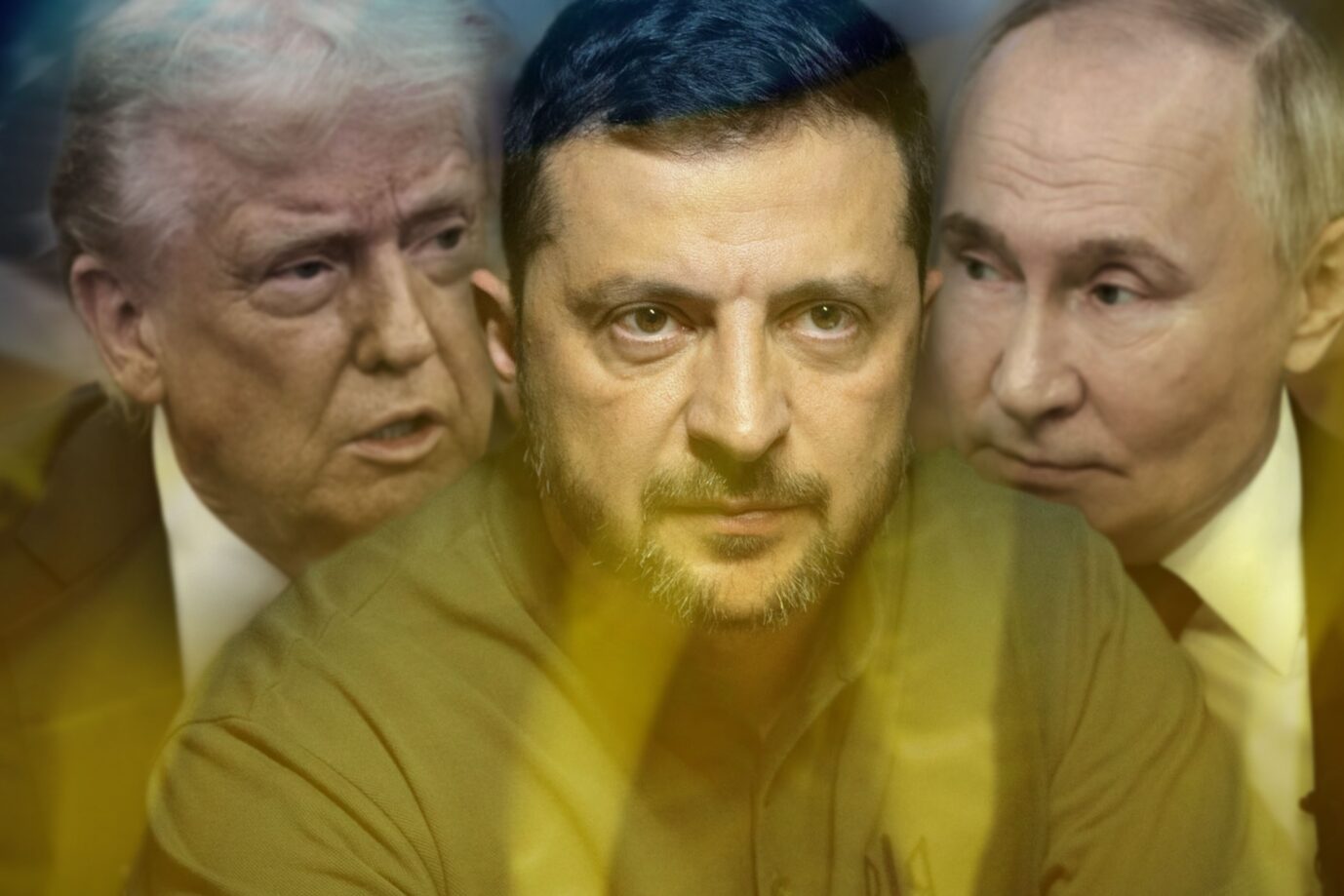

Russia’s invasion of Ukraine triggered the bloodiest war in Europe since World War II. Meanwhile, twelve states in the Middle East are now directly engaged in combat stemming from the conflict between Iran and the United States—the region’s most comprehensive war in decades. In East Asia, North Korea has dramatically accelerated its military buildup and officially abandoned the goal of peaceful reunification with South Korea, particularly as Pyongyang deepens cooperation with Moscow while attempting to reduce its decades-long dependency on Beijing, according to Junge Freiheit.
Until recently, these conflicts across Europe, the Middle East, and East Asia remained largely separate. However, overlaps are multiplying at an alarming rate. In recent days, Ukraine sank an Iranian commercial vessel in the Caspian Sea, killing one sailor. Kyiv confirmed attacks on Iranian shipping in the Caspian, stating the vessels had been supporting military cargo shipments to Russia. Tehran reportedly considered retaliatory strikes following the attack, though diplomatic intervention prevented an Iranian missile assault on a Ukrainian port—a move that would have significantly escalated the conflict between Iran, Russia, and the West, the New York Times reported.
Tehran Maintains Facade of Neutrality
Ukrainian President Volodymyr Zelenskyy recently warned that North Korea is preparing to deploy an additional 30,000 troops to support Russia’s war against Ukraine. When the first North Korean soldiers arrived at the front in late 2024, Zelenskyy characterized it as the first step toward a world war. The latest incident in the Caspian Sea could similarly be viewed as another step in that direction.
For now, this dangerous trajectory has been somewhat contained. Russia has suffered significant military setbacks in Ukraine and likely has little appetite for further escalation. The weakened Iranian regime also has no interest in opening a new front against itself. Tehran already faces considerable pressure from its confrontation with Israel and the United States, which explains its decision to forgo direct retaliation against Ukraine.
Iran supported Russia at the outset of the Ukraine war by providing hundreds of drones that Moscow deployed in attacks against Ukrainian targets. Since then, relations between Kyiv and Tehran have steadily deteriorated. However, Iran continues to deny direct involvement in the war, emphasizing that it remains neutral and respects Ukraine’s sovereignty and territorial integrity.
Zelenskyy Points to Russian-Iranian Cooperation
Kyiv’s decision to take military action against Iran may represent an attempt to deepen cooperation among Western allies. Ukraine likely sees an opportunity to improve relations with the Trump administration by highlighting Russia’s support for Iran in its war with the United States. Zelenskyy has already pointed to intelligence sharing by Russia that the Tehran regime used to attack American troops and bases in the region.
The Caspian front, combined with the Indian Ocean where the United States has imposed a naval blockade against Iran, is intended to form a ring of economic and military pressure around Tehran. Simultaneously, Ukraine’s provocation in the Caspian Sea may have been designed to draw European states more deeply into the Iran conflict—a step that would also align with the Trump administration’s interests.
Speculation is currently circulating about new mobilization efforts in Russia and the possible deployment of additional North Korean soldiers. The East Asian dictatorship has already committed up to 15,000 troops to Russia’s war against Ukraine, including in combat operations in Russia’s Kursk region. Further deployment of North Korean forces on European soil would mean an Asian state is directly intervening in a European war to an unprecedented degree. The conflict would thereby increasingly assume global dimensions and evolve into a confrontation between rival power blocs. The Ukraine war would become even more of a test case for the European security order, while Kyiv has already targeted one Kremlin partner—Iran—in the Caspian Sea.
Echoes of World War II
The First and Second World Wars took place across multiple continents. Both conflicts were also characterized by clearly defined global alliance systems. Between 1939 and 1945, the Axis powers of Germany, Italy, and Japan faced an alliance whose core consisted of Britain, the United States, and the Soviet Union. Both world wars also featured direct military confrontations between the world’s most powerful states at the time. Today’s conflicts already display several of these characteristics. The overlapping wars now span Europe and Asia and are increasingly affecting Africa as well.
Growing cooperation between Russia, China, Iran, and North Korea has prompted numerous American strategists to speak of an Axis of Adversaries or Axis of Upheaval.
However, Donald Trump’s often confrontational approach toward traditional U.S. allies in the European Union, along with Israel’s growing image problem in parts of Europe—such as Spain—and the Arab world, complicates the formation of a unified alliance against the anti-Western axis.
Yet cooperation among America’s rivals—Russia, China, North Korea, and Iran—also faces significant obstacles that prevent the formation of a truly cohesive bloc capable of mounting a coordinated global challenge to Western power.
With information from Junge Freiheit