China Doesn’t Need to Sink Carriers to Defeat America
The United States and China are engaged in a multifaceted strategic competition spanning technology, manufacturing, finance, and education rather than traditional military confrontation, according to Pedro Ordein.
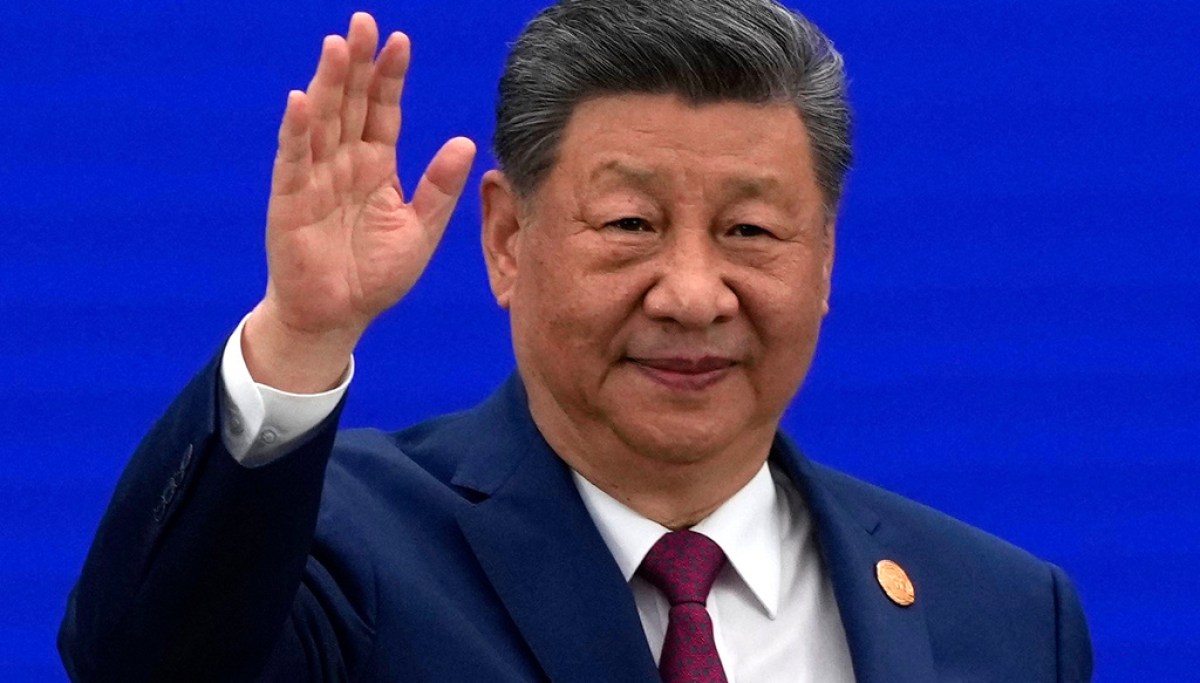

The most decisive strategic competitions throughout history have seldom hinged on a single military engagement, and the current contest between the United States and China follows that same pattern, according to Pedro Ordein writing in Washington Examiner.

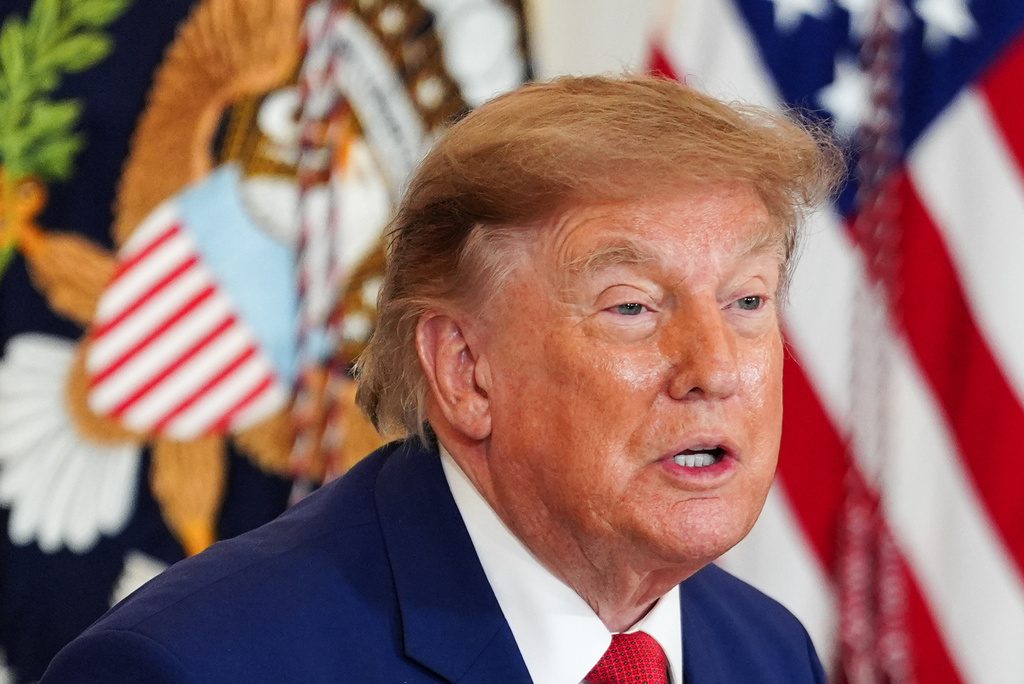
Rome’s imperial ascent was not achieved through one campaign alone. Britain’s dominance throughout the 1800s did not rest on a solitary naval triumph. America’s Cold War victory was not the product of one military strike. Instead, great powers rise by consistently outperforming their adversaries in the domains where enduring strength is forged.
That reality defines the strategic challenge Washington now confronts with Beijing.
For years, American strategy has operated on a reasonable premise: military dominance underpins global leadership by deterring enemies, reassuring partners, and forming a pillar of national power. Yet China is not the Soviet Union.
Beijing is waging competition across a far wider spectrum—spanning technology, manufacturing, finance, education, infrastructure, supply networks, and scientific output, in addition to military capability.
China Does Not Need a Battlefield Victory
China does not require a military defeat of the United States. It does not need to occupy American soil. It does not need to destroy a carrier strike group. Beijing simply needs to surpass America in sufficient sectors that will determine the character of the 21st century.
The critical question is not whether the United States possesses the strength to compete. Rather, it is whether America is actually competing in the arenas where the future will be determined.
Much of the current strategic conversation remains focused on defense budgets, naval force posture, and potential conflict scenarios involving Taiwan. Those considerations are important, but they do not constitute the entire competitive landscape.
The Real Battlegrounds
The contest is already underway inside semiconductor fabrication plants, artificial intelligence research centers, advanced manufacturing complexes, financial institutions, research universities, critical mineral supply networks, and industrial capital deployment. These are not isolated theaters—they represent interconnected fronts in a single comprehensive competition.
The United States brings formidable assets to this contest. American semiconductor firms command approximately half the global semiconductor market. U.S. companies maintain leadership in chip design, software development, aerospace, biotechnology, venture investment, and many cutting-edge artificial intelligence platforms.
The United States continues drawing substantial numbers of international science and engineering students and researchers. Foreign-born scientists and engineers remain deeply embedded in America’s research and innovation ecosystem.
The dollar maintains its status as the preeminent global reserve currency, representing well over half of foreign exchange reserves worldwide. American capital markets remain among the deepest and most powerful globally.
These constitute significant advantages.
Where China Dominates
China’s strengths differ in character. It stands as the world’s foremost manufacturing power by industrial scale and occupies a central position in global production systems. In critical minerals, Beijing’s dominance is even more pronounced: China leads in refining nearly every major strategic mineral tracked by the International Energy Agency.
China now grants more science and engineering doctorates than the United States and has emerged as a leading generator of scientific publications and high-technology manufactured products.
Neither nation dominates across all domains. America retains exceptional strength in technological innovation, capital formation, advanced semiconductor leadership, and global talent attraction. China leads in manufacturing scale, critical mineral processing, and multiple metrics of scientific and industrial production.
One nation holds enormous advantages in discovery and finance. The other has constructed enormous advantages in scale and industrial execution.
The Nature of Great Power Decline
The issue is not that China is winning, nor that America is losing. The fundamental reality is that the competitive environment has transformed.
History rarely chronicles the decline of great powers as a single catastrophic military loss. More commonly, leadership transitions occur because another nation becomes superior at developing the industries, technologies, infrastructure, talent pools, and economic resilience that sustain geopolitical power across decades.
Military supremacy remains essential. Yet military supremacy alone cannot permanently offset industrial dependency. Innovation cannot sustain dominance without resilient supply chains and capacity to manufacture at scale. Financial leadership grows harder to preserve when strategic industries and vital inputs increasingly rely on competitors.
Scientific discovery generates possibility. Industrial capacity converts possibility into national power.
The defining question confronting the United States is therefore not whether China can defeat America militarily, but whether America is competing effectively in the domains that will actually determine global leadership in the century ahead.
With information from Washington Examiner