Necessary Cookies

Required for the site to function. Cannot be disabled.

Analytics Cookies

Help us understand how visitors interact with our site (Google Analytics via GTM).

Marketing Cookies

Used to track visitors and deliver personalised advertisements.

We use cookies to enhance your browsing experience and analyse site traffic. By clicking Accept All, you consent to our use of cookies. Privacy Policy
NewsFire Global
Home News Europe World Christianity Culture Wars Opinion Video
Information
About Us Authors Advertising Terms & Conditions Privacy Policy Contact
R2B Media
R2B NEWSFIRE.GR PAPAFOTIS.GR THRACTION HELLENIC CONSERVATIVES RIGHT2THEBONE YT
News Europe

Ceuta: Look for Israel…

Oscar-winning actor Javier Bardem amplified conspiracy theories blaming Israel for a migration crisis in Ceuta when thousands of Moroccan migrants stormed the Spanish enclave.
Dimitris Papafotis
Dimitris Papafotis Editor in Chief
AUGUST 25, 2026 AT 6:12 PM

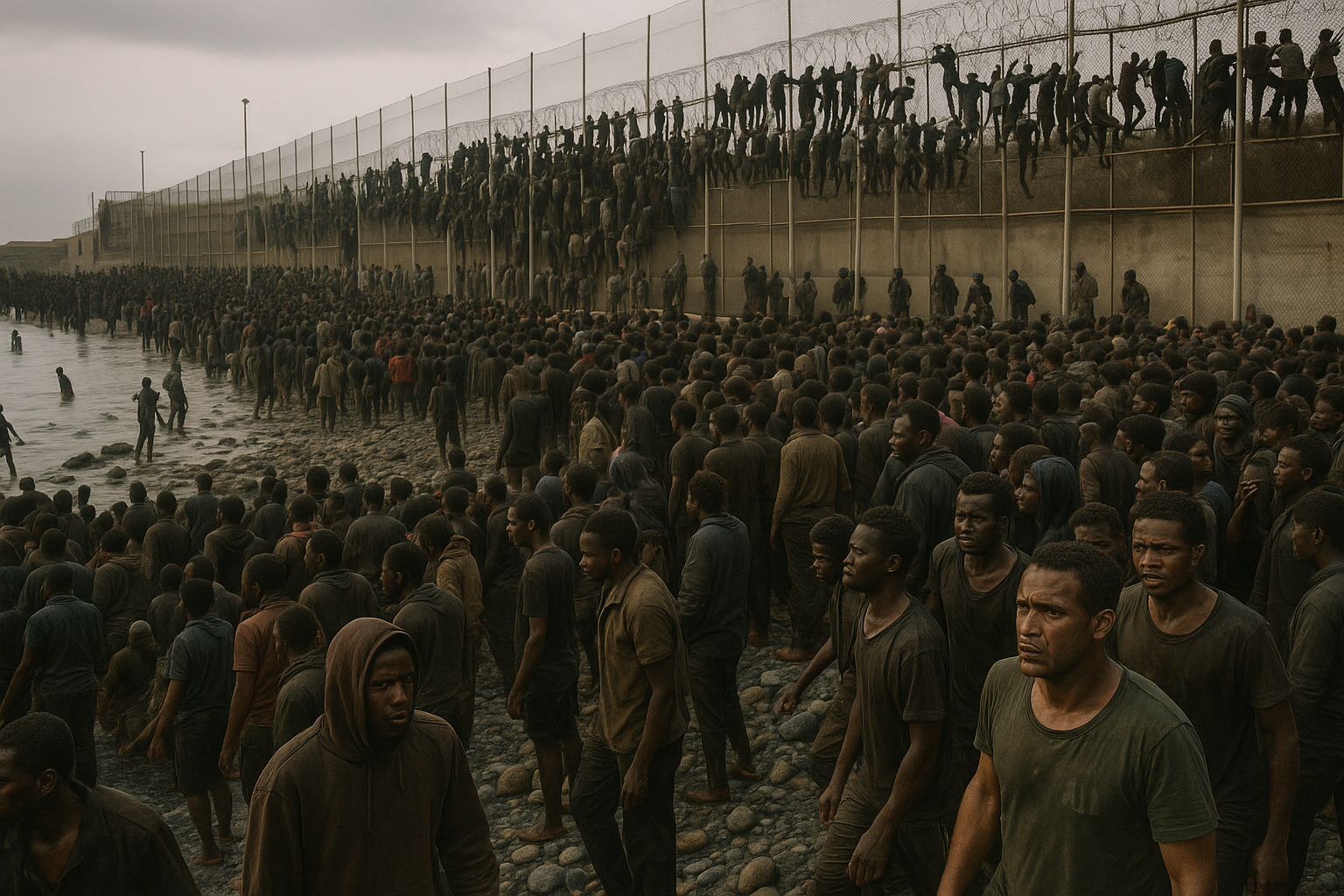
When a major migration crisis erupted in Ceuta as between 60,000 and 80,000 migrants from Morocco stormed the Spanish enclave, conspiracy theorists wasted no time finding their usual suspect: Israel. Among those amplifying these baseless allegations was Oscar-winning actor Javier Bardem, whose acting credentials apparently convinced him he possessed expertise in geopolitical analysis as well.

According to Causeur, Javier Bardem shared social media posts suggesting Israel had some hidden interest in weakening Spain during its diplomatic standoff with Morocco. The logic employed was the classic conspiratorial cui bono—”who benefits”—a method that identifies a culprit first and worries about evidence later, if at all.

As philosopher Pierre-André Taguieff has demonstrated, conspiracy thinking is not merely a collection of absurdities but a way of imposing order on a world that is often chaotic, contradictory, and populated by actors who themselves do not fully understand their actions. The cui bono principle might suggest avenues for investigation, but it cannot replace actual evidence. Arms manufacturers profit from wars, yet no one seriously claims they start them all. Funeral directors benefit from death, but nobody accused them of spreading COVID-19.

The Eternal Scapegoat

Historians Léon Poliakov and David Nirenberg have traced how “the Jew” became a fantastical figure capable of embodying contradictions: revolutionary to the bourgeoisie, banker to anarchists, cosmopolitan rootless wanderer to nationalists, yet too tribal for globalists. Rothschild in the morning, Trotsky in the evening, as Causeur reports. The question naturally arises whether Israel now occupies in contemporary imagination the role once filled by this fantasized Jewish figure.

To be clear, criticizing Israeli policy is not inherently antisemitic. One can condemn civilian deaths in Gaza, oppose West Bank settlements, or denounce political figures like Netanyahu, Smotrich, and Ben-Gvir. One might even question the Jewish people’s assertion of self-determination in their ancestral homeland. But when a dispute erupts between Rabat and Madrid and Israel somehow gets dragged into the narrative, criticism has clearly crossed into something else entirely.

The Mossad Mythology

Then there is the Mossad. In conspiratorial imagination, Israeli intelligence services possess powers their own government must envy. They infiltrate governments, manipulate public opinion, trigger crises, and leave no traces—except when they choose to. The absence of evidence becomes reassuring rather than problematic: if nothing is found, the operation must have been expertly executed. Heads Israel is guilty, tails Israel is guilty. This reasoning ventures perilously close to theology.

The Protocols of the Elders of Zion may have aged poorly, and talk of a “global Jewish conspiracy” plays badly at dinner parties these days. But old fantasies know how to adapt. Instead of the hand of perfidious Jews, we now speak of Mossad operations—a high-tech version of the same ancient obsession.

The Mundane Reality

The real world is considerably less entertaining than conspiracy theories suggest. States pursue interests, governments make mistakes, alliances shift, and crises escape the control of those who sparked them. International relations specialists sometimes underestimate one of history’s most powerful forces: simple human stupidity. But acknowledging this is frustrating because it eliminates the grand puppet master lurking in shadows, the secret room, the master plan. So the search for Israel continues, and—miraculously—it is always found.

Javier Bardem can continue searching for who pulls the strings. After all, his profession involves trying to believe in whatever script he is handed.

With information from Causeur

Share:
Dimitris Papafotis
Dimitris Papafotis

Dimitris Papafotis is the editor-in-chief of NewsFire.GR. He was born and raised in Athens. He studied at the Journalism Workshop (1991-1993). He currently lives in Pyrgos, Ilia, where he has been active in radio and various newspapers, while also maintaining his personal blog, Papafotis.gr.

Recent News

When a major migration crisis erupted in Ceuta as between 60,000 and 80,000 migrants from Morocco stormed the Spanish enclave, conspiracy theorists wasted no time finding their usual suspect: Israel. Among those amplifying these baseless allegations was Oscar-winning actor Javier Bardem, whose acting credentials apparently convinced him he possessed expertise in geopolitical analysis as well.

According to Causeur, Javier Bardem shared social media posts suggesting Israel had some hidden interest in weakening Spain during its diplomatic standoff with Morocco. The logic employed was the classic conspiratorial cui bono—”who benefits”—a method that identifies a culprit first and worries about evidence later, if at all.

As philosopher Pierre-André Taguieff has demonstrated, conspiracy thinking is not merely a collection of absurdities but a way of imposing order on a world that is often chaotic, contradictory, and populated by actors who themselves do not fully understand their actions. The cui bono principle might suggest avenues for investigation, but it cannot replace actual evidence. Arms manufacturers profit from wars, yet no one seriously claims they start them all. Funeral directors benefit from death, but nobody accused them of spreading COVID-19.

The Eternal Scapegoat

Historians Léon Poliakov and David Nirenberg have traced how “the Jew” became a fantastical figure capable of embodying contradictions: revolutionary to the bourgeoisie, banker to anarchists, cosmopolitan rootless wanderer to nationalists, yet too tribal for globalists. Rothschild in the morning, Trotsky in the evening, as Causeur reports. The question naturally arises whether Israel now occupies in contemporary imagination the role once filled by this fantasized Jewish figure.

To be clear, criticizing Israeli policy is not inherently antisemitic. One can condemn civilian deaths in Gaza, oppose West Bank settlements, or denounce political figures like Netanyahu, Smotrich, and Ben-Gvir. One might even question the Jewish people’s assertion of self-determination in their ancestral homeland. But when a dispute erupts between Rabat and Madrid and Israel somehow gets dragged into the narrative, criticism has clearly crossed into something else entirely.

The Mossad Mythology

Then there is the Mossad. In conspiratorial imagination, Israeli intelligence services possess powers their own government must envy. They infiltrate governments, manipulate public opinion, trigger crises, and leave no traces—except when they choose to. The absence of evidence becomes reassuring rather than problematic: if nothing is found, the operation must have been expertly executed. Heads Israel is guilty, tails Israel is guilty. This reasoning ventures perilously close to theology.

The Protocols of the Elders of Zion may have aged poorly, and talk of a “global Jewish conspiracy” plays badly at dinner parties these days. But old fantasies know how to adapt. Instead of the hand of perfidious Jews, we now speak of Mossad operations—a high-tech version of the same ancient obsession.

The Mundane Reality

The real world is considerably less entertaining than conspiracy theories suggest. States pursue interests, governments make mistakes, alliances shift, and crises escape the control of those who sparked them. International relations specialists sometimes underestimate one of history’s most powerful forces: simple human stupidity. But acknowledging this is frustrating because it eliminates the grand puppet master lurking in shadows, the secret room, the master plan. So the search for Israel continues, and—miraculously—it is always found.

Javier Bardem can continue searching for who pulls the strings. After all, his profession involves trying to believe in whatever script he is handed.

With information from Causeur