Necessary Cookies

Required for the site to function. Cannot be disabled.

Analytics Cookies

Help us understand how visitors interact with our site (Google Analytics via GTM).

Marketing Cookies

Used to track visitors and deliver personalised advertisements.

We use cookies to enhance your browsing experience and analyse site traffic. By clicking Accept All, you consent to our use of cookies. Privacy Policy
NewsFire Global
Home News Europe World Christianity Culture Wars Opinion Video
Information
About Us Authors Advertising Terms & Conditions Privacy Policy Contact
R2B Media
R2B NEWSFIRE.GR PAPAFOTIS.GR THRACTION HELLENIC CONSERVATIVES RIGHT2THEBONE YT
News Culture Wars

Bagayoko and Pigasse Deny Existence of Historic French People

French politician Marion Maréchal sparked debate by criticizing immigration's housing impact, prompting left-wing figures to deny the existence of indigenous French people.
Stefanos Banos
Stefanos Banos Staff Writer
AUGUST 21, 2026 AT 3:56 PM

The controversy began on August 17 when Marion Maréchal, Member of the European Parliament and president of Identité Libertés, released a video addressing France’s housing crisis and criticizing the negative influence of migratory flows on the issue—a standard position within conservative and nationalist circles, according to Valeurs Actuelles.

Her remarks triggered sharp responses from two prominent left-wing figures who went so far as to deny the existence of native French people altogether.

Progressive Elites Deny Indigenous French Identity

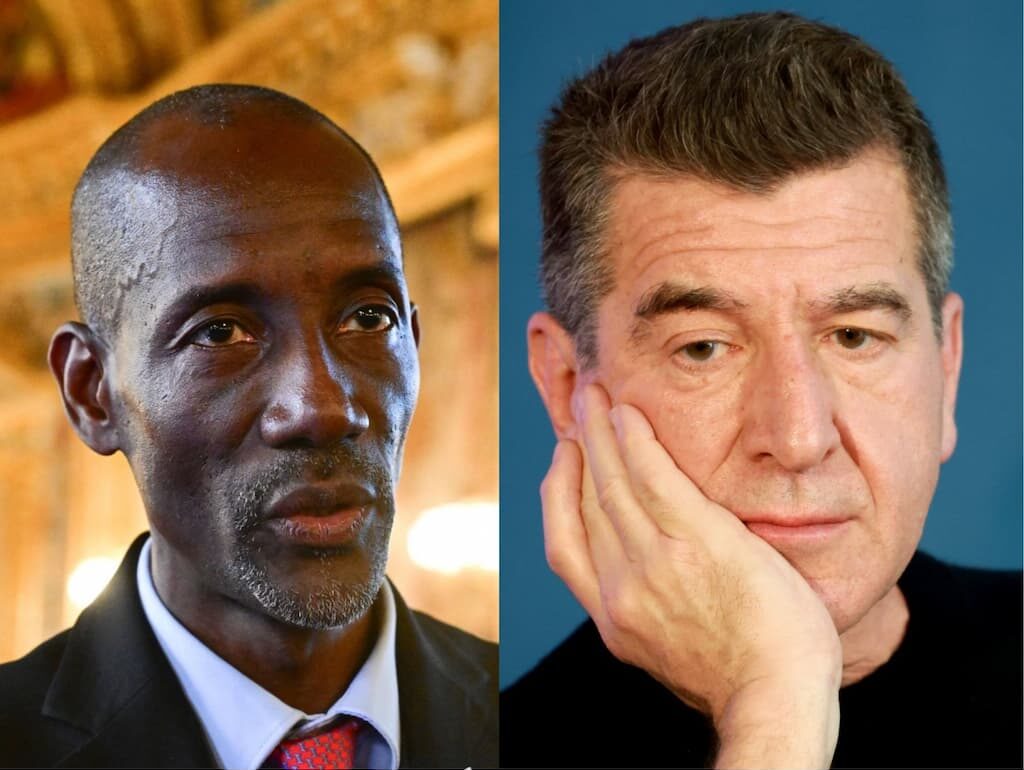
On August 19, progressive businessman Matthieu Pigasse responded to Maréchal on X, writing that the concept of native-born French people does not exist. He claimed that France is made up of migrations, mixtures, and successive generations that build a common history together.

The same day, Bally Bagayoko, the France Unbowed mayor of Saint-Denis, endorsed Pigasse’s statement as a truth and declared his support for what he called the “New France.”

Maréchal Fires Back With Historical Facts

The statements prompted a forceful response from Maréchal, who challenged the logical contradiction in their position. She pointed out on X that if there is a “New France,” then there must necessarily be a France that came before—precisely the one they deny in order to make the French accept its disappearance.

Maréchal noted that this France emerged from the historical settlement of the country, which for twenty centuries was continuous and almost totally homogeneous before intra-European migrations of the nineteenth century, which were geographically and culturally neighboring, followed much more recently by migrations from around the world.

She challenged the deniers directly, asking whether they would similarly deny the existence of indigenous Malian, Algerian, Chinese, or Indian peoples.

Demographic Data Contradicts “New France” Narrative

Despite the rhetoric from advocates of the so-called “New France,” demographic reality tells a different story. According to the National Institute for Demographic Studies, two-thirds of the French population have no direct or indirect connection to immigration over three generations.

The exchange highlights the deepening divide in France between progressive elites who embrace demographic transformation and conservatives who defend the legitimacy and continuity of the historic French nation.

With information from Valeurs Actuelles

Share:
Stefanos Banos
Stefanos Banos

Stefanos Banos was born in Piraeus and is an editor at NewsFire.GR, specializing in political analysis and international relations. He graduated from the Department of Communication and Media at the University of Bremen in Germany, where he also completed his Master of Arts in Communication and Media Studies. Married to Zoi, he is a proud father of three boys.

Recent News

The controversy began on August 17 when Marion Maréchal, Member of the European Parliament and president of Identité Libertés, released a video addressing France’s housing crisis and criticizing the negative influence of migratory flows on the issue—a standard position within conservative and nationalist circles, according to Valeurs Actuelles.

Her remarks triggered sharp responses from two prominent left-wing figures who went so far as to deny the existence of native French people altogether.

Progressive Elites Deny Indigenous French Identity

On August 19, progressive businessman Matthieu Pigasse responded to Maréchal on X, writing that the concept of native-born French people does not exist. He claimed that France is made up of migrations, mixtures, and successive generations that build a common history together.

The same day, Bally Bagayoko, the France Unbowed mayor of Saint-Denis, endorsed Pigasse’s statement as a truth and declared his support for what he called the “New France.”

Maréchal Fires Back With Historical Facts

The statements prompted a forceful response from Maréchal, who challenged the logical contradiction in their position. She pointed out on X that if there is a “New France,” then there must necessarily be a France that came before—precisely the one they deny in order to make the French accept its disappearance.

Maréchal noted that this France emerged from the historical settlement of the country, which for twenty centuries was continuous and almost totally homogeneous before intra-European migrations of the nineteenth century, which were geographically and culturally neighboring, followed much more recently by migrations from around the world.

She challenged the deniers directly, asking whether they would similarly deny the existence of indigenous Malian, Algerian, Chinese, or Indian peoples.

Demographic Data Contradicts “New France” Narrative

Despite the rhetoric from advocates of the so-called “New France,” demographic reality tells a different story. According to the National Institute for Demographic Studies, two-thirds of the French population have no direct or indirect connection to immigration over three generations.

The exchange highlights the deepening divide in France between progressive elites who embrace demographic transformation and conservatives who defend the legitimacy and continuity of the historic French nation.

With information from Valeurs Actuelles