Necessary Cookies

Required for the site to function. Cannot be disabled.

Analytics Cookies

Help us understand how visitors interact with our site (Google Analytics via GTM).

Marketing Cookies

Used to track visitors and deliver personalised advertisements.

We use cookies to enhance your browsing experience and analyse site traffic. By clicking Accept All, you consent to our use of cookies. Privacy Policy
NewsFire Global
Home News Europe World Christianity Culture Wars Opinion Video
Information
About Us Authors Advertising Terms & Conditions Privacy Policy Contact
R2B Media
R2B NEWSFIRE.GR PAPAFOTIS.GR THRACTION HELLENIC CONSERVATIVES RIGHT2THEBONE YT
News Europe

Islamic Veil Sales Boom in Lyon

A pop-up store selling Islamic modest wear drew thousands to Lyon, reigniting French debate over religious segmentation and republican principles in public life.

Dimitris Papafotis
Dimitris Papafotis Editor in Chief
JUNE 30, 2026 AT 10:21 AM

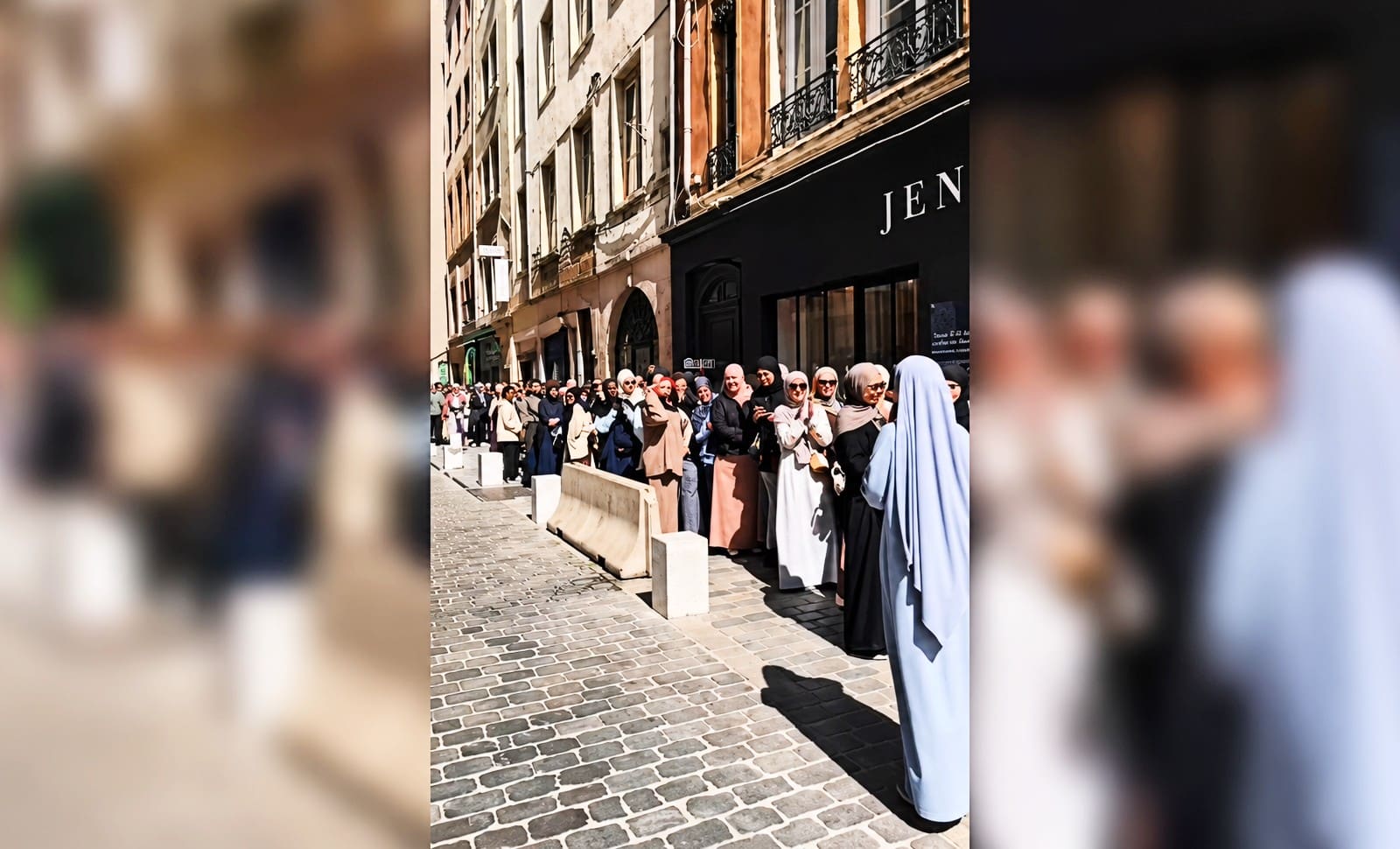
The Muslim ready-to-wear brand Jennah opened a temporary boutique in downtown Lyon from Friday June 5 through Sunday June 7, according to Causeur. The store, which describes itself as offering “modest ready-to-wear,” marks the brand’s second appearance in the heart of the Presqu’île district after drawing several thousand customers to its first pop-up event in 2025.

The brand offers a range of garments including abayas, hijabs, long tunics, and full-coverage dresses designed to comply with Islamic modesty requirements. Founded in 2014, Jennah has grown into a significant player in the global modest fashion movement, claiming nearly 450,000 Instagram followers and riding a wave of social media-driven growth among customers seeking clothing aligned with religious or cultural convictions.

A Commercial Success With Political Implications

While the brand’s founders characterize their venture as simply meeting legitimate consumer demand, critics view the phenomenon through a sharper lens. The very concept of a retail outlet targeting primarily Muslim women raises fundamental questions about the role of religion in public spaces and whether such businesses accelerate the fragmentation of French society along confessional lines.

Observers hostile to the trend see it as symptomatic of growing sectarian segmentation that runs counter to France’s republican model. They warn of the normalization of identity-based dress codes and express concern about social pressure that may be exerted on young women in environments where such garments increasingly become the expected standard rather than a personal choice.

Freedom Versus Fragmentation

Supporters of modest fashion counter that the issue involves individual freedom and entrepreneurial liberty. The brand emphasizes on social media that all women are welcome, whether veiled or not, regardless of religious affiliation. This position frames the debate as one of personal autonomy rather than communal obligation.

The commercial success of Jennah points to a broader reality facing contemporary France: the emergence of increasingly targeted markets built around specific cultural or religious identities. This economic phenomenon fuels ongoing debate about communitarianism and the challenges confronting French republican values in an era of identity-conscious consumerism.

The tension between commercial freedom and national cohesion remains unresolved, with the Lyon pop-up store serving as the latest flashpoint in a debate that shows no signs of fading from French public discourse.

With information from Causeur

Share:
Dimitris Papafotis
Dimitris Papafotis

Dimitris Papafotis is the editor-in-chief of NewsFire.GR. He was born and raised in Athens. He studied at the Journalism Workshop (1991-1993). He currently lives in Pyrgos, Ilia, where he has been active in radio and various newspapers, while also maintaining his personal blog, Papafotis.gr.

The Muslim ready-to-wear brand Jennah opened a temporary boutique in downtown Lyon from Friday June 5 through Sunday June 7, according to Causeur. The store, which describes itself as offering “modest ready-to-wear,” marks the brand’s second appearance in the heart of the Presqu’île district after drawing several thousand customers to its first pop-up event in 2025.

The brand offers a range of garments including abayas, hijabs, long tunics, and full-coverage dresses designed to comply with Islamic modesty requirements. Founded in 2014, Jennah has grown into a significant player in the global modest fashion movement, claiming nearly 450,000 Instagram followers and riding a wave of social media-driven growth among customers seeking clothing aligned with religious or cultural convictions.

A Commercial Success With Political Implications

While the brand’s founders characterize their venture as simply meeting legitimate consumer demand, critics view the phenomenon through a sharper lens. The very concept of a retail outlet targeting primarily Muslim women raises fundamental questions about the role of religion in public spaces and whether such businesses accelerate the fragmentation of French society along confessional lines.

Observers hostile to the trend see it as symptomatic of growing sectarian segmentation that runs counter to France’s republican model. They warn of the normalization of identity-based dress codes and express concern about social pressure that may be exerted on young women in environments where such garments increasingly become the expected standard rather than a personal choice.

Freedom Versus Fragmentation

Supporters of modest fashion counter that the issue involves individual freedom and entrepreneurial liberty. The brand emphasizes on social media that all women are welcome, whether veiled or not, regardless of religious affiliation. This position frames the debate as one of personal autonomy rather than communal obligation.

The commercial success of Jennah points to a broader reality facing contemporary France: the emergence of increasingly targeted markets built around specific cultural or religious identities. This economic phenomenon fuels ongoing debate about communitarianism and the challenges confronting French republican values in an era of identity-conscious consumerism.

The tension between commercial freedom and national cohesion remains unresolved, with the Lyon pop-up store serving as the latest flashpoint in a debate that shows no signs of fading from French public discourse.

With information from Causeur