Necessary Cookies

Required for the site to function. Cannot be disabled.

Analytics Cookies

Help us understand how visitors interact with our site (Google Analytics via GTM).

Marketing Cookies

Used to track visitors and deliver personalised advertisements.

We use cookies to enhance your browsing experience and analyse site traffic. By clicking Accept All, you consent to our use of cookies. Privacy Policy
NewsFire Global
Home News Europe World Christianity Culture Wars Opinion Video
Information
About Us Authors Advertising Terms & Conditions Privacy Policy Contact
R2B Media
R2B NEWSFIRE.GR PAPAFOTIS.GR THRACTION HELLENIC CONSERVATIVES RIGHT2THEBONE YT
News Europe

Polish Right Eyes Bardella as Crucial EU Reform Partner

Poland's opposition right-wing parties are forging strategic alliances with France's National Rally ahead of elections as conservative forces coordinate to challenge Brussels' authority within the EU.

Dimitris Papafotis
Dimitris Papafotis Editor in Chief
JUNE 24, 2026 AT 2:24 PM
brusselssignal.eu
Photo: brusselssignal.eu

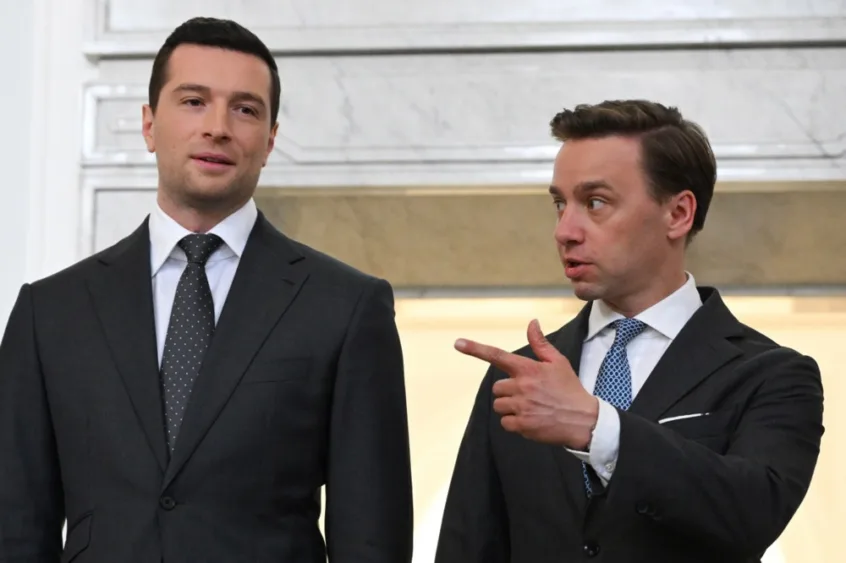
Jordan Bardella, the 31-year-old leader of Marine Le Pen’s National Rally party and likely French presidential candidate, traveled to Warsaw last week for high-level meetings with Poland’s main opposition parties. His visit signals a concerted effort by European conservative forces to coordinate their approach to EU reform, according to Brussels Signal.

The visits come as both Poland’s Law and Justice party (PiS) and the nationalist libertarian Confederation party look ahead to the 2027 parliamentary elections, where they hope to unseat the current center-left government led by Prime Minister Donald Tusk, a vocal proponent of deeper European integration and so-called “European sovereignty” on defense and security matters.

During his June 18-19 visit, Bardella met with PiS leadership, Confederation party officials, and opposition-aligned President Karol Nawrocki. The meetings focused on security concerns and what presidential aides described as the role of sovereign states within the European Union framework.

Building a Reform Coalition

Despite policy differences on economic and social issues, PiS and Confederation recognize the electoral mathematics facing them. Polish opinion polling suggests neither party can form a government independently, and coalition building may require additional partners such as the nationalist Catholic Confederation of the Polish Crown led by Grzegorz Braun or the center-right Polish People’s Party.

Both parties have taken note of how the previous PiS majority government clashed with EU leadership, resulting in withheld EU funds and multiple defeats before the European Court of Justice. As Brussels Signal reports, that conflict underscored the need for powerful allies within the EU structure.

Bardella made clear his vision does not include exiting the EU. We do not intend to leave the European Union, he stated, emphasizing instead a strategy to change the institution from within without dismantling it entirely.

Poland as Cornerstone of New European Architecture

The French opposition leader described Poland as essential to building what he called a new European architecture founded on strength, border protection, and economic growth. Should he win the French presidential election next spring, Bardella hopes to collaborate with a right-wing Polish government and Italian Prime Minister Giorgia Meloni‘s government to drive fundamental EU reform.

In discussions with PiS leader Jarosław Kaczyński, Bardella outlined a shared agenda focused on preventing migration and rolling back environmental policies that conservative parties view as economically damaging.

During its previous time in office, PiS cultivated close relationships with European nationalist leaders including Le Pen, Italy’s Matteo Salvini and Meloni, and Hungary’s Viktor Orbán.

Confederation’s Strategic Shift

Notably, Bardella’s invitation to Poland came not from PiS but from Krzysztof Bosak, leader of the nationalist wing of the Confederation Party. Like the National Rally, Confederation has been working to move nationalist ideas into the political mainstream rather than remaining on the radical fringe.

Some of Confederation’s founders, including libertarian conservative Janusz Korwin-Mikke and MEP Grzegorz Braun, previously advocated for Poland to leave the EU entirely. That position has moderated as the party seeks broader electoral appeal.

President Nawrocki has repeatedly called for EU reform that would preserve member state sovereignty while constraining the power of EU institutions. His meeting with Bardella centered on security issues and the future role of sovereign nations within the European framework.

Le Pen’s Legal Battle Casts Shadow

Bardella’s increased prominence comes as his mentor Marine Le Pen faces a potential five-year ban from public office over allegations of misspending European Parliamentary funds. Over the past year, the younger leader has worked to project a presidential image, articulating detailed positions on economic policy, NATO, and relations with Russia.

The coordinated outreach between French and Polish conservative forces reflects a broader strategy among European right-wing parties to build alliances capable of challenging Brussels’ authority while remaining within the EU structure. With elections approaching in both countries and Italy facing its own electoral test next autumn, conservative parties are positioning themselves for what they hope will be a transformative moment in European politics.

With information from Brussels Signal

Share:
Dimitris Papafotis
Dimitris Papafotis

Dimitris Papafotis is the editor-in-chief of NewsFire.GR. He was born and raised in Athens. He studied at the Journalism Workshop (1991-1993). He currently lives in Pyrgos, Ilia, where he has been active in radio and various newspapers, while also maintaining his personal blog, Papafotis.gr.

brusselssignal.eu
Photo: brusselssignal.eu

Jordan Bardella, the 31-year-old leader of Marine Le Pen’s National Rally party and likely French presidential candidate, traveled to Warsaw last week for high-level meetings with Poland’s main opposition parties. His visit signals a concerted effort by European conservative forces to coordinate their approach to EU reform, according to Brussels Signal.

The visits come as both Poland’s Law and Justice party (PiS) and the nationalist libertarian Confederation party look ahead to the 2027 parliamentary elections, where they hope to unseat the current center-left government led by Prime Minister Donald Tusk, a vocal proponent of deeper European integration and so-called “European sovereignty” on defense and security matters.

During his June 18-19 visit, Bardella met with PiS leadership, Confederation party officials, and opposition-aligned President Karol Nawrocki. The meetings focused on security concerns and what presidential aides described as the role of sovereign states within the European Union framework.

Building a Reform Coalition

Despite policy differences on economic and social issues, PiS and Confederation recognize the electoral mathematics facing them. Polish opinion polling suggests neither party can form a government independently, and coalition building may require additional partners such as the nationalist Catholic Confederation of the Polish Crown led by Grzegorz Braun or the center-right Polish People’s Party.

Both parties have taken note of how the previous PiS majority government clashed with EU leadership, resulting in withheld EU funds and multiple defeats before the European Court of Justice. As Brussels Signal reports, that conflict underscored the need for powerful allies within the EU structure.

Bardella made clear his vision does not include exiting the EU. We do not intend to leave the European Union, he stated, emphasizing instead a strategy to change the institution from within without dismantling it entirely.

Poland as Cornerstone of New European Architecture

The French opposition leader described Poland as essential to building what he called a new European architecture founded on strength, border protection, and economic growth. Should he win the French presidential election next spring, Bardella hopes to collaborate with a right-wing Polish government and Italian Prime Minister Giorgia Meloni‘s government to drive fundamental EU reform.

In discussions with PiS leader Jarosław Kaczyński, Bardella outlined a shared agenda focused on preventing migration and rolling back environmental policies that conservative parties view as economically damaging.

During its previous time in office, PiS cultivated close relationships with European nationalist leaders including Le Pen, Italy’s Matteo Salvini and Meloni, and Hungary’s Viktor Orbán.

Confederation’s Strategic Shift

Notably, Bardella’s invitation to Poland came not from PiS but from Krzysztof Bosak, leader of the nationalist wing of the Confederation Party. Like the National Rally, Confederation has been working to move nationalist ideas into the political mainstream rather than remaining on the radical fringe.

Some of Confederation’s founders, including libertarian conservative Janusz Korwin-Mikke and MEP Grzegorz Braun, previously advocated for Poland to leave the EU entirely. That position has moderated as the party seeks broader electoral appeal.

President Nawrocki has repeatedly called for EU reform that would preserve member state sovereignty while constraining the power of EU institutions. His meeting with Bardella centered on security issues and the future role of sovereign nations within the European framework.

Le Pen’s Legal Battle Casts Shadow

Bardella’s increased prominence comes as his mentor Marine Le Pen faces a potential five-year ban from public office over allegations of misspending European Parliamentary funds. Over the past year, the younger leader has worked to project a presidential image, articulating detailed positions on economic policy, NATO, and relations with Russia.

The coordinated outreach between French and Polish conservative forces reflects a broader strategy among European right-wing parties to build alliances capable of challenging Brussels’ authority while remaining within the EU structure. With elections approaching in both countries and Italy facing its own electoral test next autumn, conservative parties are positioning themselves for what they hope will be a transformative moment in European politics.

With information from Brussels Signal