Necessary Cookies

Required for the site to function. Cannot be disabled.

Analytics Cookies

Help us understand how visitors interact with our site (Google Analytics via GTM).

Marketing Cookies

Used to track visitors and deliver personalised advertisements.

We use cookies to enhance your browsing experience and analyse site traffic. By clicking Accept All, you consent to our use of cookies. Privacy Policy
NewsFire Global
Home News Europe World Christianity Culture Wars Opinion Video
Information
About Us Authors Advertising Terms & Conditions Privacy Policy Contact
R2B Media
R2B NEWSFIRE.GR PAPAFOTIS.GR THRACTION HELLENIC CONSERVATIVES RIGHT2THEBONE YT
News World

Xi Visits Egypt as China Expands Middle East Influence

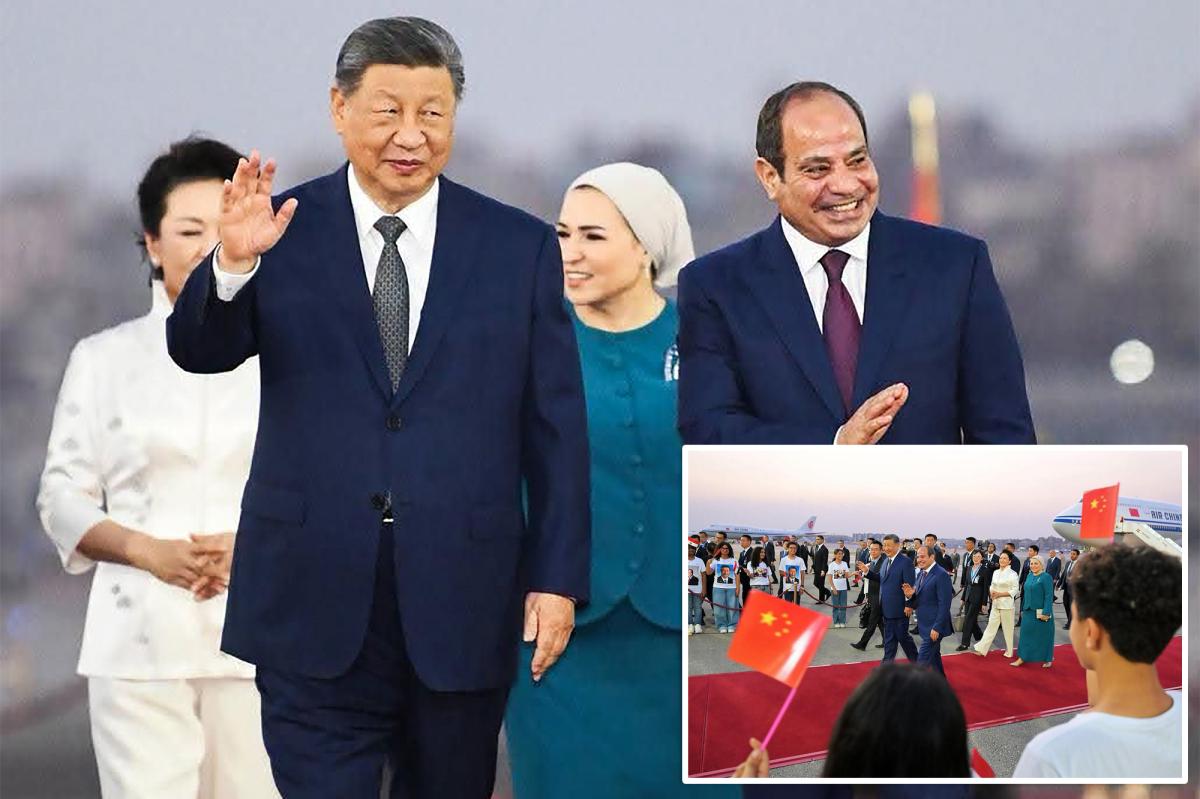
Chinese President Xi Jinping arrived in Cairo for a state visit highlighting Beijing's growing Middle East influence as it courts longtime U.S. ally Egypt amid Washington's conflict with Iran.

SEPTEMBER 2, 2026 AT 10:25 AM

The three-day visit, according to New York Post, marks Xi’s first trip to Egypt in a decade and his first Middle East tour since visiting Saudi Arabia in 2022. Egyptian President Abdel Fattah el-Sissi greeted the Chinese leader with full military honors at Cairo airport on Tuesday evening, where Chinese and Egyptian flags lined the tarmac in a red-carpet ceremony befitting a major strategic partner.

Behind the diplomatic pageantry lies a stark geopolitical reality: China is positioning itself as a regional stabilizer and economic powerhouse in the Middle East, deliberately contrasting its approach with decades of American military entanglement that has now escalated into a six-month war with Iran.

Egypt Seeks Strategic Diversification Beyond Washington

Egypt’s warming embrace of Beijing reflects Cairo’s calculation that closer ties with China offer valuable strategic diversification. In 2023, Egypt joined the BRICS bloc—a grouping of major emerging economies including Brazil, Russia, India, China and South Africa designed as a counterweight to Western-led institutions like the G7.

A year later, Egypt formally signed on to China’s Belt and Road Initiative, Xi Jinping’s signature infrastructure project aimed at extending Chinese influence across continents through massive development investments.

China has already poured more than $10 billion into Egyptian projects, as New York Post reports, including a major business hub east of Cairo and an electric rail line serving industry in the Nile Delta. Bilateral trade between the two nations now reaches approximately $20 billion annually, according to government figures—compared to $15.7 billion in trade between the United States and Egypt in 2025.

Beijing Casts Itself as Middle East Peacemaker

China has actively cultivated an image as a regional mediator, most notably when it brokered a 2023 agreement restoring diplomatic relations between Iran—Beijing’s key regional ally and oil supplier—and Saudi Arabia, a longtime American partner. That deal showcased China’s ambitions to directly compete with the United States for Middle East influence, though relations between Riyadh and Tehran have since deteriorated following Iran’s retaliatory strikes on Saudi Arabia and other Gulf states during the current conflict with the US and Israel.

Beijing has long advocated for a two-state solution to the Israeli-Palestinian conflict, a position widely supported across the Arab world. Shortly before Hamas militants launched their attack on Israel in 2023, Xi hosted Palestinian Authority President Mahmoud Abbas and announced a “strategic partnership” with the Palestinian leadership.

Suez Canal Emerges as Critical Energy Corridor

With oil shipments through the Strait of Hormuz severely disrupted by the Iran war, the Suez Canal—under Egyptian control—has become a vital alternative route for energy supplies leaving the region. This geographic advantage gives Egypt significant leverage in its dealings with energy-hungry China.

Muhammad Zulfikar Rakhmat, a Middle East expert with Jakarta’s Center of Economic and Law Studies, told New York Post that China sees Egypt as a gateway to both the Arab and African worlds at a time when American attention is focused elsewhere.

Military Cooperation Deepens Between Cairo and Beijing

The strategic relationship extends beyond economics. In August, China and Egypt conducted a multiday joint air exercise across several Egyptian bases—the first-ever combat exercise involving China’s J-16 fighter jets and Egypt’s French-made Rafale fighters, a significant milestone in military cooperation.

During this week’s visit, the two leaders are scheduled to hold formal talks Wednesday, and Xi plans to tour the Grand Egyptian Museum near the pyramids of Giza. Both presidents published friendly opinion pieces Tuesday in Egypt’s state-run newspapers marking 70 years of diplomatic relations, with Xi calling for expanded collaboration through development and el-Sissi praising Chinese investment while reaffirming Cairo’s support for Beijing’s claim that Taiwan is Chinese territory.

Xi’s Cairo visit follows his attendance at a two-day conference of the Shanghai Cooperation Organization, a 10-nation political and security group explicitly positioned as a counterweight to American global influence.

With information from New York Post

Share:
Eleni Papadaki-Van Der Merwe

She was born in 1986 in Johannesburg, South Africa. She is the granddaughter of an immigrant from Crete who settled in the Greek community of Johannesburg (one of the largest in Africa). She holds a bachelor’s degree in International Relations and Political Science from the University of the Witwatersrand (Wits) in Johannesburg and a master’s degree in Journalism from Rhodes University in Grahamstown. She began her career at English-language media outlets in Johannesburg, covering politics and economics, with a focus on issues related to migration and the diaspora. She moved to Athens in 2015 to “return to her roots,” initially to pursue graduate studies, and has remained there permanently. She is married to an Afrikaner; they have two children and live in the southern suburbs of Athens.

The three-day visit, according to New York Post, marks Xi’s first trip to Egypt in a decade and his first Middle East tour since visiting Saudi Arabia in 2022. Egyptian President Abdel Fattah el-Sissi greeted the Chinese leader with full military honors at Cairo airport on Tuesday evening, where Chinese and Egyptian flags lined the tarmac in a red-carpet ceremony befitting a major strategic partner.

Behind the diplomatic pageantry lies a stark geopolitical reality: China is positioning itself as a regional stabilizer and economic powerhouse in the Middle East, deliberately contrasting its approach with decades of American military entanglement that has now escalated into a six-month war with Iran.

Egypt Seeks Strategic Diversification Beyond Washington

Egypt’s warming embrace of Beijing reflects Cairo’s calculation that closer ties with China offer valuable strategic diversification. In 2023, Egypt joined the BRICS bloc—a grouping of major emerging economies including Brazil, Russia, India, China and South Africa designed as a counterweight to Western-led institutions like the G7.

A year later, Egypt formally signed on to China’s Belt and Road Initiative, Xi Jinping’s signature infrastructure project aimed at extending Chinese influence across continents through massive development investments.

China has already poured more than $10 billion into Egyptian projects, as New York Post reports, including a major business hub east of Cairo and an electric rail line serving industry in the Nile Delta. Bilateral trade between the two nations now reaches approximately $20 billion annually, according to government figures—compared to $15.7 billion in trade between the United States and Egypt in 2025.

Beijing Casts Itself as Middle East Peacemaker

China has actively cultivated an image as a regional mediator, most notably when it brokered a 2023 agreement restoring diplomatic relations between Iran—Beijing’s key regional ally and oil supplier—and Saudi Arabia, a longtime American partner. That deal showcased China’s ambitions to directly compete with the United States for Middle East influence, though relations between Riyadh and Tehran have since deteriorated following Iran’s retaliatory strikes on Saudi Arabia and other Gulf states during the current conflict with the US and Israel.

Beijing has long advocated for a two-state solution to the Israeli-Palestinian conflict, a position widely supported across the Arab world. Shortly before Hamas militants launched their attack on Israel in 2023, Xi hosted Palestinian Authority President Mahmoud Abbas and announced a “strategic partnership” with the Palestinian leadership.

Suez Canal Emerges as Critical Energy Corridor

With oil shipments through the Strait of Hormuz severely disrupted by the Iran war, the Suez Canal—under Egyptian control—has become a vital alternative route for energy supplies leaving the region. This geographic advantage gives Egypt significant leverage in its dealings with energy-hungry China.

Muhammad Zulfikar Rakhmat, a Middle East expert with Jakarta’s Center of Economic and Law Studies, told New York Post that China sees Egypt as a gateway to both the Arab and African worlds at a time when American attention is focused elsewhere.

Military Cooperation Deepens Between Cairo and Beijing

The strategic relationship extends beyond economics. In August, China and Egypt conducted a multiday joint air exercise across several Egyptian bases—the first-ever combat exercise involving China’s J-16 fighter jets and Egypt’s French-made Rafale fighters, a significant milestone in military cooperation.

During this week’s visit, the two leaders are scheduled to hold formal talks Wednesday, and Xi plans to tour the Grand Egyptian Museum near the pyramids of Giza. Both presidents published friendly opinion pieces Tuesday in Egypt’s state-run newspapers marking 70 years of diplomatic relations, with Xi calling for expanded collaboration through development and el-Sissi praising Chinese investment while reaffirming Cairo’s support for Beijing’s claim that Taiwan is Chinese territory.

Xi’s Cairo visit follows his attendance at a two-day conference of the Shanghai Cooperation Organization, a 10-nation political and security group explicitly positioned as a counterweight to American global influence.

With information from New York Post