Necessary Cookies

Required for the site to function. Cannot be disabled.

Analytics Cookies

Help us understand how visitors interact with our site (Google Analytics via GTM).

Marketing Cookies

Used to track visitors and deliver personalised advertisements.

We use cookies to enhance your browsing experience and analyse site traffic. By clicking Accept All, you consent to our use of cookies. Privacy Policy
NewsFire Global
Home News Europe World Christianity Culture Wars Opinion Video
Information
About Us Authors Advertising Terms & Conditions Privacy Policy Contact
R2B Media
R2B NEWSFIRE.GR PAPAFOTIS.GR THRACTION HELLENIC CONSERVATIVES RIGHT2THEBONE YT
News World

Trump Didn’t Abandon Ukraine — He Forced Kyiv to Win

Washington has abandoned consensus-driven diplomacy for deliberate instability that weaponizes unpredictability to force European allies to increase defense spending and Ukraine to pursue offensive innovation.


AUGUST 25, 2026 AT 5:30 PM

According to Eric Wargotz writing in Washington Examiner, what traditional foreign policy experts dismiss as chaos is in fact a calculated strategy—one that weaponises unpredictability to upend the status quo and compel results where polite diplomacy has failed.

Rather than treating the North Atlantic alliance as an untouchable institution, the current administration views defence commitments through a transactional lens. Washington has openly questioned the value of security guarantees that are not matched by adequate European defence spending, triggering alarm across the continent but also producing tangible shifts in military budgets.

This pressure campaign is not isolationism, Wargotz contends, but rather a tactical manoeuvre to force European capitals to assume greater responsibility for their own security. The fear generated by threats to withdraw American protection has driven governments to finally allocate serious resources to their armed forces.

Kyiv Responds to Pressure With Offensive Innovation
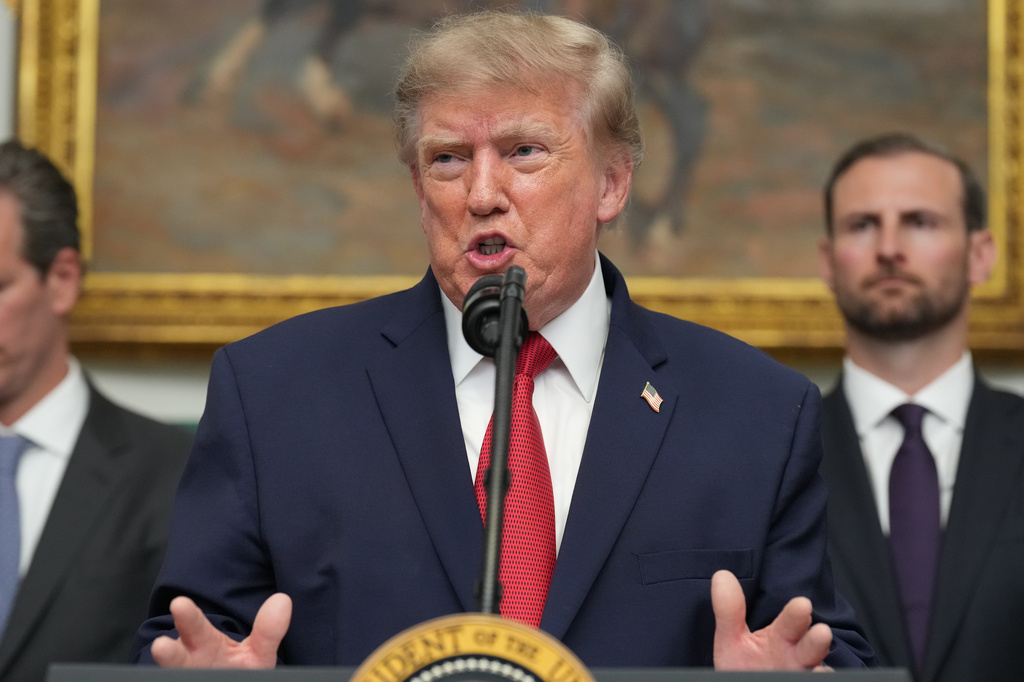
The same pattern is evident in Washington’s handling of the Russia-Ukraine conflict. Behind closed doors, the White House has pushed for rapid, direct negotiations with proposals that would require Ukraine to cede territory and renounce NATO membership. Publicly, President Donald Trump has bluntly told Ukrainian President Volodymyr Zelensky that you don’t have the cards.

Traditional diplomats interpreted this public rebuke as abandonment. Instead, it catalysed a dramatic shift in Kyiv’s military strategy. Confronted with the prospect of reduced American support, Ukrainian forces escalated their campaign deep into Russian territory using domestically produced long-range drones and missiles.

Ukrainian strikes have successfully targeted military production facilities, logistics depots, and air defence installations hundreds of miles inside Russia. More significantly, Kyiv has systematically attacked Russia’s energy infrastructure, hitting major oil refineries and causing severe disruptions to both fuel revenue and domestic power supplies.

By informing Ukraine it lacked leverage, Washington effectively forced Kyiv to create its own. The expanded drone offensive has brought the costs of war directly to Russian civilians, overstretched Moscow’s defences, and fundamentally altered the strategic calculations on both sides.

Bipartisan Momentum Against Endless Conflict

The push toward a negotiated resolution enjoys substantial support across party lines in Congress. Republican lawmakers including Senator Rand Paul of Kentucky have publicly opposed open-ended spending commitments, arguing that unlimited obligations fail to produce peace. Representative Warren Davidson of Ohio similarly endorses using strategic pressure to compel a settlement.

Progressive Democrats have echoed these concerns. Representative Ro Khanna of California has cautioned against endless weapons transfers that risk broader escalation, while Representative Pramila Jayapal of Washington has actively advocated for a proactive diplomatic effort, insisting that every war must ultimately conclude through direct talks.

This emerging bipartisan consensus provides the administration with a strong domestic mandate to pivot away from indefinite military entanglements. It demonstrates that both lawmakers and voters are ready to move beyond the permanent crisis management that has defined Western policy in Eastern Europe for years.

The strategy of weaponised unpredictability keeps Moscow uncertain about American red lines and limits Russian President Vladimir Putin’s room for manoeuvre. Despite routine threats of severe consequences over Western arms shipments, Russia’s options remain constrained by the very instability Washington has deliberately injected into the equation.

With information from Washington Examiner

Share:
Eleni Papadaki-Van Der Merwe

She was born in 1986 in Johannesburg, South Africa. She is the granddaughter of an immigrant from Crete who settled in the Greek community of Johannesburg (one of the largest in Africa). She holds a bachelor’s degree in International Relations and Political Science from the University of the Witwatersrand (Wits) in Johannesburg and a master’s degree in Journalism from Rhodes University in Grahamstown. She began her career at English-language media outlets in Johannesburg, covering politics and economics, with a focus on issues related to migration and the diaspora. She moved to Athens in 2015 to “return to her roots,” initially to pursue graduate studies, and has remained there permanently. She is married to an Afrikaner; they have two children and live in the southern suburbs of Athens.

According to Eric Wargotz writing in Washington Examiner, what traditional foreign policy experts dismiss as chaos is in fact a calculated strategy—one that weaponises unpredictability to upend the status quo and compel results where polite diplomacy has failed.

Rather than treating the North Atlantic alliance as an untouchable institution, the current administration views defence commitments through a transactional lens. Washington has openly questioned the value of security guarantees that are not matched by adequate European defence spending, triggering alarm across the continent but also producing tangible shifts in military budgets.

This pressure campaign is not isolationism, Wargotz contends, but rather a tactical manoeuvre to force European capitals to assume greater responsibility for their own security. The fear generated by threats to withdraw American protection has driven governments to finally allocate serious resources to their armed forces.

Kyiv Responds to Pressure With Offensive Innovation

The same pattern is evident in Washington’s handling of the Russia-Ukraine conflict. Behind closed doors, the White House has pushed for rapid, direct negotiations with proposals that would require Ukraine to cede territory and renounce NATO membership. Publicly, President Donald Trump has bluntly told Ukrainian President Volodymyr Zelensky that you don’t have the cards.

Traditional diplomats interpreted this public rebuke as abandonment. Instead, it catalysed a dramatic shift in Kyiv’s military strategy. Confronted with the prospect of reduced American support, Ukrainian forces escalated their campaign deep into Russian territory using domestically produced long-range drones and missiles.

Ukrainian strikes have successfully targeted military production facilities, logistics depots, and air defence installations hundreds of miles inside Russia. More significantly, Kyiv has systematically attacked Russia’s energy infrastructure, hitting major oil refineries and causing severe disruptions to both fuel revenue and domestic power supplies.

By informing Ukraine it lacked leverage, Washington effectively forced Kyiv to create its own. The expanded drone offensive has brought the costs of war directly to Russian civilians, overstretched Moscow’s defences, and fundamentally altered the strategic calculations on both sides.

Bipartisan Momentum Against Endless Conflict

The push toward a negotiated resolution enjoys substantial support across party lines in Congress. Republican lawmakers including Senator Rand Paul of Kentucky have publicly opposed open-ended spending commitments, arguing that unlimited obligations fail to produce peace. Representative Warren Davidson of Ohio similarly endorses using strategic pressure to compel a settlement.

Progressive Democrats have echoed these concerns. Representative Ro Khanna of California has cautioned against endless weapons transfers that risk broader escalation, while Representative Pramila Jayapal of Washington has actively advocated for a proactive diplomatic effort, insisting that every war must ultimately conclude through direct talks.

This emerging bipartisan consensus provides the administration with a strong domestic mandate to pivot away from indefinite military entanglements. It demonstrates that both lawmakers and voters are ready to move beyond the permanent crisis management that has defined Western policy in Eastern Europe for years.

The strategy of weaponised unpredictability keeps Moscow uncertain about American red lines and limits Russian President Vladimir Putin’s room for manoeuvre. Despite routine threats of severe consequences over Western arms shipments, Russia’s options remain constrained by the very instability Washington has deliberately injected into the equation.

With information from Washington Examiner