Supreme Court Backs Trump Mail-Voting Rules Before Midterms
The Supreme Court ruled 6-3 to let Trump's mail-in ballot restrictions proceed, lifting one injunction weeks before midterm elections while another nationwide block remains in effect.
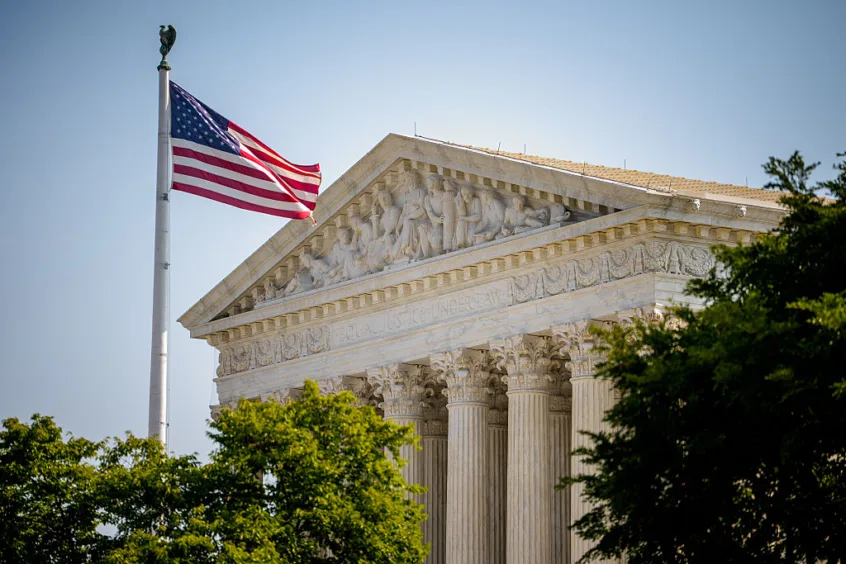

According to Brussels Signal, the unsigned ruling issued on August 24, 2026, removed an injunction previously granted by Boston-based district judge Indira Talwani in June. That injunction had prevented the administration from enforcing key parts of the executive order in California and 22 other states that mounted legal challenges. The court simultaneously approved a parallel request from Alabama and 11 additional states supporting the measures.
The decision broke along ideological lines, with the court’s three liberal justices dissenting from the conservative majority.
Federal Voter List at Center of Dispute
The executive order in question establishes a federal registry of eligible voters and instructs the US Postal Service to mail ballots exclusively to individuals appearing on that list. The challenge centers on federalism: elections in America are constitutionally administered at the state level, and plaintiffs contend that Washington lacks the legal authority to impose such requirements.
The majority made clear it was not ruling on whether the order itself is lawful. The court stated that its decision did not mean any implementation steps would necessarily be lawful, noting that time would reveal the answer. The ruling hinged on procedural grounds—the majority found that the executive order, standing alone, had not yet caused concrete harm to the challenging states, meaning Talwani lacked jurisdiction to block it in June.
Second Injunction Still in Effect
A separate nationwide injunction issued by Talwani on August 11 remains active. That broader order prohibits the Postal Service from acting on the administration’s directives. The Trump administration has indicated it will petition the First Circuit Court of Appeals to lift that ruling, while 12 Republican-led states have already filed appeals.
The immediate practical impact is therefore more limited than the Supreme Court’s decision might suggest. Though the Postal Service has released its implementation framework, multiple states are set to begin mailing ballots within weeks, and the nationwide injunction continues to block federal interference.
Liberal Justices Issue Sharp Dissents
Supreme Court Justice Sonia Sotomayor, joined by Elena Kagan, wrote that the ruling deliberately avoided addressing whether the President’s efforts to intervene in state-run November elections were constitutional or whether the executive branch possessed authority to enforce such directives. She characterized the decision as merely delaying the inevitable legal reckoning.
Ketanji Brown Jackson filed her own dissent, criticizing the majority for focusing on technical standing questions rather than confronting the administration’s broader objectives.
California Governor Gavin Newsom announced his state would file fresh legal challenges to block the rules from taking effect. New York Attorney General Letitia James called the ruling a painful setback but not the final word, saying her office was evaluating further legal action.
Reversal of 2020 Constitutional Arguments
The current dispute has its roots in 2020, when the United States witnessed its largest expansion of mail-in voting in history. Data from the Massachusetts Institute of Technology’s Survey of the Performance of American Elections shows that approximately 43 percent of voters cast ballots by mail that year—nearly double the 2018 figure.
Much of that expansion bypassed state legislatures entirely. California, Nevada, New Jersey, Vermont and the District of Columbia mailed ballots to all registered voters as pandemic emergency measures. In other jurisdictions, witness requirements were suspended and ballot-receipt deadlines extended through executive orders, litigation settlements and judicial rulings.
At the time, Republicans objected on constitutional grounds, arguing that the US Constitution vests authority over election procedures in state legislatures and Congress—not governors, election officials or courts. Those objections were largely rejected by the courts.
Chain of Custody Concerns Drive Republican Position
The Republican case against expanded mail voting centers on ballot security. Once a ballot leaves the controlled environment of a polling place, its integrity depends on the accuracy of mailing addresses, signature verification standards that vary widely between states, and in some cases third-party ballot collectors whose activities are subject to minimal oversight.
Republicans cite the bipartisan Commission on Federal Election Reform, co-chaired in 2005 by former President Jimmy Carter and former Secretary of State James Baker, which identified absentee ballots as the most significant source of potential voter fraud and recommended prohibiting party operatives from handling them.
The commission stopped short of calling for the elimination of postal voting. The Carter Center has subsequently stated that its findings have been quoted selectively by those seeking to restrict mail-in ballot access.
With information from Brussels Signal