Necessary Cookies

Required for the site to function. Cannot be disabled.

Analytics Cookies

Help us understand how visitors interact with our site (Google Analytics via GTM).

Marketing Cookies

Used to track visitors and deliver personalised advertisements.

We use cookies to enhance your browsing experience and analyse site traffic. By clicking Accept All, you consent to our use of cookies. Privacy Policy
NewsFire Global
Home News Europe World Christianity Culture Wars Opinion Video
Information
About Us Authors Advertising Terms & Conditions Privacy Policy Contact
R2B Media
R2B NEWSFIRE.GR PAPAFOTIS.GR THRACTION HELLENIC CONSERVATIVES RIGHT2THEBONE YT
News World

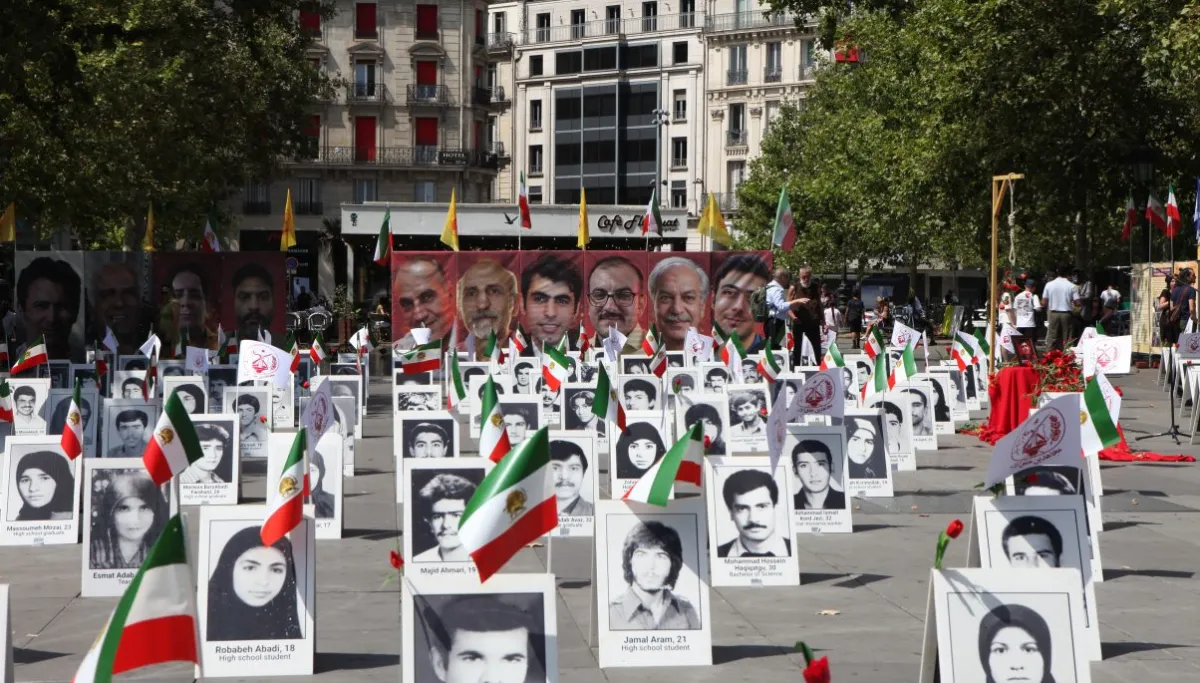
Iran’s 1988 Massacre Continues to Haunt Regime Today

Iran executed Shahram Sadeghi following his conviction for driving into police during protests, continuing its decades-long pattern of using the death penalty as political intimidation.

AUGUST 18, 2026 AT 4:45 PM

Nearly four decades after Iran’s mass execution of political prisoners in 1988, the Islamic Republic continues to wield the death penalty as a weapon of political intimidation against its own population, according to Nasser Razii writing in Washington Examiner.

On Sunday, Iranian authorities executed Shahram Sadeghi in Karaj following his conviction for deliberately driving into police officers during anti-government protests in January 2026. Iran’s judiciary confirmed the Supreme Court had upheld the death sentence before carrying it out.


The execution arrives as Iran marks the 38th anniversary of the 1988 massacre of political prisoners, when thousands were summarily killed following secret trials. The Iranian opposition has documented over 30,000 victims, the majority being members and supporters of the People’s Mojahedin Organization of Iran.

The significance of the 1988 killings extends beyond their scale—it lies in the complete absence of accountability for the perpetrators, Razii argues.

In July 2024, Professor Javaid Rehman, then United Nations Special Rapporteur on human rights in Iran, issued his final report on the atrocities. He determined the 1988 killings constituted crimes against humanity, including murder and extermination. Rehman also identified substantial evidence that the killings, torture, and inhumane treatment of People’s Mojahedin Organization members and supporters were executed with genocidal intent.

That determination should fundamentally alter international understanding of Iran’s ongoing deployment of capital punishment, the analysis contends.

The 1988 executions were not an anomaly but rather part of a systematic approach in which death serves as an instrument of political control. The failure to hold anyone accountable created conditions allowing the practice to persist.

Iran’s nationwide uprising spanning December 2025 and January 2026 once again revealed the breadth of public opposition to the Islamic Republic. What initially emerged as economic protests rapidly evolved into a direct political challenge to the regime. The government’s response included mass arrests, lethal force, executions, and an unprecedented communications blackout.

Iranian authorities maintain that those sentenced to death are criminals or security threats rather than political prisoners. Yet the pattern remains difficult to dismiss. Among those facing execution are individuals arrested during or in connection with a nationwide movement challenging the political order.

According to Iranian authorities, Sadeghi was convicted not only of attacking police during the January protests but also of what they characterized as an “operational action” supporting Israel, the United States, and hostile organizations. Reuters confirmed the Supreme Court upheld the sentence before execution.

Regardless of the government’s allegations, the fundamental concern remains the application of capital punishment within a political environment where fair-trial guarantees and independent judicial oversight are profoundly questionable.

Maryam Rajavi, President-elect of the National Council of Resistance of Iran, condemned Sadeghi’s execution on Sunday and urged the UN Security Council to take urgent measures to halt Iran’s executions. Her appeal coincided with the Iranian opposition marking the 38th anniversary of the 1988 massacre.

The relevance of 1988 to today’s situation is clear: a regime never compelled to answer for mass executions possesses little motivation to abandon execution as a repression tool. The continuity is not identical victims or circumstances, but rather the state’s persistent use of the death penalty to suppress political opposition.

The international community must stop treating the 1988 massacre as closed history, Razii contends.

The United Nations findings establish a foundation for accountability. Governments that have imposed sanctions or travel restrictions on Iranian officials should ensure perpetrators of the 1988 atrocities remain under scrutiny. International institutions should support independent investigations and preserve evidence that could eventually support judicial proceedings.

Current executions should not be divorced from that history. When an Iranian prisoner receives a death sentence after being accused of protest participation, the question transcends whether one individual committed a crime. The real question is whether the judicial system is again being weaponized to send a message to millions: challenge the regime, and the ultimate punishment awaits.

With information from Washington Examiner

Share:
Eleni Papadaki-Van Der Merwe

She was born in 1986 in Johannesburg, South Africa. She is the granddaughter of an immigrant from Crete who settled in the Greek community of Johannesburg (one of the largest in Africa). She holds a bachelor’s degree in International Relations and Political Science from the University of the Witwatersrand (Wits) in Johannesburg and a master’s degree in Journalism from Rhodes University in Grahamstown. She began her career at English-language media outlets in Johannesburg, covering politics and economics, with a focus on issues related to migration and the diaspora. She moved to Athens in 2015 to “return to her roots,” initially to pursue graduate studies, and has remained there permanently. She is married to an Afrikaner; they have two children and live in the southern suburbs of Athens.

Nearly four decades after Iran’s mass execution of political prisoners in 1988, the Islamic Republic continues to wield the death penalty as a weapon of political intimidation against its own population, according to Nasser Razii writing in Washington Examiner.

On Sunday, Iranian authorities executed Shahram Sadeghi in Karaj following his conviction for deliberately driving into police officers during anti-government protests in January 2026. Iran’s judiciary confirmed the Supreme Court had upheld the death sentence before carrying it out.

The execution arrives as Iran marks the 38th anniversary of the 1988 massacre of political prisoners, when thousands were summarily killed following secret trials. The Iranian opposition has documented over 30,000 victims, the majority being members and supporters of the People’s Mojahedin Organization of Iran.

The significance of the 1988 killings extends beyond their scale—it lies in the complete absence of accountability for the perpetrators, Razii argues.

In July 2024, Professor Javaid Rehman, then United Nations Special Rapporteur on human rights in Iran, issued his final report on the atrocities. He determined the 1988 killings constituted crimes against humanity, including murder and extermination. Rehman also identified substantial evidence that the killings, torture, and inhumane treatment of People’s Mojahedin Organization members and supporters were executed with genocidal intent.

That determination should fundamentally alter international understanding of Iran’s ongoing deployment of capital punishment, the analysis contends.

The 1988 executions were not an anomaly but rather part of a systematic approach in which death serves as an instrument of political control. The failure to hold anyone accountable created conditions allowing the practice to persist.

Iran’s nationwide uprising spanning December 2025 and January 2026 once again revealed the breadth of public opposition to the Islamic Republic. What initially emerged as economic protests rapidly evolved into a direct political challenge to the regime. The government’s response included mass arrests, lethal force, executions, and an unprecedented communications blackout.

Iranian authorities maintain that those sentenced to death are criminals or security threats rather than political prisoners. Yet the pattern remains difficult to dismiss. Among those facing execution are individuals arrested during or in connection with a nationwide movement challenging the political order.

According to Iranian authorities, Sadeghi was convicted not only of attacking police during the January protests but also of what they characterized as an “operational action” supporting Israel, the United States, and hostile organizations. Reuters confirmed the Supreme Court upheld the sentence before execution.

Regardless of the government’s allegations, the fundamental concern remains the application of capital punishment within a political environment where fair-trial guarantees and independent judicial oversight are profoundly questionable.

Maryam Rajavi, President-elect of the National Council of Resistance of Iran, condemned Sadeghi’s execution on Sunday and urged the UN Security Council to take urgent measures to halt Iran’s executions. Her appeal coincided with the Iranian opposition marking the 38th anniversary of the 1988 massacre.

The relevance of 1988 to today’s situation is clear: a regime never compelled to answer for mass executions possesses little motivation to abandon execution as a repression tool. The continuity is not identical victims or circumstances, but rather the state’s persistent use of the death penalty to suppress political opposition.

The international community must stop treating the 1988 massacre as closed history, Razii contends.

The United Nations findings establish a foundation for accountability. Governments that have imposed sanctions or travel restrictions on Iranian officials should ensure perpetrators of the 1988 atrocities remain under scrutiny. International institutions should support independent investigations and preserve evidence that could eventually support judicial proceedings.

Current executions should not be divorced from that history. When an Iranian prisoner receives a death sentence after being accused of protest participation, the question transcends whether one individual committed a crime. The real question is whether the judicial system is again being weaponized to send a message to millions: challenge the regime, and the ultimate punishment awaits.

With information from Washington Examiner