Check Your Privilege, Comrade: Socialism’s Black Voter Firewall
Black voters continue to reject far-left socialist policies in the Democratic Party while white progressives consolidate power, as evidenced by Michigan primary results showing overwhelming support for establishment candidates.

The Democratic Party’s increasingly vocal socialist wing faces an unexpected roadblock in its drive to reshape American politics: black voters, who continue to reject the far-left agenda while white progressives consolidate power within the party apparatus.
As Peter Laffin argues in Washington Examiner, socialists within the Democratic coalition routinely blame congressional leadership, moderate voters, lobbying organizations like the American Israel Public Affairs Committee, and centrist think tanks for blocking their ambitions. What they rarely acknowledge is the consistent opposition from black voters themselves.
The reluctance to confront this reality is strategic. Acknowledging that black Americans overwhelmingly reject socialist policies would undermine the narrative progressives have constructed about their movement over the past decade, which positioned amplifying black and brown voices as central to left-wing politics while white progressives were instructed to listen and serve as allies. Yet in 2026, the Democratic Party’s energy unmistakably emanates from white activists, though few will openly admit it.
Michigan’s recent primary results exposed this racial divide with uncommon clarity. Black voters delivered overwhelming support to establishment-backed Representative Haley Stevens, who won majority-black areas by commanding margins: 28 percentage points in Detroit, 53 points in Muskegon Heights, and 26 points in Flint.
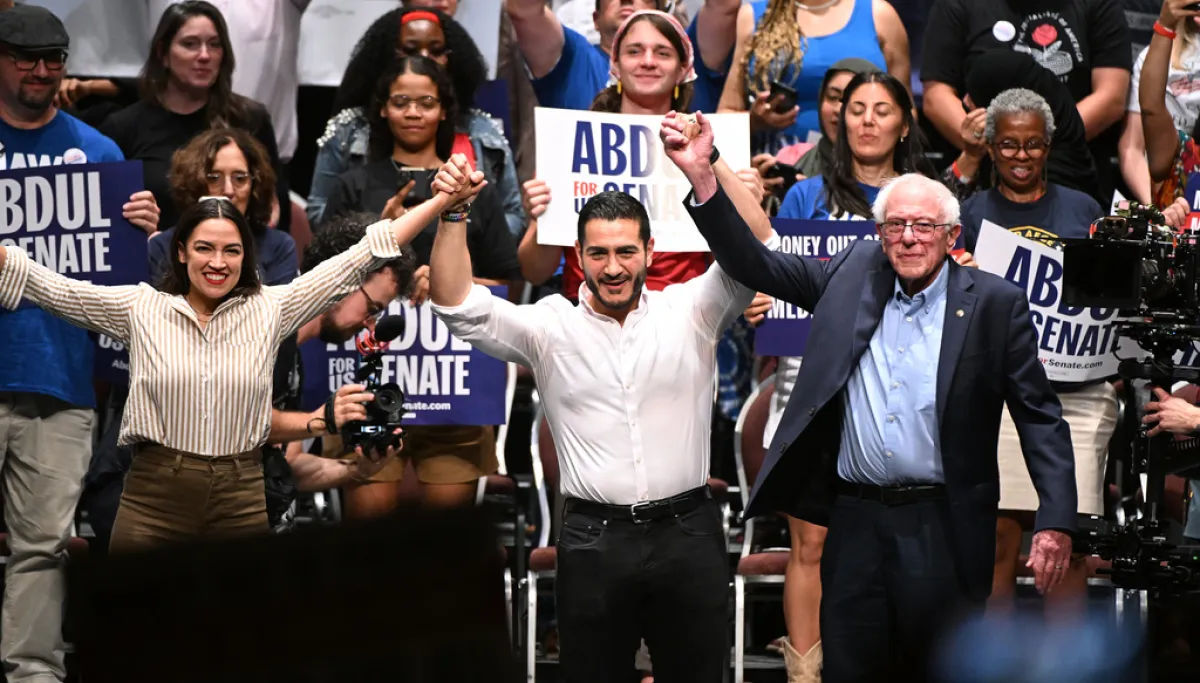
Progressive candidate Abdul el Sayed, who narrowly won the contest, dominated liberal, high-income, heavily educated communities with predominantly white populations. He also performed strongly among Arab voters, though they represent a minor portion of the electorate.
The demographic profile reveals a jarring contradiction. Stevens voters tended to be older, economically disadvantaged, less formally educated, and more likely to be black—precisely the constituency progressives claim to represent. El Sayed supporters skewed younger, wealthier, highly credentialed, and white—exactly the demographic progressives have spent years instructing to “check their privilege.”
The transformation from 2020’s political climate—some now call it “Woke 1″—is stark. Being progressive once meant elevating black voices. Today it increasingly means deferring to white college graduates whose expensive degrees often prepared them for little beyond service-sector employment.
This alliance was always built on projection rather than reality. Intersectionality, the theoretical framework that shaped an entire generation of university students, categorized people by perceived oppression levels and assumed these groups would naturally form a political coalition—producing absurdities like Queers for Palestine.
Black voters, however, do not view themselves as sharing political objectives with their self-appointed white progressive champions.
This pattern has deep historical roots. Black voters have consistently demonstrated political pragmatism while white progressives have prized ideological purity. In 1948, Henry Wallace ran to President Harry Truman’s left with an aggressive civil rights platform, yet black voters remained with Truman. In 1976, Jimmy Carter, a centrist Southern governor, dominated black Southern votes over the more progressive Mo Udall. In 2020, black voters delivered South Carolina to Joe Biden after Bernie Sanders won New Hampshire and Nevada.
Michigan’s primary followed this established pattern—black voters supported the centrist perceived as the stronger general election candidate. This time, however, white progressives prevailed.
The division bewilders white progressives who view themselves as champions of marginalized communities. It should not. Black Democrats differ fundamentally from white progressives in ways the rhetoric obscures. Seventy-six percent of black Democrats identify as Christians. Among white Democrats, that figure stands at just 42 percent. The party’s white voters now divide almost evenly between those claiming religious affiliation and those claiming none.
Far-left progressives have grown increasingly hostile toward religious belief, Christianity especially. When they disparage faith, they alienate a core component of their own coalition.
Black voters also diverge sharply from white progressives on policy priorities. Defunding police departments enjoys far greater support among whites than blacks. A 2020 Cooperative Election Survey found that 40 percent of white Democrats supported reducing law enforcement spending, compared with only 24 percent of black Democrats. An American Enterprise Institute survey four years later determined that nonwhite working-class voters opposed reducing police budgets by a 30-point margin, while white liberal college graduates favored such reductions by a 20-point margin.
The education policy gap is equally dramatic. According to YouGov’s 2024 Cooperative Election Study, approximately two-thirds of black Americans supported state-provided school voucher subsidies. Meanwhile, less than one-third of white Democrats agreed.
Border security reveals similar divisions. A 2022 Harvard/Tufts survey found that 63 percent of black Democrats supported increased border enforcement.
The evidence demonstrates that the Democratic Party’s socialist transformation faces resistance not primarily from party elites or lobbying groups, but from black voters who reject the far-left policy agenda while white progressives increasingly drive the party’s direction—a reality that contradicts everything progressives claim about their movement.
With information from Washington Examiner