DSA’s Blueprint to Disarm America Threatens National Security
The Democratic Socialists of America platform calls for ending capitalism, drafting a new Constitution, and abolishing the Senate and Electoral College, representing a direct challenge to American power.
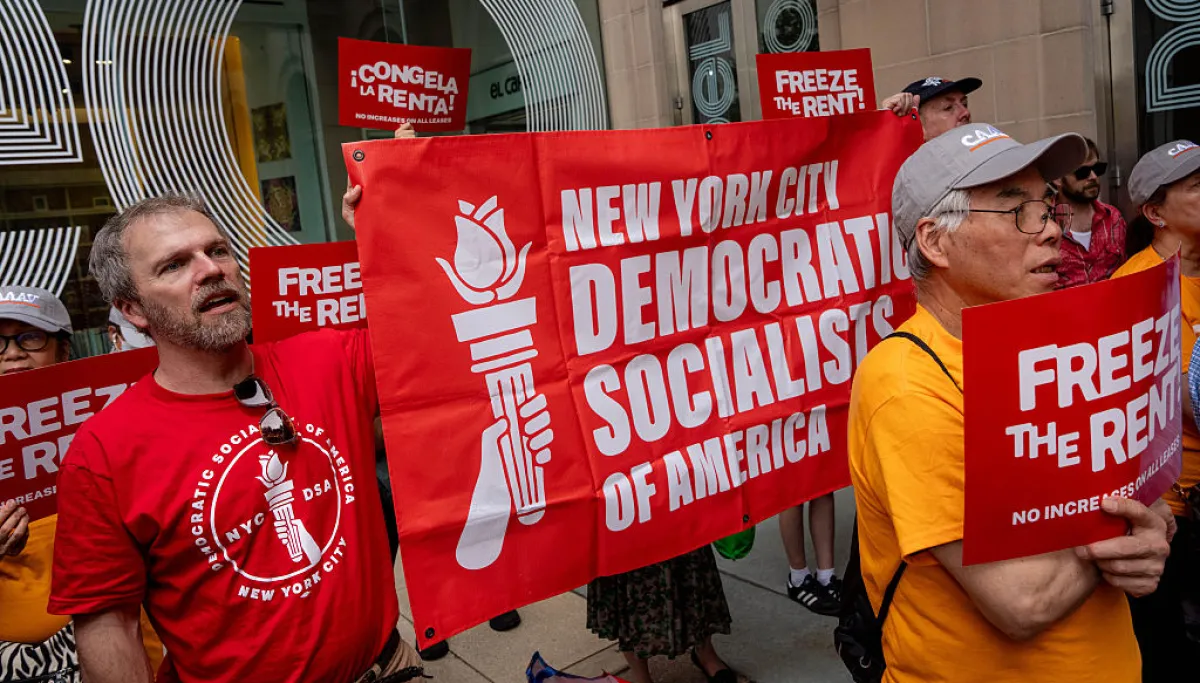

The platform advanced by the Democratic Socialists of America now represents a direct challenge to core elements of American national power, including constitutional government, border security, energy independence, and military strength, according to Colton Overcash writing in Washington Examiner.
What the DSA describes as democratic socialism has evolved far beyond debates over taxation or the scope of government. The organization’s national program explicitly calls for ending capitalism, transferring major industries and property from private ownership into political control, drafting a new Constitution, and establishing what it terms a democratic socialist republic.


The agenda includes abolishing the Senate and Electoral College, restructuring the presidency and Supreme Court, eliminating police forces and prisons, removing all immigration caps, and positioning America as a reduced power operating under the influence of hostile foreign regimes.
The Return of the Apparatchik System
Historical precedent offers a clear warning. When political authority extends into economic life, a new class emerges: the apparatchik. In the Soviet model, party officials wielded power not through entrepreneurship or market competition, but through control of jobs, housing, production, investment, and opportunity.
Transferring industries and property into government hands creates the same dynamic. Officials gain influence over contracts, permits, financing, housing, energy access, and economic opportunity. While socialism promises to dismantle elite power structures, it often replaces them with a politically connected class backed by state authority—a modern apparatchik system in all but name.
Constitutional Demolition
The DSA constitutional platform would concentrate power dramatically. The organization seeks to eliminate the Senate and Electoral College entirely, and restructure both the presidency and Supreme Court to make them subordinate to Congress. The existing Constitution explicitly protects each state’s equal representation in the Senate unless that state consents to change. DSA wants the chamber abolished altogether, which helps explain why it also advocates replacing the Constitution itself.
The political strategy matches the ambition. DSA fields candidates in existing elections while constructing an organizational apparatus separate from the Democratic Party and cultivating a network of socialist officeholders. The goal is to accumulate power within current institutions and then leverage that power to transform the system from within.
Economic Promises Meet Fiscal Reality
For most Americans, economic consequences would materialize first. The DSA agenda includes universal healthcare with no individual costs, free education through college, complete student debt cancellation, government-owned housing, universal rent control, a federal jobs guarantee, and a 32-hour work week at full pay. These commitments would fall on a federal government already running massive deficits.
The healthcare proposal alone illustrates the scope. Congressional Budget Office modeling of single-payer systems projects they would shift between $1.5 trillion and $3 trillion in additional annual health spending onto the federal budget. When demand for medical services outpaces the supply of doctors, nurses, hospital beds, and operating rooms, rationing through waiting lists becomes inevitable. In Canada, over one-third of hip and knee replacements in 2025 exceeded the country’s 26-week standard.
Housing policy confronts similar constraints. Government can impose rent caps immediately, but cannot manufacture apartments by legislative decree. Research examining San Francisco discovered that expanded rent control led property owners to reduce rental housing supply by approximately 15 percent.
The Cost of Everyday Life
American households experience economic disruption directly. The average family spends more than $6,000 annually on groceries consumed at home. A 5 percent price increase adds roughly $300 per year; a 10 percent increase adds over $600. The dollar’s reserve currency status reduces American borrowing costs and provides Washington with extraordinary financial leverage on the world stage. Fiscal credibility translates directly into national power.
Public Safety and the Abolition Agenda
Public safety concerns are more immediate still. DSA explicitly frames reductions in police authority and funding as incremental steps toward abolishing both police forces and prisons. Yet when violent crimes occur—rape, kidnapping, robbery, murder—society requires officers capable of intervention, investigators who can identify perpetrators, and secure facilities that can separate dangerous individuals from the public. Extensive research has consistently demonstrated that police presence reduces violent crime and homicide rates. Reform where necessary, but elimination serves no public interest.
With information from Washington Examiner