Necessary Cookies

Required for the site to function. Cannot be disabled.

Analytics Cookies

Help us understand how visitors interact with our site (Google Analytics via GTM).

Marketing Cookies

Used to track visitors and deliver personalised advertisements.

We use cookies to enhance your browsing experience and analyse site traffic. By clicking Accept All, you consent to our use of cookies. Privacy Policy
NewsFire Global
Home News Europe World Christianity Culture Wars Opinion Video
Information
About Us Authors Advertising Terms & Conditions Privacy Policy Contact
R2B Media
R2B NEWSFIRE.GR PAPAFOTIS.GR THRACTION HELLENIC CONSERVATIVES RIGHT2THEBONE YT
News World

US Pulls Last Pacific Carrier to Focus on Iran Threat

The U.S. has withdrawn its last Pacific aircraft carrier to the Middle East, prompting defense analysts to warn that China may exploit the gap to undermine American influence in the region.

Dimitris Papafotis
Dimitris Papafotis Editor in Chief
AUGUST 17, 2026 AT 12:14 AM

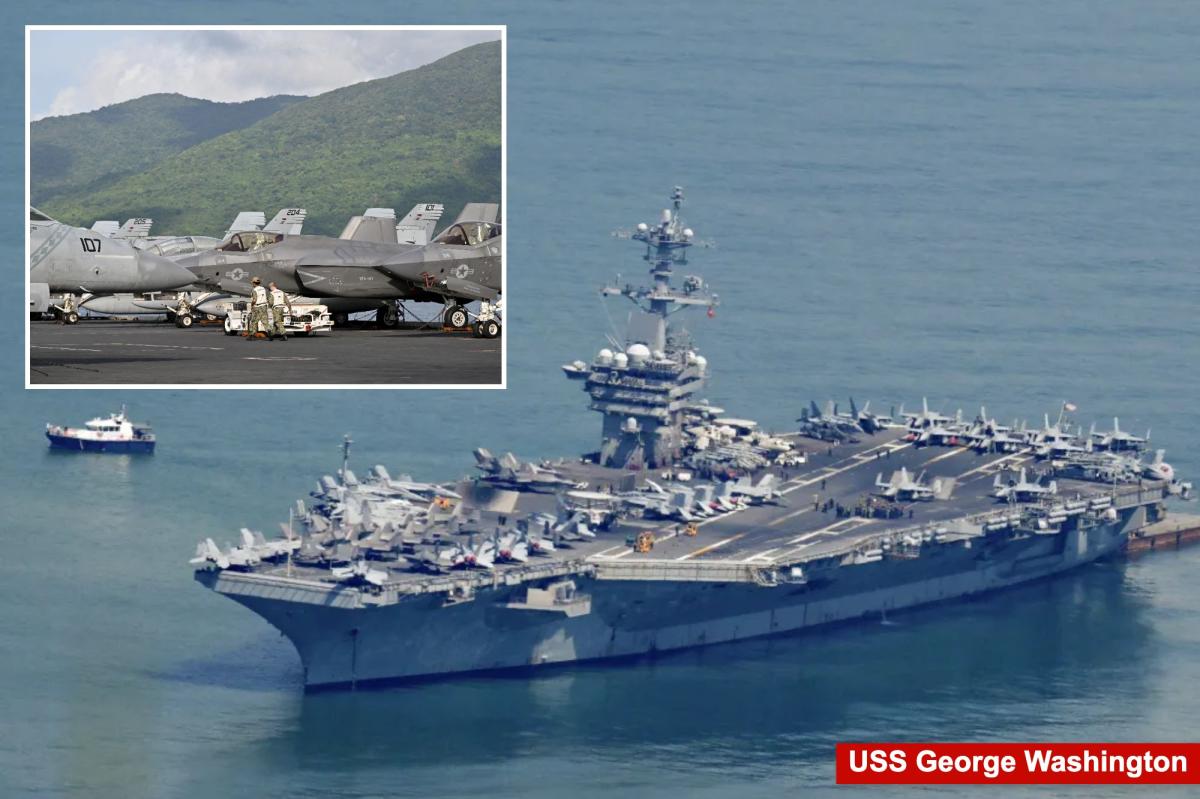
The USS George Washington has departed the South China Sea and is heading to the Middle East to replace the Lincoln, which is finally returning home after the longest American naval deployment since the Cold War, according to Ronny Reyes writing in New York Post.

The Lincoln’s extended deployment, which began on November 21, 2025, from San Diego, has far exceeded the standard six-month rotation and raised serious concerns about mental health and supply conditions aboard the vessel. Reports last week revealed dire circumstances including suicide attempts among crew members, prompting protests from sailors and their families.

While the George Washington’s redeployment reflects the Trump administration’s concentrated focus on the Iran conflict, the absence of carrier firepower in the Pacific has sparked alarm among defense experts about potential Chinese exploitation of the gap.

Bryan Clark, a former Navy submariner now serving as a defense analyst at the Hudson Institute, warned that Beijing is leveraging America’s Pacific absence to reshape regional power dynamics.

They’re using this as part of the narrative to demonstrate to the Philippines, to Japan, to Indonesia and others that the US is not the big dog in the western Pacific anymore, Clark explained. He noted that China prefers regional nations conclude that American security guarantees have become unreliable.

The timing of the carrier withdrawal coincides with fresh Chinese naval exercises designed as shows of force against the Philippines and Japan, two critical American allies in the region.

Damage Control in Manila

Admiral Frank Bradley, head of US Special Operations Command, traveled to Manila on Thursday in an apparent damage control mission to reassure Philippine officials of continued American commitment to Pacific security.

Bradley insisted the United States maintains global force projection capabilities and pledged that once Middle Eastern threats are addressed, American military power will return to other regions as required. He also expressed confidence in the Armed Forces of the Philippines’ ability to defend their sovereignty while maintaining close ties with Washington.

Carrier Bottleneck Looms

President Donald Trump and Acting Navy Secretary Hung Cao have downplayed concerns about conditions aboard the Lincoln. Cao traveled to the ship over the weekend to personally assess the situation and confirm the crew’s imminent return home.

Defense analysts warn the carrier shuffle could create a bottleneck at America’s only two carrier shipyards, potentially forcing the United States to scale back its aircraft carrier presence globally compared to previous years.

The strategic repositioning leaves the Pacific theater without American carrier coverage at a moment when Chinese naval assertiveness is escalating, raising questions about Washington’s ability to maintain credible deterrence across multiple global theaters simultaneously.

With information from New York Post
Share:
Dimitris Papafotis
Dimitris Papafotis

Dimitris Papafotis is the editor-in-chief of NewsFire.GR. He was born and raised in Athens. He studied at the Journalism Workshop (1991-1993). He currently lives in Pyrgos, Ilia, where he has been active in radio and various newspapers, while also maintaining his personal blog, Papafotis.gr.

The USS George Washington has departed the South China Sea and is heading to the Middle East to replace the Lincoln, which is finally returning home after the longest American naval deployment since the Cold War, according to Ronny Reyes writing in New York Post.

The Lincoln’s extended deployment, which began on November 21, 2025, from San Diego, has far exceeded the standard six-month rotation and raised serious concerns about mental health and supply conditions aboard the vessel. Reports last week revealed dire circumstances including suicide attempts among crew members, prompting protests from sailors and their families.

While the George Washington’s redeployment reflects the Trump administration’s concentrated focus on the Iran conflict, the absence of carrier firepower in the Pacific has sparked alarm among defense experts about potential Chinese exploitation of the gap.

Bryan Clark, a former Navy submariner now serving as a defense analyst at the Hudson Institute, warned that Beijing is leveraging America’s Pacific absence to reshape regional power dynamics.

They’re using this as part of the narrative to demonstrate to the Philippines, to Japan, to Indonesia and others that the US is not the big dog in the western Pacific anymore, Clark explained. He noted that China prefers regional nations conclude that American security guarantees have become unreliable.

The timing of the carrier withdrawal coincides with fresh Chinese naval exercises designed as shows of force against the Philippines and Japan, two critical American allies in the region.

Damage Control in Manila

Admiral Frank Bradley, head of US Special Operations Command, traveled to Manila on Thursday in an apparent damage control mission to reassure Philippine officials of continued American commitment to Pacific security.

Bradley insisted the United States maintains global force projection capabilities and pledged that once Middle Eastern threats are addressed, American military power will return to other regions as required. He also expressed confidence in the Armed Forces of the Philippines’ ability to defend their sovereignty while maintaining close ties with Washington.

Carrier Bottleneck Looms

President Donald Trump and Acting Navy Secretary Hung Cao have downplayed concerns about conditions aboard the Lincoln. Cao traveled to the ship over the weekend to personally assess the situation and confirm the crew’s imminent return home.

Defense analysts warn the carrier shuffle could create a bottleneck at America’s only two carrier shipyards, potentially forcing the United States to scale back its aircraft carrier presence globally compared to previous years.

The strategic repositioning leaves the Pacific theater without American carrier coverage at a moment when Chinese naval assertiveness is escalating, raising questions about Washington’s ability to maintain credible deterrence across multiple global theaters simultaneously.

With information from New York Post