Necessary Cookies

Required for the site to function. Cannot be disabled.

Analytics Cookies

Help us understand how visitors interact with our site (Google Analytics via GTM).

Marketing Cookies

Used to track visitors and deliver personalised advertisements.

We use cookies to enhance your browsing experience and analyse site traffic. By clicking Accept All, you consent to our use of cookies. Privacy Policy
NewsFire Global
Home News Europe World Christianity Culture Wars Opinion Video
Information
About Us Authors Advertising Terms & Conditions Privacy Policy Contact
R2B Media
R2B NEWSFIRE.GR PAPAFOTIS.GR THRACTION HELLENIC CONSERVATIVES RIGHT2THEBONE YT
News World

Iran: From Hormuz to the “Hormuz of Fire”

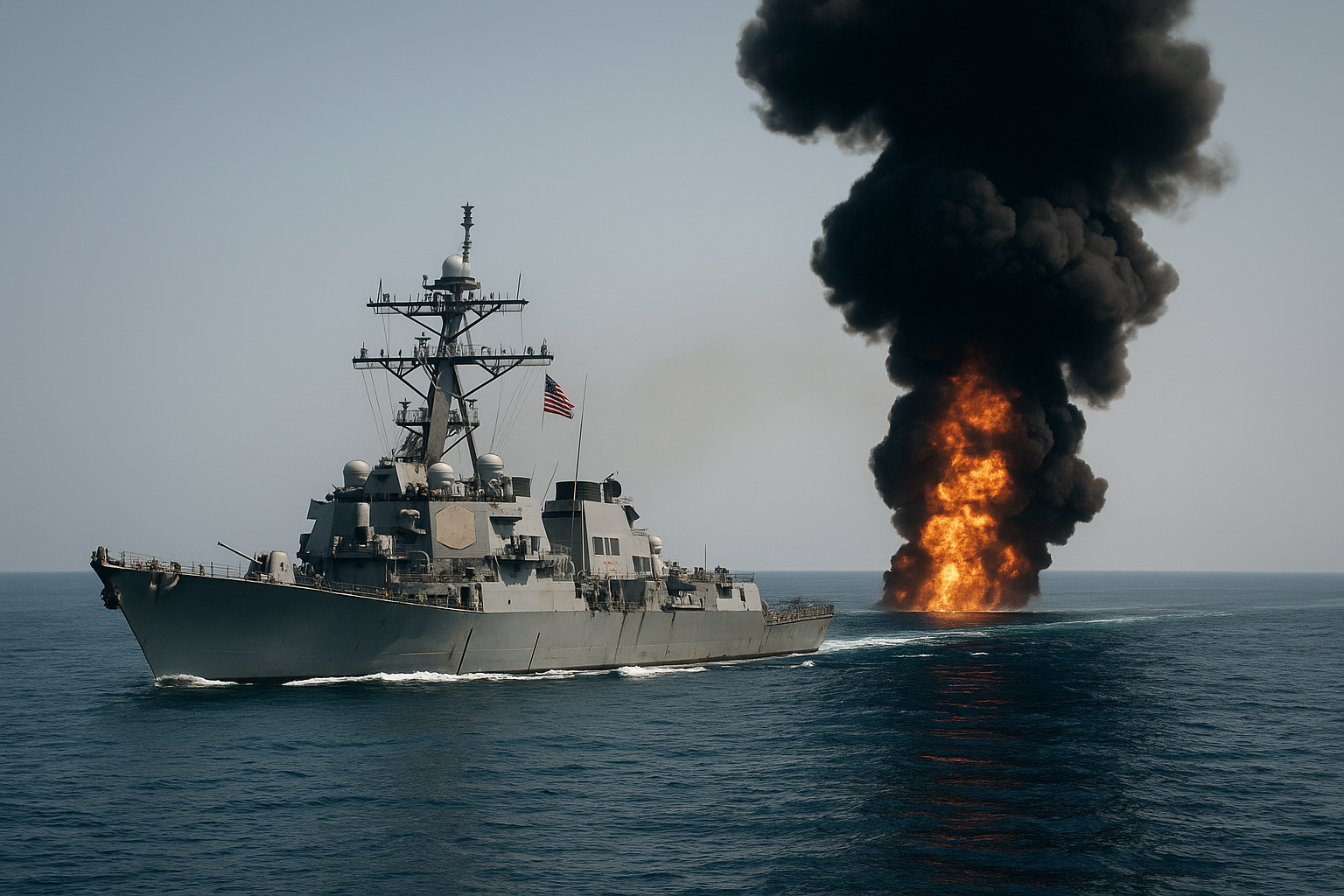
The U.S. seeks to economically pressure Iran while maintaining Persian Gulf oil flows, but officials' claims of near-normal export levels through the Strait of Hormuz conflict with independent shipping data.

AUGUST 14, 2026 AT 3:31 PM

The United States is pursuing a delicate balancing act in the Persian Gulf, attempting to maintain the flow of oil from Arab monarchies while economically strangling Iran, but the strategy faces significant obstacles as Tehran retains the ability to threaten shipping across a much wider area than just the Strait of Hormuz.

On Tuesday, August 11, US Energy Secretary Chris Wright made a striking claim that nearly 9 million barrels of oil had been passing daily through the Strait of Hormuz over the previous seven days, coming from the Persian Gulf. According to Causeur, Wright added that an additional 5 to 7 million barrels per day were being evacuated via pipelines and terminals that bypass the strait entirely. In total, approximately 15 million barrels would be leaving the region each day. Wright even claimed that on Sunday, August 9, the figure exceeded 20 million barrels, surpassing pre-war levels.

However, the 9 million barrel figure must be handled with caution. Available independent data does not currently confirm such a level. On Tuesday, Reuters noted only six passages through the strait, compared to an average of approximately eleven over the preceding ten days. On Wednesday, Reuters data showed eight transits, against 125 to 140 daily movements before the war.

A Political Numbers Game

This battle over statistics is revealing. For Washington, the quantity of oil successfully exiting the Gulf has become politically significant, as American strategy toward Iran is changing in nature. The fundamental American problem can be stated simply: Washington seeks to exert economic pressure on Tehran strong enough to limit its ability to finance the war and force its leaders to change their negotiating positions. But it must achieve this without provoking a global oil shock that would plunge the United States and its allies into economic crisis and, above all, turn against Donald Trump just months before midterm elections.

This is precisely the difficulty of the strangulation strategy, as Causeur reports. Sanctioning or blocking Iranian exports is relatively simple as long as the rest of Gulf oil continues to circulate. It becomes far more dangerous if Tehran responds by reducing Saudi, Emirati, Iraqi, Kuwaiti, or Qatari exports.

Military Superiority Without Economic Control

The military strategy pursued since February had encountered precisely this limitation. The United States possesses overwhelming military superiority, but control of a strait does not depend solely on mastery of the sea. It also requires the ability to neutralize capabilities installed on land. From its coasts, Iran can threaten navigation with ballistic and anti-ship missiles, drones, mines, and light craft. A relatively modest coastal navy, backed by a vast land-based apparatus, thus manages to contest the world’s most powerful navy’s effective control of a maritime space only a few dozen kilometers wide.

American military superiority therefore does not automatically translate into economic control of Hormuz. Hence the search for a new equilibrium. The focus now is less on militarily defeating Iran than on constructing a system around it that allows oil from the Gulf monarchies to exit while preventing Tehran, as much as possible, from benefiting from this circulation itself. Wright’s stated figure must be understood in this context. If confirmed, 9 million barrels per day would constitute a significant achievement.

The Strait as Energy Highway

Before the war, the strait was an energy highway. In the first half of 2025, approximately 20.9 million barrels of oil and petroleum products crossed it daily, representing about 20 percent of global consumption of petroleum liquids and roughly a quarter of global maritime oil trade. By the end of 2025, traffic remained close to this level. In the fourth quarter, the Energy Information Administration evaluated flows at 20.7 million barrels per day.

But in the first quarter of 2026, with the outbreak of war and the Hormuz crisis, flows had fallen to 14.6 million. The situation subsequently deteriorated further. The EIA estimates that approximately 5.5 million barrels of daily Middle Eastern production were still halted in July.

Beyond Hormuz: No True Sanctuary

According to Causeur, while alternative routes exist to bypass Hormuz—including Saudi pipelines, the Fujairah terminal, and Red Sea routes—none offers a genuine sanctuary. Missiles and drones now enable Iran and its allies to threaten Gulf hydrocarbons well beyond the strait itself.

A second difficulty compounds the problem. Not all barrels are equal. Asian countries are particularly dependent on Hormuz. Before the war, Saudi Arabia alone represented approximately 38 percent of crude and condensate flows transiting through the strait.

With information from Causeur

Share:
Eleni Papadaki-Van Der Merwe

She was born in 1986 in Johannesburg, South Africa. She is the granddaughter of an immigrant from Crete who settled in the Greek community of Johannesburg (one of the largest in Africa). She holds a bachelor’s degree in International Relations and Political Science from the University of the Witwatersrand (Wits) in Johannesburg and a master’s degree in Journalism from Rhodes University in Grahamstown. She began her career at English-language media outlets in Johannesburg, covering politics and economics, with a focus on issues related to migration and the diaspora. She moved to Athens in 2015 to “return to her roots,” initially to pursue graduate studies, and has remained there permanently. She is married to an Afrikaner; they have two children and live in the southern suburbs of Athens.

The United States is pursuing a delicate balancing act in the Persian Gulf, attempting to maintain the flow of oil from Arab monarchies while economically strangling Iran, but the strategy faces significant obstacles as Tehran retains the ability to threaten shipping across a much wider area than just the Strait of Hormuz.

On Tuesday, August 11, US Energy Secretary Chris Wright made a striking claim that nearly 9 million barrels of oil had been passing daily through the Strait of Hormuz over the previous seven days, coming from the Persian Gulf. According to Causeur, Wright added that an additional 5 to 7 million barrels per day were being evacuated via pipelines and terminals that bypass the strait entirely. In total, approximately 15 million barrels would be leaving the region each day. Wright even claimed that on Sunday, August 9, the figure exceeded 20 million barrels, surpassing pre-war levels.

However, the 9 million barrel figure must be handled with caution. Available independent data does not currently confirm such a level. On Tuesday, Reuters noted only six passages through the strait, compared to an average of approximately eleven over the preceding ten days. On Wednesday, Reuters data showed eight transits, against 125 to 140 daily movements before the war.

A Political Numbers Game

This battle over statistics is revealing. For Washington, the quantity of oil successfully exiting the Gulf has become politically significant, as American strategy toward Iran is changing in nature. The fundamental American problem can be stated simply: Washington seeks to exert economic pressure on Tehran strong enough to limit its ability to finance the war and force its leaders to change their negotiating positions. But it must achieve this without provoking a global oil shock that would plunge the United States and its allies into economic crisis and, above all, turn against Donald Trump just months before midterm elections.

This is precisely the difficulty of the strangulation strategy, as Causeur reports. Sanctioning or blocking Iranian exports is relatively simple as long as the rest of Gulf oil continues to circulate. It becomes far more dangerous if Tehran responds by reducing Saudi, Emirati, Iraqi, Kuwaiti, or Qatari exports.

Military Superiority Without Economic Control

The military strategy pursued since February had encountered precisely this limitation. The United States possesses overwhelming military superiority, but control of a strait does not depend solely on mastery of the sea. It also requires the ability to neutralize capabilities installed on land. From its coasts, Iran can threaten navigation with ballistic and anti-ship missiles, drones, mines, and light craft. A relatively modest coastal navy, backed by a vast land-based apparatus, thus manages to contest the world’s most powerful navy’s effective control of a maritime space only a few dozen kilometers wide.

American military superiority therefore does not automatically translate into economic control of Hormuz. Hence the search for a new equilibrium. The focus now is less on militarily defeating Iran than on constructing a system around it that allows oil from the Gulf monarchies to exit while preventing Tehran, as much as possible, from benefiting from this circulation itself. Wright’s stated figure must be understood in this context. If confirmed, 9 million barrels per day would constitute a significant achievement.

The Strait as Energy Highway

Before the war, the strait was an energy highway. In the first half of 2025, approximately 20.9 million barrels of oil and petroleum products crossed it daily, representing about 20 percent of global consumption of petroleum liquids and roughly a quarter of global maritime oil trade. By the end of 2025, traffic remained close to this level. In the fourth quarter, the Energy Information Administration evaluated flows at 20.7 million barrels per day.

But in the first quarter of 2026, with the outbreak of war and the Hormuz crisis, flows had fallen to 14.6 million. The situation subsequently deteriorated further. The EIA estimates that approximately 5.5 million barrels of daily Middle Eastern production were still halted in July.

Beyond Hormuz: No True Sanctuary

According to Causeur, while alternative routes exist to bypass Hormuz—including Saudi pipelines, the Fujairah terminal, and Red Sea routes—none offers a genuine sanctuary. Missiles and drones now enable Iran and its allies to threaten Gulf hydrocarbons well beyond the strait itself.

A second difficulty compounds the problem. Not all barrels are equal. Asian countries are particularly dependent on Hormuz. Before the war, Saudi Arabia alone represented approximately 38 percent of crude and condensate flows transiting through the strait.

With information from Causeur