Donroe Doctrine Proves Effective in Practice
Nicaraguan leader Daniel Ortega announced he will cancel all future elections in response to renewed American pressure under the Trump administration's approach to national security threats.
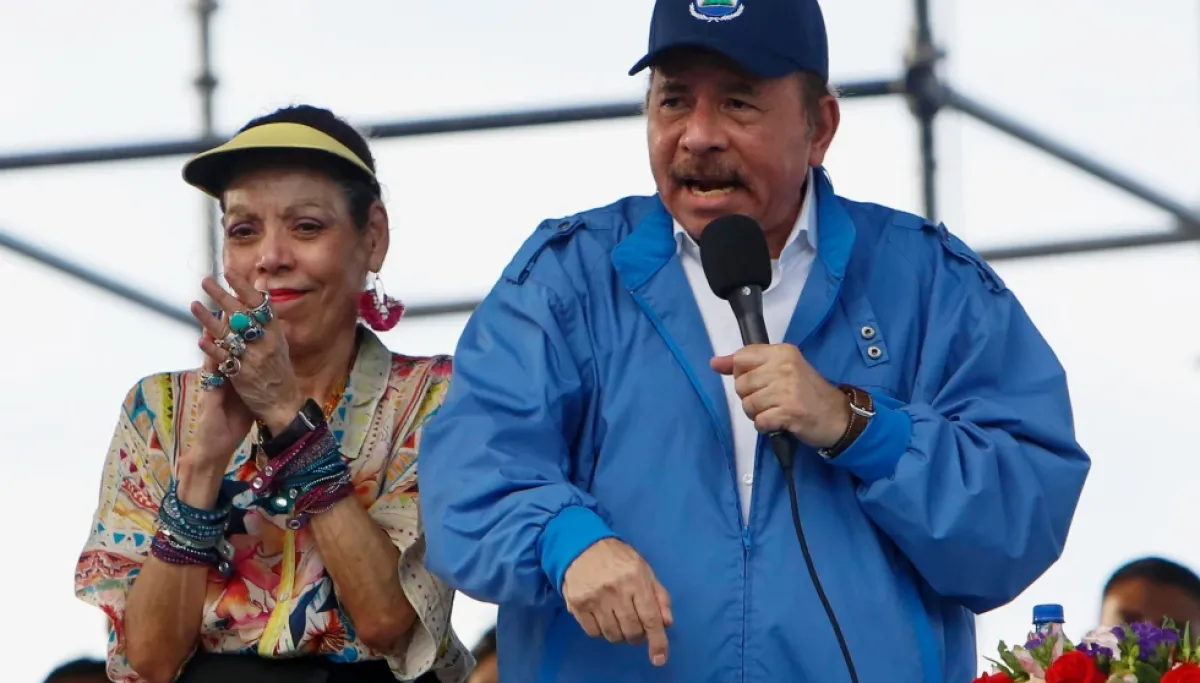

The 80-year-old Marxist leader made his declaration on Sunday during commemorations of the Sandinista Revolution anniversary, which originally brought him to power in 1979 after toppling the Somoza government. Speaking to supporters, Ortega vowed that political parties aligned with Washington would never return to power in Nicaragua.
According to Washington Examiner, Ortega has served as a thorn in America’s side for nearly six decades. His political career began in 1967 as a leader of the Sandinista National Liberation Front, a guerrilla movement trained and equipped by the Soviet Union and Cuba. The FSLN successfully overthrew the U.S.-backed government of Anastasio Somoza Debayle in 1979.
Under Ortega’s leadership from 1979 to 1990, Nicaragua pursued standard communist policies of land seizures and wealth redistribution. The predictable economic collapse that followed, combined with the fall of the Berlin Wall, led to his ouster in 1990. For fifteen years, American influence dominated the region through what became known as the Washington Consensus.
Ortega returned to office in 2006 as part of a leftist surge across Latin America, riding the so-called Pink Wave that brought anti-American socialists to power in Venezuela, Argentina, Bolivia, Brazil, and Ecuador. These governments, inspired by Venezuela’s Hugo Chavez and Cuba’s Castro regime, opened their doors to adversarial powers including China, Russia, and Iran, significantly eroding U.S. influence in the hemisphere.
President Donald Trump has reversed these losses since returning to office. The 2026 National Defense Strategy explicitly criticized the Biden administration for abandoning Monroe Doctrine principles and allowing adversaries to gain footholds in America’s backyard. The strategy document called for what it termed a Trump Corollary to defend U.S. interests in the region decisively.
The administration demonstrated its seriousness with Operation Absolute Resolve on January 3, 2026, when elite American forces conducted a lightning raid in Caracas to capture Venezuelan dictator Nicolas Maduro. U.S. troops seized Maduro and his wife while eliminating his Cuban security detail. The dramatic operation sent an unmistakable message throughout the region that the era of challenging American power in the Western Hemisphere had ended.
Trump himself dubbed the new approach the Donroe Doctrine following Maduro’s capture. The Venezuelan strongman now sits in a New York jail cell facing narco-terrorism charges. His allies have clearly received the message.
The State Department has since imposed comprehensive sanctions against Cuba, which Secretary of State Marco Rubio designated a national security threat and failed state. On July 21, the department released documentation detailing the Cuban regime’s efforts to incite domestic unrest within the United States.
Ortega, whose rise to power depended heavily on Cuban support decades ago, now finds himself in an increasingly precarious position. The analysis suggests Washington should intensify diplomatic and economic pressure on the aging autocrat through strengthened sanctions and United Nations resolutions condemning his cancellation of elections. Such moves would force his backers in Moscow and Beijing to face international scrutiny for supporting authoritarian governance.
The piece argues that Ortega represents the past rather than the future, and his brand of communism deserves consignment to history’s dustbin. Despite his defiant rhetoric, he will not define Latin America’s trajectory moving forward.
The decline of communist influence in Latin America promises improved conditions for both regional populations and American interests. That outcome appears increasingly likely, thanks largely to what Trump has branded the Donroe Doctrine.
With information from Washington Examiner