Hindréléz 2026 File: Pro-Consuls Exploit Traditions
In May 2026, a coordinated effort led by Turkish officials transformed the traditional Hindrelez festival in Thrace into a political tool, threatening local cultural diversity by imposing a uniform ethnic identity.
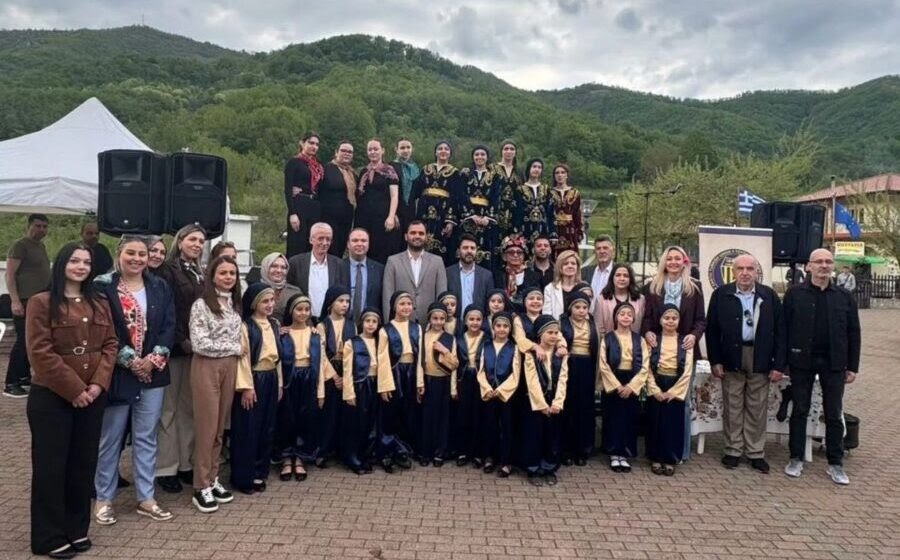

REVEALING: The “Hıdırellez” 2026 Plan – The Geography of Consular Infiltration and the Turkification of Customs in Thrace
The traditional spring festival, Hıdırellez (or Enderlezi), was transformed in May 2026 into a large-scale coordinated political influence operation.
Written by Nikos Arvanitis
Centered in the Xanthi Prefecture and strategically extending into Rodopi and Evros, the Turkish Consulate in Komotini, in cooperation with the illegally operating Turkish Union of Xanthi (TEX) and with the full backing of the Municipality of Myki, attempted to impose a uniform ethnic narrative, effectively overshadowing the authentic folk traditions of the Pomaks, Roma, and Alevis.
The “Itinerary” of Propaganda: From Myki and Oraiο to Leptokarya
The leadership of TEX and consular attachés implemented a strategy of “suffocating embrace” of local communities, developing a network of events at key locations:
-
Ilitza (Municipality of Myki): The “flagship” event (May 6). Co-organized by the Mayor of Myki, Ahmet Kurt (former president of TEX), the festival was turned into a political manifesto.
-
Oraiο (Yassıören):
At the event of the local “Association of Culture, Sports and Education,” the custom was framed with the necessary ethnic “identity.” -
Selero (Gökçeler):
Intervention within the “Educational and Cultural Association,” where traditional dances and songs were instrumentalized as proof of homogeneity. -
Leptokarya (Palamutluk – Evros):
Despite adverse weather conditions (May 3), the Consulate supported the event of the “Southern Evros Association,” aiming at the Turkification of Alevis through the narrative of “Ruz-ı Hızır.” -
Mega Pisto (Rodopi): Targeted activities featuring artists and exhibits directly referencing the Turkish Ministry of Culture.
The “Vanguard” of the Mechanism: The Participants
The provocative instrumentalization of customs was sealed by the presence of a large group of officials.
The pace was set by the Diplomatic Leadership (Consul Aykut Ünal, Vice-Consul Umut Yamık, Attaché Yunus Boz), in full alignment with Institutional Authorities (Member of Parliament Burhan Baran, Mayor Ahmet Kurt, Regional Councilors Salih Yörük and Ahmet Osman Pehlivan).
The political wing was represented by the President of KIEF, Çiğdem Asafoğlu, while the Religious Leadership was represented by the pseudo-mufti Mustafa Trampa. Operational control of the Associations was held by Kerem Abdurahimoğlu (President of TEX), İpek Salihoğlu, Hüseyin Mahmut, Aydın Ahmet, and Şerafettin Hurşit.
Finally, the artistic “packaging” was curated by the music instructors Süleyman and Merve Kara and the dance teachers Tülin Hacıhalil and Gökhan Mustafa.
The Method of Turkification
This operation is achieved through Nomenclature (exclusive identification with Turkish mythology as opposed to Saint George), Institutional Cover (use of municipal resources), and Cultural Homogenization, where authentic practices (swings, sacrifices) are replaced by imported activities (ebru art).
- Source: RodopiPress / On-site Reporting
Editor’s Comment
The simultaneous activation of so many fronts proves that we are not dealing with spontaneous festivals, but a calculated “strategic depth” of Ankara.
When the folk traditions of the Pomaks, Roma, and Alevis are compulsorily “translated” by consular employees and endorsed by elected Greek officials, the cultural diversity of Thrace is at risk of eradication.
Historical memory reminds us that these customs belong to the people of the region, not to the offices of foreign consulates.
Source: TAXIARHISpress